
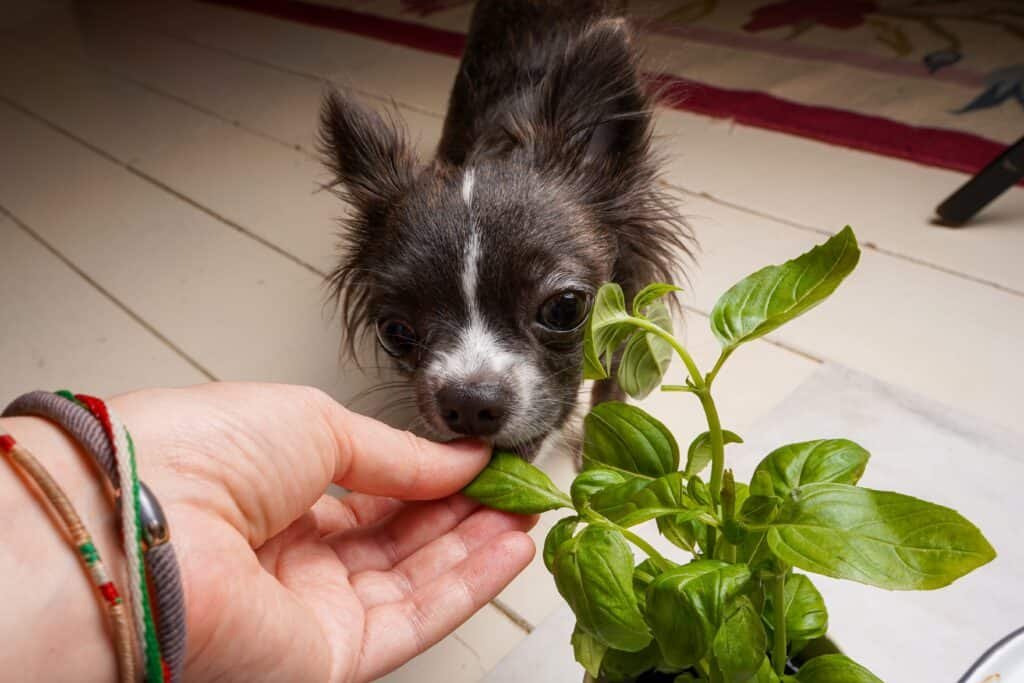
I run a small pet boarding setup behind my home and grow herbs there for convenience. Over the years, many dogs have sniffed or chewed on various plants. Basil comes up often, especially during warm months when it’s abundant and within reach. I’ve seen dogs nibble it, spit it out, or ignore it. So, I get asked this question frequently.
What Basil Actually Does in a Dog’s System
From what I’ve seen, basil isn’t poisonous to dogs. Dogs may chew a few leaves and show no reaction beyond a wrinkled nose at the taste. Compared to onions or chocolate, basil poses far less concern. Still, I don’t let dogs snack on it freely.
If a dog eats more than a small amount—especially a curious puppy—it may get a mild upset stomach. Loose stool may appear later that day, and sometimes drooling follows. These mild reactions convince me to keep plants out of reach.
Dogs process plants differently than we do. Their digestive system is shorter, and too much fibrous material can irritate the gut. A few leaves usually pass without issue, but a handful are enough to worry owners into calling for advice.
When I Start Paying Closer Attention
I don’t panic if a dog eats basil, but I keep an eye on them for a few hours. Behavior matters more than the plant. If a dog shows signs of lethargy, refuses water, or vomits repeatedly, I intervene. While this rarely happens, I never ignore early signs.
One case last spring stood out: a medium-sized dog ate about ten or twelve leaves. He was fine at first, then had mild diarrhea that evening. I kept him hydrated, skipped a meal, and he returned to normal by morning.
For a second opinion, I sometimes suggest resources such as the ASPCA Animal Poison Control Center. They explain plant safety clearly. I rely on my observations but give references to calm worried owners. Panic helps no one.
Fresh Basil vs Cooked or Seasoned Forms
There’s a difference between a dog chewing a fresh basil leaf and eating food containing basil with other ingredients. Plain basil is one thing; pasta sauce with garlic, onion, oil, and salt is another. I always consider the full dish.
Boarding dogs have tried licking plates, and that’s where issues start. It’s rarely the basil—it’s the garlic or heavy seasoning causing problems. Even small amounts of seasoned food upset dogs faster than plants do.
My rule: A fresh leaf in small amounts is low risk, but human food mixes are unpredictable. This distinction keeps things clear, especially for new owners who may assume all plant foods are safe.
Why Some Dogs React Differently
Dogs react to basil differently. Size matters—a large dog can handle a nibble, but a small dog may react to the same amount. Dogs with sensitive stomachs show symptoms faster than those with varied diets.
Age plays a role. Puppies chew and swallow more, increasing the chance they’ll eat more. Older dogs are more selective, though some still grab what they can. Personality matters.
Some dogs love chewing leaves. Others ignore them. I board a dog who always sniffs the basil, then walks away, uninterested. That behavior is ideal.
How I Manage Herbs Around Dogs Daily
I don’t remove basil; I just control access. Pots sit above most dogs’ noses, about waist height. This simple step stops unnecessary nibbling. Physical barriers work better than constant watching.
On busy days with several dogs, I keep the garden off-limits unless I’m present. A moment’s distraction is enough for a curious dog to chew. Prevention is easier than treating a sick dog later.
If a dog grabs a leaf, I don’t chase. That turns it into a game. I approach calmly, offer a treat, and redirect. Dogs respond better to calm than sudden reactions.
My checklist: Confirm what was eaten, watch behavior for a few hours, keep water available, and skip a meal if needed.
This routine lets me handle small incidents without overreacting or missing anything important.
I’ve lived with dogs and plants for years. Basil isn’t dangerous, but I don’t encourage dogs to eat it. Most cases resolve on their own, and observation helps keep things under control.