
I run a small boarding and grooming setup near town and have handled hundreds of feeding questions. Pork bones come up often: clients bring leftovers or ask if a Sunday roast bone is safe. I have seen good outcomes, but I have also seen a few scary situations that changed how I answer this question.
Why Pork Bones Seem Like a Natural Treat
People often assume bones are a natural part of a dog’s diet. That idea is not completely wrong, especially if you look at how wild canines chew through carcasses. Pork bones smell rich and fatty, and dogs go crazy for them within seconds. I have watched a calm Labrador turn into a focused chewer the moment a bone hit the floor.
The main issue is that not all bones pose the same risk. Pork bones, particularly after cooking, become extremely brittle. This brittleness causes them to fracture into sharp, jagged splinters. I have personally removed fragments that looked like needles from a dog’s mouth—fragments that, if swallowed, could seriously injure the throat or internal organs.
Raw pork bones are a different story, but they still carry risks. Even uncooked bones can break depending on the dog’s bite strength. A strong chewer can snap through a rib bone in minutes. That is where supervision matters, and many owners underestimate it.
The Real Risks I’ve Seen Firsthand
I remember a case from last winter where a mid-sized dog came in for boarding with a history of chewing pork bones at home. The owner thought it was harmless because the dog had done it for years. Within two days, the dog started refusing food and seemed uncomfortable. A later vet visit showed irritation of the digestive tract, likely from small bone fragments.
For those looking for safer chew alternatives, I sometimes suggest checking a reliable dog chew shop that focuses on products designed to break down more predictably. The difference in material can reduce the chance of sharp splinters forming inside the mouth or gut. That small switch can save you from a stressful vet visit.
There are a few common problems I have seen with pork bones:
Choking is one. A bone chunk can get lodged in the throat, especially if the dog tries to swallow too fast. Tooth fractures are another issue, and I have seen at least 4 cases in which molars cracked on harder bones. Internal damage is the worst-case scenario, and you don’t want to deal with it at midnight.
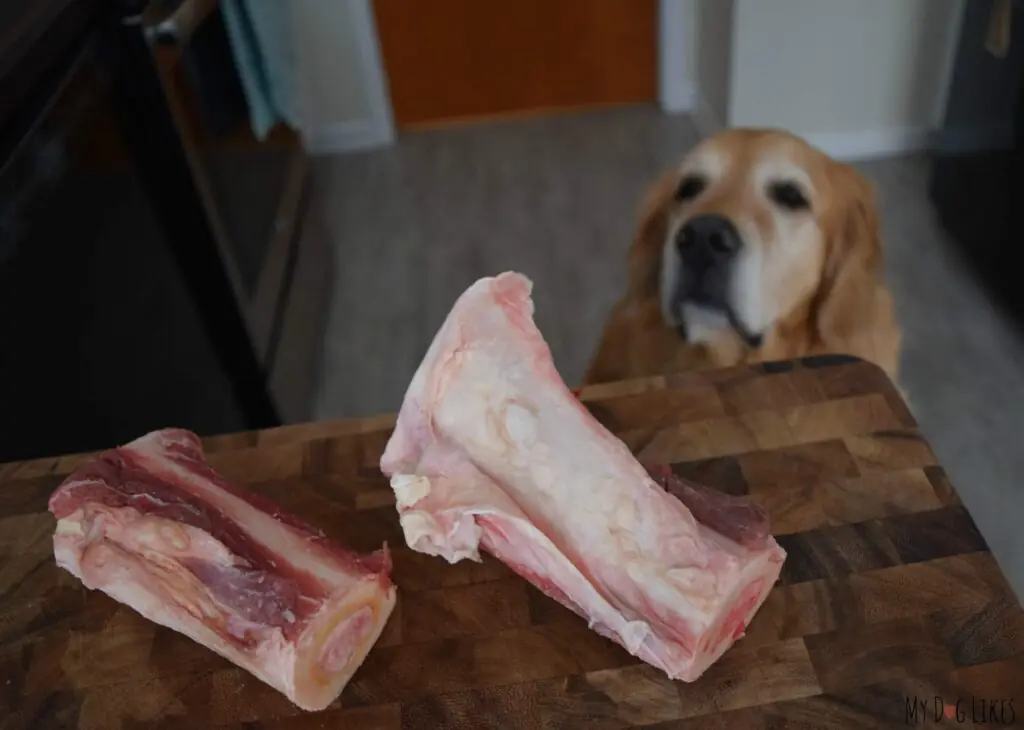
Cooked vs Raw Pork Bones
Cooked pork bones are where most trouble starts. Heat alters the bone’s structure, making it dry and prone to splintering. I never recommend giving cooked bones, no matter how large they seem. Even a thick bone can shatter under pressure once it has been roasted or boiled.
Raw pork bones may be less likely to shatter, but significant risks remain. They can still break into sharp or jagged chunks, potentially causing wounds or blockages. Bacterial contamination is also a real threat—raw bones left out can harbor dangerous pathogens, and I have seen dogs develop vomiting or severe diarrhea after gnawing on old bones.
Size matters more than people think. A large femur bone behaves differently from a small rib bone. Even then, a determined dog can reduce a large bone into dangerous pieces over time. No bone lasts forever.
What I Recommend Instead
I now recommend purpose-made chews that wear down slowly and predictably. I keep various types at my facility and select them based on each dog’s size and chewing style.
Supervision is key. Even with safer chews, I do not leave dogs unattended for long periods. I check on them every 10 to 15 minutes to see if they are actively chewing something. That habit came from experience, not theory.
It also helps to know your dog’s behavior. Some dogs gnaw patiently, while others try to break and swallow chunks. The second group is where most problems happen. If your dog falls into that category, I would avoid bones entirely.
To sum up, the core takeaway is this: Pork bones, whether cooked or raw, always pose some level of risk to dogs. Safer chew options and close supervision are better ways to protect your dog. It only takes one bad incident to understand why the risk isn’t worth it. a chew.