
I run a small indoor plant care service and do in-home consultations, and one question I hear more often than you might expect is about cats and ferns. I have walked into living rooms with ten or more plants, a curious cat on the shelf, and an owner who suddenly realizes they are no longer sure what is safe. I have dealt with this myself, too, juggling delicate plants and a stubborn cat who chews anything green. So I will speak from experience here, not theory.
My Experience With Maidenhair Ferns Around Cats
I have kept maidenhair ferns for years, both for clients and in my own space, and they are known for their soft, airy leaves that almost invite curiosity. Cats notice them quickly. The movement of the fronds alone can attract attention, especially in a quiet room where even a small draft makes the plant sway. I have seen cats bat at them like toys.
Here is the simple answer. Maidenhair ferns are not considered poisonous to cats. In practical terms, if a cat chews a few leaves, I do not expect toxic poisoning symptoms. That said, I have still seen mild stomach upset in a few cases, especially when a cat eats a larger amount or already has a sensitive gut.
A client last spring had two young cats that treated her fern like a snack bar. They were fine overall, but one of them threw up later that day. It was not serious, but it was enough to make her rethink placement. Plants can be safe and still cause problems in real life.
Why “Non-Toxic” Doesn’t Mean “No Risk”
There is a gap between what is labeled non-toxic and what actually happens in a home with active pets. I remind people that “non-toxic” usually means it will not cause severe poisoning, but it does not promise zero reaction. Cats are small animals, and even minor irritation can show up quickly. That is where confusion often starts.
When I am unsure or a client wants a second opinion, I sometimes point them toward resources like plant toxicity guide pages that break things down in plain terms and help them compare different species without getting lost in scientific names. It saves time and reduces panic. People feel better when they can cross-check what I say.
There are also non-chemical concerns. Soil can carry fertilizers, and I have seen cats dig into pots and ingest small amounts of treated soil. That can lead to symptoms that people wrongly blame on the plant itself. The plant gets the blame, but the real issue sits in the pot.
Another factor is quantity. A single nibble is very different from a cat repeatedly chewing the same plant over a week. I once tracked this for a client who insisted her cat “barely touched” the fern, but we counted damaged fronds and realized it was happening daily. Patterns matter more than one-time events.
How I Keep Ferns and Cats in the Same Space
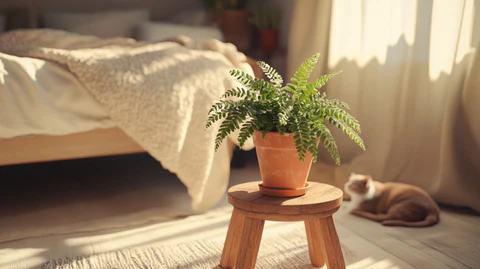
I do not believe you have to choose between plants and pets. I have built setups that allow both to coexist without constant stress. Placement is the first thing I adjust. Height matters more than people think. Even moving a plant up by 30 to 40 centimeters can reduce casual access.
Distraction helps too. Cats go after plants out of curiosity or boredom. If there is nothing else to engage them, the fern becomes entertainment. I usually suggest adding a small cat grass tray nearby. It gives them a safer option to chew and often redirects their focus within a few days.
I also pay attention to plant condition. A dry, crispy maidenhair fern sheds more and becomes easier to chew. A healthy, well-watered plant holds its shape better and is less tempting to eat. That may sound minor, but I have seen a clear difference in behavior between neglected and thriving plants.
For some homes, I recommend a simple barrier. Not a full enclosure, just a subtle deterrent like a decorative stand with a narrow base that makes it harder for a cat to jump directly onto the plant. It is not foolproof, but it reduces impulse interactions. Small changes add up.
Signs I Watch For After a Cat Nibbles a Fern
Even with non-toxic plants, I stay alert for certain signs. Vomiting is the most common one I see, and it usually happens within a few hours. It is often mild and resolves on its own, but I still tell clients to monitor closely. If it repeats, something else may be involved.
Loose stool can also show up, especially in younger cats. I have seen this in two separate homes where kittens had more sensitive digestion. In both cases, the issue cleared within a day after the plant was moved out of reach. Short-lived symptoms still matter.
Lethargy is less common, but I never ignore it. If a cat seems unusually quiet or stops eating, I advise contacting a vet. That goes beyond simple plant irritation. I have learned not to assume everything is plant-related, even when timing suggests otherwise.
Here is how I usually break it down for clients:
If symptoms are mild and pass quickly, I adjust the environment and keep watching. If symptoms last more than a day or get worse, I suggest a vet visit. That line has worked well over the years and keeps people from overreacting or underreacting.
I still keep maidenhair ferns in homes with cats. I just do it with intention. The plant is safe, but the situation needs some thought. Once that balance is in place, both the greenery and the pet can share the same space without constant worry.