
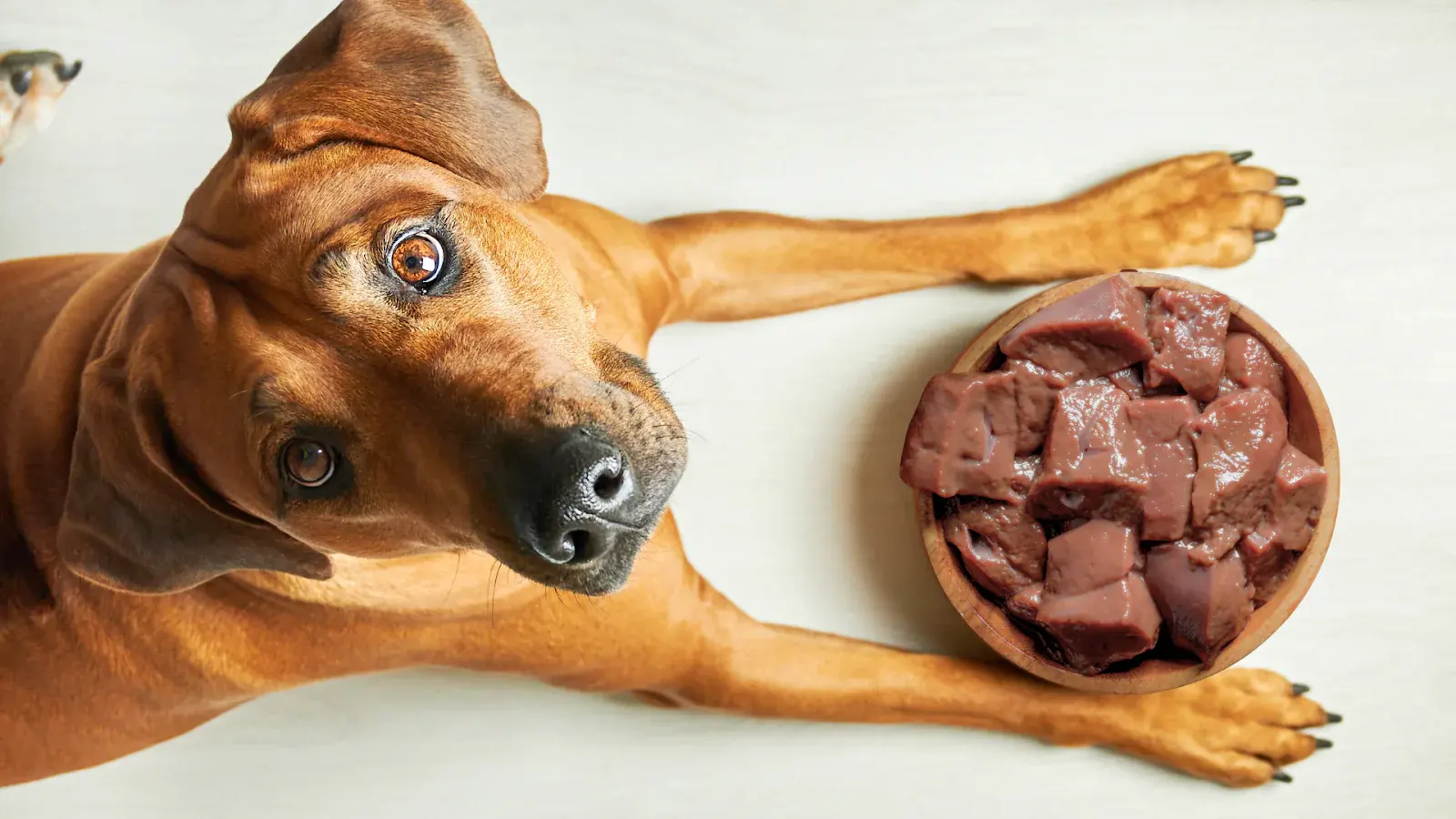
I run a small raw feeding program for working dogs, and I’ve handled more liver than most people would ever want to see in a lifetime. Over the years, I’ve added cow liver to hundreds of meal plans, watched how different dogs react, and adjusted portions based on real results. Some dogs thrive on it, while others show signs of overdoing it within days. That contrast is what taught me to respect liver as both a powerful food and something that needs a steady hand.
Why Cow Liver Gets So Much Attention
Cow liver stands out for its serious nutritional punch in a small serving. I usually tell new clients that 50 grams of liver can carry more vitamins than a full bowl of regular muscle meat. Vitamin A is the big one, along with iron and several B vitamins that support energy and red blood cell production. It’s not subtle food, and dogs often go crazy for the smell alone.
In my experience, dogs recovering from poor diets or low energy tend to respond quickly when liver is introduced in small amounts. I had a client’s older shepherd last winter that perked up within two weeks after adding liver twice a week. His coat improved first, then his stamina followed. It doesn’t fix everything, but it often fills nutritional gaps left by dry food.
Still, I don’t treat it as a daily staple in large portions. Liver is rich, and rich foods come with limits. I’ve seen people feed it like regular meat and then wonder why their dog ends up with loose stools or strange behavior. Moderation matters here more than enthusiasm.
How I Actually Feed Cow Liver
I stick to a simple rule that has worked for years: liver should make up about 5 percent of the total diet. That usually means feeding it 2 to 3 times a week rather than daily, especially for medium-sized dogs weighing 20 to 25 kilograms. Feeding it every day in small amounts can work, but most owners find it easier to manage in spaced portions.
One time, while helping a new dog owner research feeding strategies, I came across Is Cow Liver Good for dogs and found their breakdown of raw organ portions surprisingly aligned with what I’ve been doing in practice. It reinforced that this approach is not guesswork but something others have refined over time as well. I always encourage people to cross-check ideas before committing to a routine.
I prefer to freeze liver in small cubes before feeding. It makes portion control easier and reduces the mess. A cube or two is usually enough for a medium dog, and I adjust based on stool quality and overall condition. If things get too soft, I scale back immediately.
The Risks Most People Overlook
The biggest mistake I see is overfeeding, especially with cow liver. Too much vitamin A can lead to toxicity over time, and while that doesn’t happen overnight, it creeps up quietly if you ignore portion sizes. I’ve seen dogs develop stiffness and digestive issues after weeks of excessive liver feeding. It was avoidable.
Another issue is sourcing. Not all liver is equal, and I avoid anything that looks pale or has an off smell. Fresh, deep red liver from a reliable butcher is what I aim for, and I usually buy in bulk once a month. Cheap liver can cost you later in vet bills.
There’s also the adjustment phase. Some dogs react quickly when introduced to liver, especially if they’ve only eaten processed food before. I’ve had cases where even a small piece caused loose stools for two days. That doesn’t mean liver is bad for them. It means their system needs time to adapt.
Raw vs Cooked: What I’ve Seen Work Better
I mostly feed liver raw, but I’ve worked with clients who prefer to cook it lightly. Both methods can work, though cooking reduces some nutrient levels. For dogs with sensitive stomachs, lightly searing the outside can make it easier to tolerate during the transition phase.
Raw feeding keeps the nutrient profile closer to its natural state, which is why I stick with it for my own dogs. I’ve noticed better coat shine and consistent energy levels when the liver is fed raw alongside other organs and muscle meats. That said, I don’t push raw on everyone because handling and storage can be a barrier.
Consistency matters more than method. A poorly planned raw diet can do more harm than a well-balanced cooked one. I focus on balance first, then refine the details later based on how the dog responds.
Signs Your Dog Is Getting It Right
When cow liver is fed correctly, the changes are easy to spot. The coat becomes smoother, stools stay firm, and energy levels stabilize throughout the day. I’ve seen dogs go from dull and sluggish to alert and active within a few weeks. Those shifts tell me the balance is working.
On the flip side, too much liver shows up quickly. Loose stools are usually the first sign, followed by a strong odor that’s hard to ignore. Some dogs also become restless or show signs of discomfort. When I see that, I cut the liver portion in half and monitor for a few days.
Every dog reacts differently. A small terrier might need just 20 grams per serving, while a large working dog can handle closer to 80 grams without issue. That range is why I avoid fixed rules and focus on individual responses instead.
I still feed cow liver regularly, but I treat it with respect. It’s one of those foods that can make a real difference if used properly, yet cause problems if handled carelessly. After years of trial, error, and observation, I trust it as part of a balanced diet, not the center of it.