
I work as a small-animal veterinarian in a mixed clinic where I regularly see both rabbits and cats brought in by the same households. One question I occasionally hear from curious pet owners is whether a rabbit and a cat can mate or produce offspring together. The short answer I give in the clinic is always the same, but the reasoning behind it takes a bit more explaining. I have handled enough cases involving both species to understand why this idea comes up and why it is biologically impossible.
Where This Question Comes From
Most people who ask this are not being careless; they are usually observing behavior rather than biology. I remember a customer from a small rural setup who kept both animals in a shared yard space and noticed them interacting closely without aggression. That kind of observation can easily lead to assumptions about species compatibility. Curiosity is natural, especially when animals appear calm around each other.
In my experience, this question often arises from a misunderstanding of animal behavior rather than of reproduction itself. Rabbits are social and can tolerate calm animals nearby, while cats can sometimes appear curious rather than immediately predatory. That visual calmness can lead owners to think that deeper biological compatibility exists. It does not.
Sometimes people even assume that because animals are mammals and similar in size, mating might be possible. I’ve had to gently correct this idea many times in consultation rooms where owners are trying to make sense of what they see at home. The truth is far more rigid than behavior suggests. Nature sets strict reproductive boundaries between species.
Biology of Cats and Rabbits
Cats belong to the Felidae family, while rabbits belong to the Lagomorpha order, and they are separated by millions of years of evolutionary divergence. Their reproductive systems are fundamentally incompatible at a genetic level. Even if physical interaction occurs, fertilization cannot happen because their chromosomes do not match in any meaningful way. This is a basic biological barrier that cannot be crossed.
In my clinic work, I often explain that successful mating requires not just physical interaction but also genetic alignment and compatible reproductive cycles. Cats are induced ovulators, meaning ovulation is triggered by mating activity, while rabbits have a different reproductive rhythm altogether. These systems do not synchronize in any natural or artificial setting. The mismatch is absolute, not partial.
People sometimes ask whether hybrid animals could exist if they are raised together from a young age. I always clarify that upbringing has no influence on genetic compatibility. A rabbit raised beside a cat will not develop any reproductive connection with it. Behavior may adapt, but biology remains fixed.
For those looking for reliable animal welfare information, I often point them toward resources like ASPCA animal care resources, where general pet safety and species behavior are explained in clear terms. I have used similar guidance material with pet owners who needed reassurance after seeing unusual interactions at home. It helps ground expectations in science rather than assumptions. The information there aligns closely with what I observe daily in clinical practice.
What Actually Happens Between Them
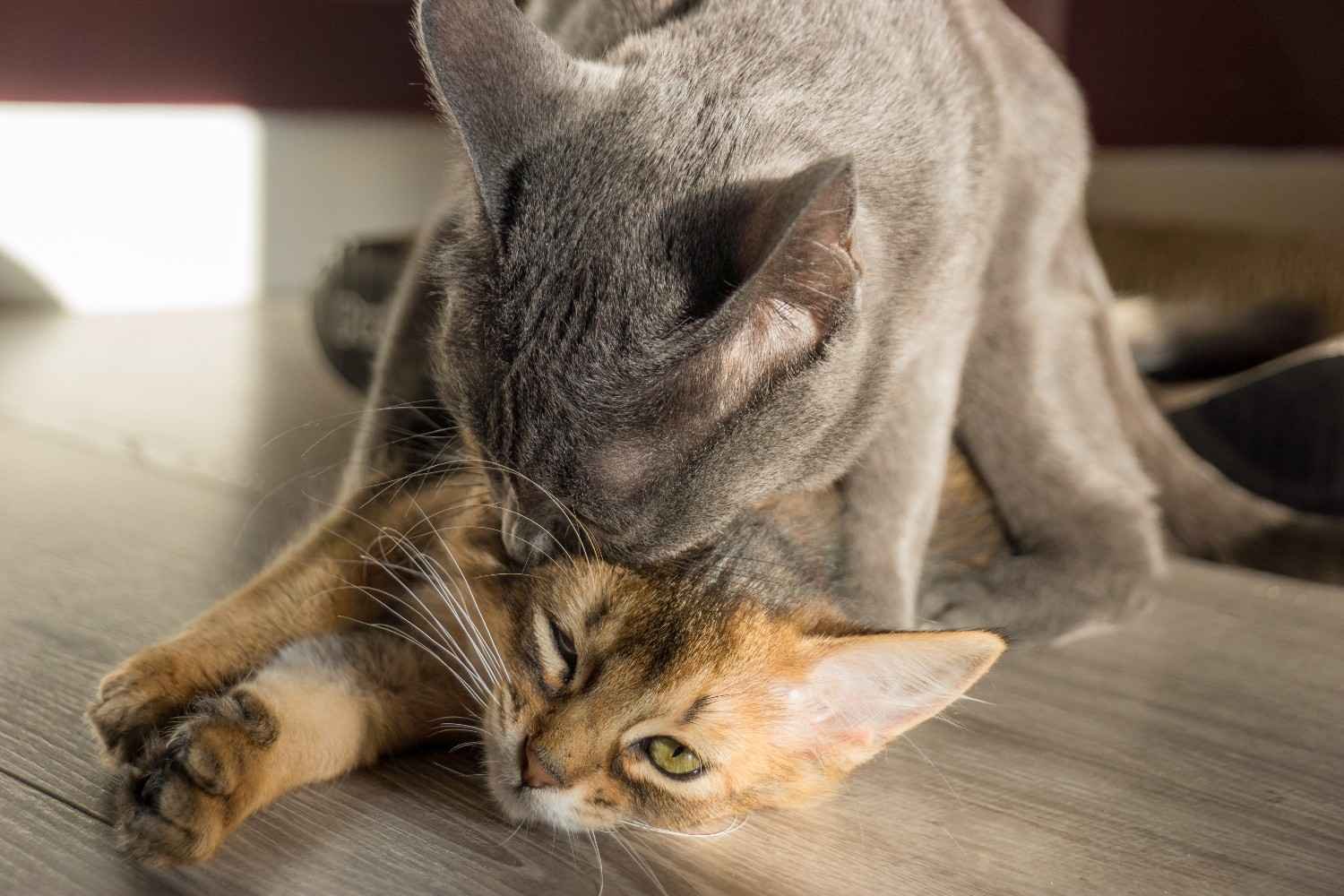
When rabbits and cats are kept in the same environment, the interaction is behavioral, not reproductive. I have seen cases where a cat shows hunting instinct while a rabbit responds with freezing or hiding behavior. This is an instinctive survival response, not social bonding in the reproductive sense. Misreading these signals can lead to risky assumptions about safety.
One case I remember involved a household that allowed free roaming between a young rabbit and a calm indoor cat. The owners thought the animals were “friends” because they occasionally lay near each other. However, stress signs in the rabbit told a different story that the owners had missed entirely. The rabbit’s stillness was fear-based, not comfort-based.
It is also important to understand that, in the wild, cats are natural predators of small mammals, including rabbits. Even when domesticated, that instinct does not disappear completely. This makes unsupervised interaction risky regardless of temperament. I always advise controlled environments when both animals are present in the same home.
How I Advise Pet Owners
When I speak with pet owners, I focus less on debunking myths and more on preventing misunderstandings that could lead to harm. I often suggest separate living spaces for rabbits and cats, especially when the rabbit is young or small. A safe enclosure for the rabbit is not optional in multi-pet homes. It is a practical necessity.
I also emphasize careful reading of body language. A relaxed cat does not guarantee a relaxed rabbit, and vice versa. One under-8-word reminder I often give is simple: boundaries protect both animals. That sentence usually stays with owners longer than technical explanations.
In more complex households, I have helped design gradual introduction routines, but even then, I maintain strict supervision guidelines. A slow introduction does not change biological reality; it only changes behavioral tolerance. Owners sometimes expect harmony to mean compatibility, but those are different things. Understanding that difference prevents many problems.
There is also an emotional aspect I encounter frequently. People want their pets to get along like family members, which is understandable. However, forcing interspecies relationships can create stress for both animals involved. My role is often to redirect that goodwill into safer care practices rather than unrealistic expectations.
The idea that a rabbit and a cat could mate is ultimately a misunderstanding of how species boundaries work. I’ve seen how quickly that misconception fades once owners understand the biological separation involved. What remains more important is how to safely manage their coexistence in shared homes. That is where real responsibility begins.