
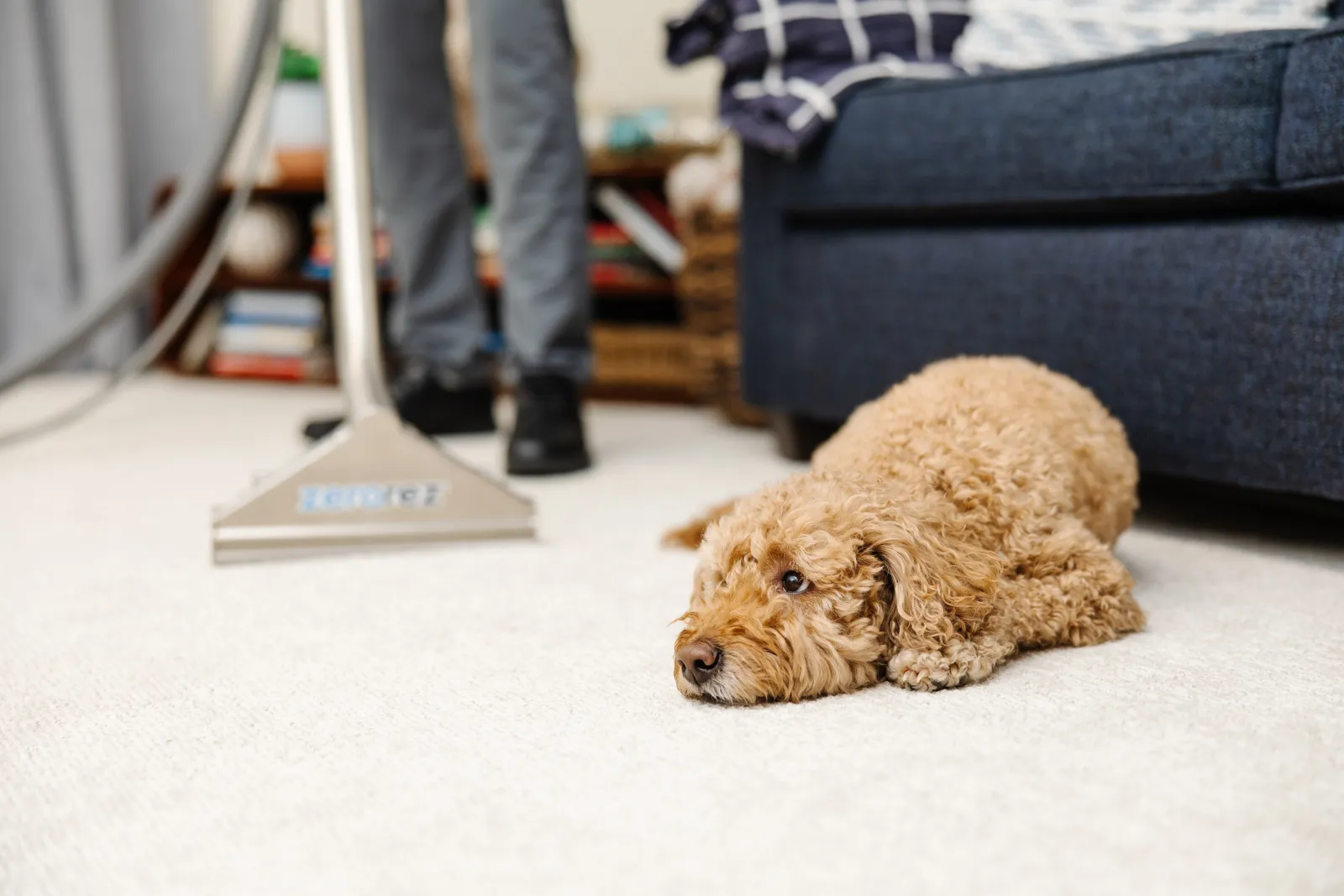
I run a small carpet-cleaning business out of a van, and a good chunk of my calls come from pet owners dealing with accidents they didn’t expect. Dog puke is one of the trickier ones, not because it looks terrible at first, but because it can settle deep into fibers if you hesitate. I have walked into homes where the stain was fresh and easy to remove, and others where it had baked into the carpet for days. Over time, I learned what works fast and what quietly makes things worse.
What I Do in the First 10 Minutes Matters Most
If I get to a job early, the difference is obvious. Fresh vomit is still sitting on top of the carpet fibers, which means I can remove most of it without forcing it deeper. I always start by scooping up as much solid material as possible using a dull edge, something like a plastic scraper. Paper towels come next, but I press, I do not rub. Rubbing spreads the mess and pushes it into the backing.
Speed matters here. I have seen people wait an hour thinking it will dry and get easier to clean, but that delay lets acids in the vomit start reacting with the carpet dyes. Some carpets handle that better than others, especially synthetic ones, but natural fibers can discolor fast. A customer last spring waited about two hours, and the spot turned faintly yellow even after I cleaned it thoroughly.
Warm water helps loosen the residue. I use a small amount, about half a cup, and blot again. Too much water is a mistake. It can soak through to the padding underneath, and once that happens, you are dealing with an odor that keeps coming back even after the surface looks clean.
Cleaning Solutions I Trust and Ones I Avoid
I keep my cleaning kit simple because I have tested too many products that promise quick fixes and leave behind sticky residue. My go-to mix is mild dish soap with warm water, about one teaspoon in a cup. It breaks down the organic material without damaging most carpet fibers. Harsh chemicals can bleach or stiffen the area, and I have had to fix more damage from overuse of cleaners than from the original stain itself.
There are times when people call me after trying something random they found online, and it usually complicates the job. One homeowner told me they followed advice from a carpet cleaning service blog and used vinegar straight from the bottle, which left a sharp smell that lingered for days. Vinegar can help, but it needs to be diluted properly, or it swaps one problem for another.
Enzyme cleaners have their place. I use them when the odor is stubborn or when the stain has been sitting for more than a day. These cleaners break down proteins at a deeper level, something soap alone cannot always do. Still, I give them time to work, sometimes 15 to 20 minutes, instead of rushing the process.
Dealing with Dried or Set-In Stains
Older stains are a different challenge. The texture changes, and the color often sets into the fibers. I start by lightly dampening the area to soften the residue before applying any cleaner. Jumping straight to scrubbing can fray the carpet, especially if it is a loop pile style.
I learned this the hard way early in my work. I scrubbed a dried spot too aggressively, and the carpet looked worse after cleaning because the fibers had fuzzed out. Now I take it slower, using a soft brush in small circles. It takes a few extra minutes, but the finish looks cleaner and more even.
Sometimes, a stain does not fully disappear. That is reality. If the vomit sat for more than a day, there is a chance the dye has already been affected. In those cases, I focus on removing odor and residue so the area feels clean, even if a faint shadow remains.
Getting Rid of the Smell for Good
The smell is what most people notice after the stain appears to be gone. It can creep back after a day or two if the padding underneath is still holding moisture or residue. I use a combination of blotting and airflow to completely dry the area. A small fan running for two to three hours makes a big difference.
Baking soda is something I still use. I sprinkle a light layer after cleaning and let it sit overnight, then vacuum it up the next day. It helps absorb lingering odors without adding moisture. It is simple, and it works more often than not.
Deep odors sometimes require extraction. That means using a machine to pull out moisture from below the surface. I carry one in my van, but for homeowners, even a rented unit can help if used carefully. The key is not over-wetting the area again during this step.
What I Tell Dog Owners to Do Next Time
I always leave clients with a few practical habits that make the next cleanup easier. Keeping a small kit nearby saves time. Mine would include paper towels, a mild soap, and a clean cloth. That alone handles most fresh incidents before they turn into bigger problems.
Quick action beats perfect technique. Even a basic cleanup done in the first five minutes prevents more serious damage. I have seen people hesitate because they are unsure what product to use, and that delay often matters more than the choice of cleaner.
Every carpet reacts a bit differently. Synthetic fibers are forgiving, while wool carpets need a gentler touch and less moisture. If you are unsure, test a small hidden area before applying anything across the stain.
I have cleaned hundreds of these spots over the years, and the pattern is always the same. The faster you act and the simpler you keep it, the better the result will look and smell after everything dries.