
I work as a mobile dog groomer, and over the years, I’ve seen a few scary situations where a dog ended up sick after eating something a human wouldn’t think twice about. Onion is one of those foods that keeps showing up in conversations with worried pet owners.
Most people are surprised when I tell them even a small amount can be risky for dogs. I’ve had more than a few clients call me after their dog got into kitchen scraps containing onion.
What makes it tricky is that an onion doesn’t always cause immediate signs. Sometimes everything looks fine at first, and that delay is what worries me the most in real cases I’ve handled. I’ve learned to treat onion exposure as serious right away, not something to wait and see about. That mindset has helped me guide owners through situations before they became emergencies.
Why is an onion dangerous for dogs
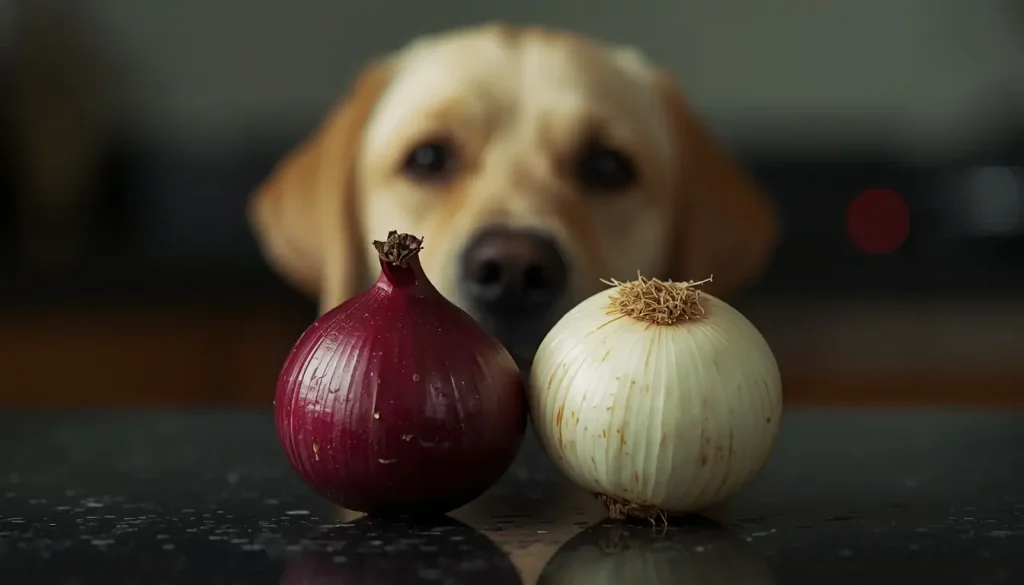
Onions belong to a group of foods that can damage a dog’s red blood cells. I explain it to pet owners in simple terms because the science can get complicated fast. Even small amounts, especially if eaten regularly, can accumulate and cause harm over time. Dogs process certain compounds in onions differently than humans, which makes them toxic for them in a way we don’t experience ourselves.
In my experience, cooked onion is just as risky as raw onion. I’ve seen people assume that cooking removes the danger, but that is not the case at all. Powdered onion used for seasoning is another hidden source that is often overlooked in home-cooked meals and leftovers. I’ve had cases where a dog ate food scraps from the dinner table and needed veterinary attention within a day or two.
What I’ve noticed most is that the risk depends on quantity and frequency, but there is no truly “safe” amount that I feel comfortable recommending. Some dogs are more sensitive than others, and I never try to guess where that line might be. It’s safer to assume complete avoidance rather than testing the limits. That’s the advice I consistently give in every grooming visit where food safety comes up.
What I see when dogs eat onions
When I get a call about a dog that might have eaten an onion, the concern usually starts with mild signs that don’t look alarming at first. I remember a customer last spring whose Labrador seemed slightly tired and wasn’t eating well after getting into leftover pasta. The pasta had onion mixed into the sauce, and they didn’t realize it until later. That kind of situation is more common than people think.
In cases like that, I always recommend contacting a veterinary service immediately rather than waiting for symptoms to worsen. Many pet owners I work with rely on local clinics or online guidance services, and I often point them toward a pet poison control service when they are unsure what steps to take next. I’ve seen how quickly early advice can prevent complications. Acting early has saved a few dogs I’ve indirectly been involved with through client follow-ups.
The pattern I’ve observed is that owners usually notice something is off only after several hours. The dog may become unusually quiet or show less interest in food and play. Sometimes the symptoms are subtle enough to be mistaken for a mild stomach issue. That delay is what makes onion exposure particularly dangerous in real-world situations.
Symptoms and how they develop
From what I’ve seen, the first signs can include weakness, reduced appetite, and mild lethargy. These symptoms don’t always appear immediately, which is why onion exposure is often underestimated at first. In more serious cases, I’ve observed pale gums and increased breathing rate, which are signs that the blood is not carrying oxygen properly. That stage is when veterinary care becomes urgent.
There was a small terrier I once helped a client with during a grooming session, who had been exposed to onions in a homemade meal the night before. The dog seemed fine in the morning, but became noticeably sluggish by evening. The owner initially thought it was just fatigue, but the situation escalated enough that they visited a clinic the same day. That experience stuck with me because the change happened gradually but clearly.
In some cases, symptoms may take 1 to 3 days to fully appear. I always tell owners not to rely on immediate behavior as a safety signal. Dogs can mask discomfort until their body can no longer compensate. By the time obvious signs appear, the internal effects may already be progressing.
Not every dog reacts the same way, which is something I emphasize a lot. Size, breed, and general health all play a role in how severe the reaction becomes. Even a small exposure can be more serious for a smaller dog compared to a larger one. That unpredictability is part of why caution is so important.
Prevention and safer food choices
The easiest way I help owners avoid problems is by focusing on prevention in everyday routines. I always suggest keeping human food out of reach, especially during cooking or cleanup. Onion often hides in sauces, gravies, and leftovers that people don’t think twice about sharing. That is where most accidental exposures happen in homes I’ve visited.
Over time, I’ve noticed that dogs respond well to consistent feeding schedules, which reduces the temptation to share table scraps. Simple dog-safe foods like plain cooked chicken or carrots are often used as treats instead of anything from the kitchen table. I’ve seen owners switch to this approach and immediately reduce accidental ingestion incidents. It becomes a habit that protects the dog without much effort.
I also remind people to be careful with pre-packaged foods. Even small seasoning blends can contain onion powder, which is easy to miss on ingredient labels. I’ve had conversations with pet owners who were genuinely shocked to learn how common it is in processed food. Awareness is usually the biggest step toward prevention.
In my daily work, I try to reinforce that dogs don’t need variety from human meals to be healthy. They do best with stable diets that avoid risky ingredients altogether. Once owners understand that, it becomes much easier to keep situations like onion exposure from happening in the first place. Prevention always feels simpler than dealing with treatment afterward.
Every time I think back on cases involving onion exposure, the pattern is the same: it usually starts with something small and unintentional. A bit of leftover food, a shared plate, or a missed ingredient label is all it takes. What matters most is catching it early and treating it seriously, rather than brushing it off as harmless. That awareness is what keeps dogs safe in the long run.