
A Veterinarian’s Real-World Experience
I’m a small-animal veterinarian who has seen more than a few cats arrive at the clinic smelling faintly of motor oil, whiskers singed, or paws blistered from contact with hot engine parts.
Many of those situations started the same way: a frightened cat crawled into a warm engine bay for shelter, and someone either tried to pull it out the wrong way or started the car without realizing the cat was there.
I’ve helped owners, neighbors, and rescue groups with this exact problem more times than I can count, and the same principles keep proving themselves.
Step One: Do Not Start the Car
The first thing I always stress is simple: don’t start the car. If there’s even a chance a cat may be in the engine compartment, leave the ignition off. I’ve treated cats whose tails were partially amputated by belts and others with severe friction wounds because the engine was turned on “just to move the car a little.”
Even a few seconds can cause catastrophic injury. If the car were recently driven, let it cool. Hot metal and exhaust parts can burn both you and the cat, and a cat in pain will wedge itself deeper.
Open the Hood Calmly and Carefully
Opening the hood needs a bit of finesse. I don’t fling it open suddenly. I crack it first and give the cat an avenue to see light and hear my voice without a loud metallic snap that sends it scrambling farther inside. In my experience, most cats in engines aren’t aggressive; they’re terrified.
A soft voice travels better than grabbing hands. I’ve had good luck tapping gently on the fender or the hood while speaking, but I avoid slamming or blasting the horn. Sudden noise often makes them burrow into places you can’t reach.
Use Food and Patience as Your Primary Tools
Food is often your best tool. The smell of tuna, sardines, or even warmed wet food placed on the ground near the front of the car has lured many stubborn stowaways out for me.
One winter morning, a neighbor called because he heard meowing but couldn’t see anything. We set a bowl of food a little distance from the bumper and backed away. Within minutes, a greasy adolescent cat unfolded itself from the wheel well, paused to assess us, and headed straight for the food. No nets, no chasing, just patience.
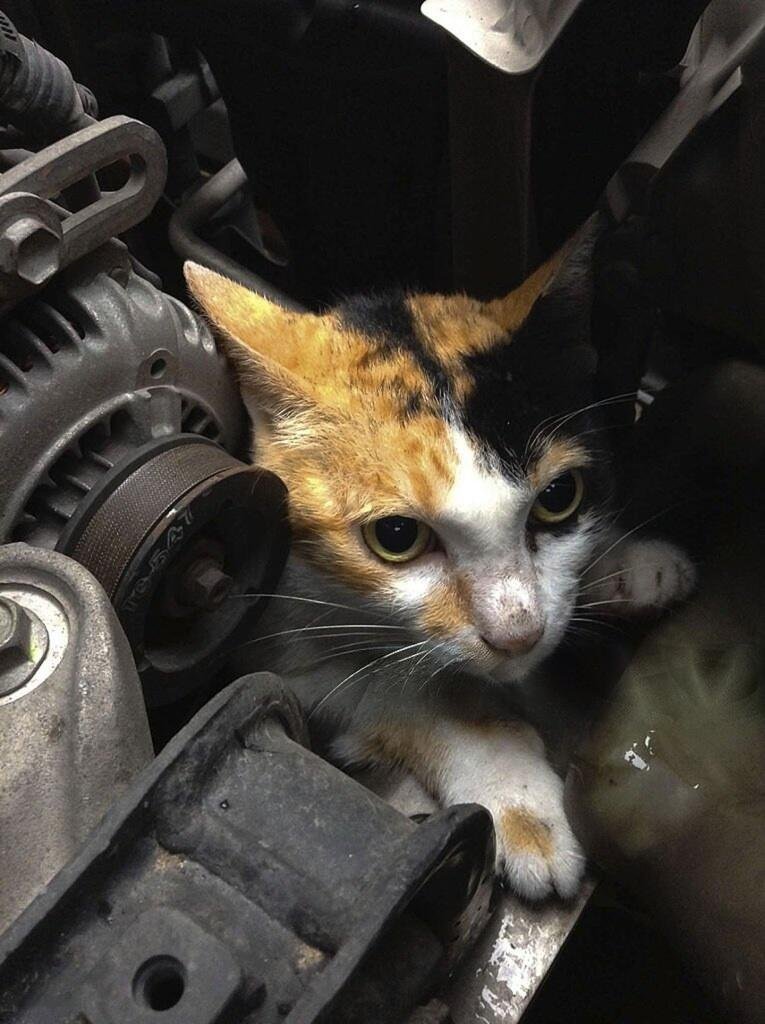
When the Cat Is Hidden Deep Inside
Not every case is that straightforward. A rescue volunteer I work with brought me a kitten that had crawled deep behind the firewall and refused to move. Crawling under the car helped us pinpoint the source of the sound.
We removed a plastic splash shield to create a lower exit path, avoiding the need to reach unquestioningly from above. The cat eventually dropped down and shot out the back of the car like a furry missile. The key was creating escape routes, not blocking them.
What You Should Never Do
There are also things I strongly advise against because I’ve seen the consequences firsthand. People sometimes spray water into the engine bay or poke around with tools, assuming the cat will “just run out.” High-pressure water can cause hypothermia in young or thin cats and force them deeper into narrow spaces.
Reaching in with bare hands is another common mistake. Engine compartments have sharp edges, belts, and pulleys, and a terrified cat can bite deeply. I’ve stitched up more than one thumb because someone thought they could grab a cat by the scruff in a tangle of hoses.
When to Call for Professional Help
Gloves, a towel, and good lighting help if you do need to remove a stuck cat physically, but I’ll be candid: if the cat is wedged or you can’t clearly see what you’re grabbing, call animal control or a roadside rescue service that handles animals.
As a veterinarian, I’d much rather see a cat a little stressed from waiting than seriously injured because someone forced the issue. Two companies and animal control officers I’ve worked with are surprisingly experienced at partially removing panels or safely lifting a vehicle enough to access the space without harming the animal.
After the Cat Is Out: Check for Injuries
Once the cat is out, my professional brain kicks in automatically. Even if a cat “looks fine,” I’ve learned not to trust appearances entirely. Burns can develop blistering later, internal injuries don’t always show immediately, and inhaled fumes irritate you, which you can’t see. If the engine was started or the cat was entangled at any point, I recommend an exam. I’ve treated hidden muscle damage and torn claws that owners overlooked until the cat stopped eating that night.
Prevention: The Simple Habit That Saves Lives
A quick word about prevention drawn from years of winter calls: outdoor and community cats love warm engines. On cold mornings, I make a habit of rapping on the hood or briefly lifting it before starting my own car. It looks a little odd in a parking lot, but the “thump-the-hood” habit has probably saved more cats than any gadget. In neighborhoods with many strays, I’ve seen people leave a small shelter box out back, which gives cats a warmer alternative than your engine bay.
Final Professional Advice
My overall advice is practical and shaped by what I’ve seen in exam rooms and driveways alike: stay calm, don’t start the car, create an obvious escape route, tempt rather than chase, and avoid grabbing unthinkingly.
And if your gut says the situation is getting risky, involve people whose daily work includes safely removing animals from tight spaces. That choice has spared both cats and car owners a great deal of avoidable pain.