
As a mobile cat groomer for seven years, I have visited various towns and seen many cats up close. Food questions arise more often than grooming ones, especially from owners trying homemade diets or sharing table scraps. Peas consistently confuse them. I see peas in kibble, mixed with wet food, or offered as ‘healthy treats.’
Why peas show up in cat food conversations
Peas are not new in pet diets. I first started noticing them heavily about five years ago, when some commercial cat foods began listing peas prominently on their ingredient lists. Owners started asking me if this meant cats should eat them regularly. I remember one household where a customer had switched three cats to a pea-heavy formula within a span of two months, thinking it was closer to a natural diet.
Cats are obligate carnivores, meaning their bodies are designed primarily for meat-based nutrition. That is not much debated among the professionals I have worked with, though people still experiment with plant ingredients. Peas themselves are not toxic in the way onions or garlic are, but that does not automatically make them beneficial for cats either.
I handle 15 to 20 cats weekly in peak seasons, and dietary confusion is common. Peas are often used as fillers or fiber, not as essential ingredients for cats. Distinguishing these matters, especially with sudden diet changes.
What I see when cats actually eat peas
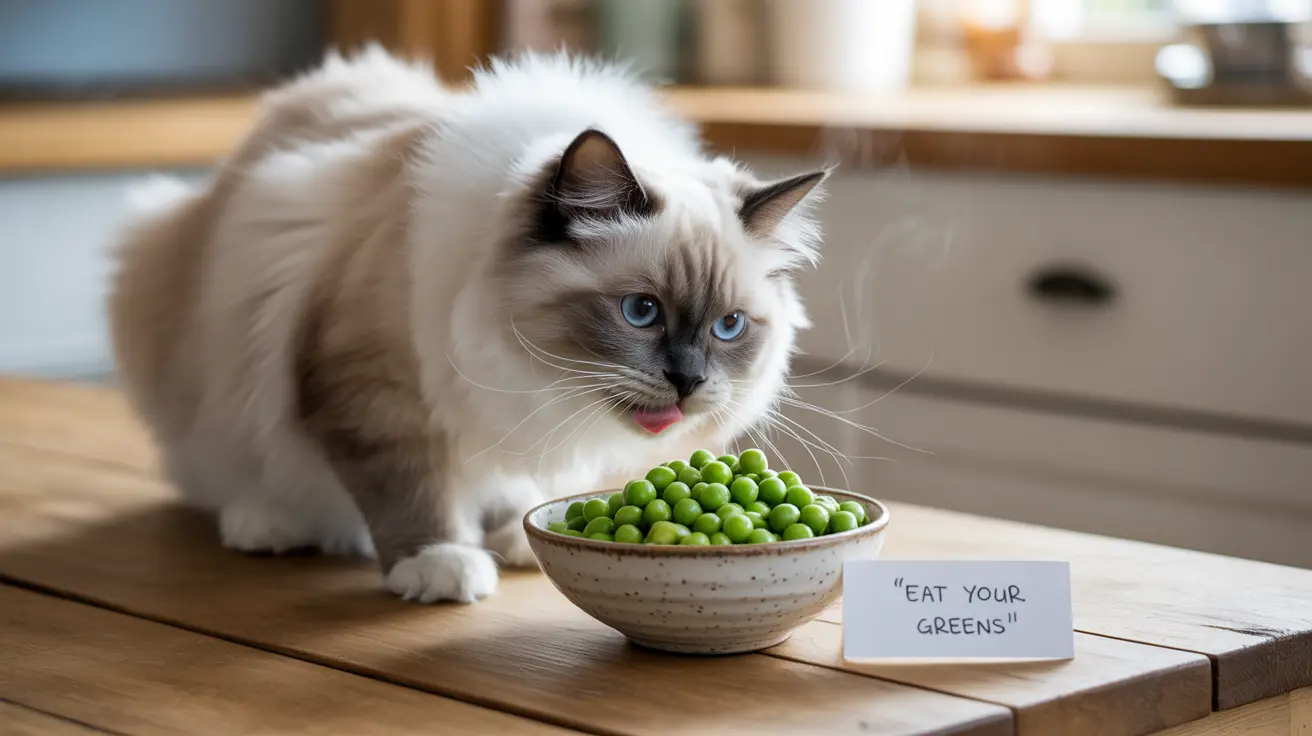
In real handling situations, I rarely see cats eat plain peas on their own unless they are mixed into something else. A customer last spring had a young tabby that kept picking peas out of a bowl of mixed vegetables left on the counter. The cat showed mild stomach upset later that day, though it was unclear whether the peas were the main cause or just part of a larger dietary mismatch.
Some owners, curious after online forums, try small home experiments. During a grooming visit, I saw a cat offered mashed peas with chicken broth. The cat sniffed, ate a bit, and lost interest. No immediate reaction followed, as seen in most cases.
If owners feel uncertain about reactions or symptoms after introducing new foods, I usually suggest checking reliable veterinary resources, like Are Peas Toxic to Cats? “, before making assumptions. I have seen situations where people misread normal behavior as a food reaction, and other cases where mild symptoms were ignored for too long. Having a reference point helps reduce that confusion.
From what I have observed, peas do not cause sudden toxic reactions in healthy cats. The issues tend to be more subtle, such as loose stools or reduced appetite, when their diet shifts too quickly. I once followed up with a household where four indoor cats were given pea-heavy kibble for nearly a month, and two of them showed inconsistent digestion during that period.
When peas are fine and when they are not
Peas in small amounts are generally not harmful for most cats I have worked with. That is based on observation rather than laboratory testing. The difference shows up in quantity and diet balance. A few peas hidden in commercial food rarely cause noticeable problems, but when peas are a major ingredient, they can shift the nutritional balance away from what cats actually require.
Cats on plant-heavy diets sometimes develop dull coats or inconsistent energy. One Persian I groomed for two years had a worse coat after switching to a pea-heavy diet. The problem improved after the owner adjusted the food.
There is also the issue of individual sensitivity. Some cats tolerate peas without any visible signs, while others experience mild digestive upset even to small amounts. I have learned not to assume a uniform response. A 4-kilogram cat and a 6-kilogram cat can react differently to the same bowl of food.
Peas also interact with the rest of the diet. If protein is low, adding more plants doesn’t help. In multi-cat homes mixing foods, I’ve seen inconsistent eating patterns as a result.
Some cats ignore peas altogether. One stray-turned-house cat in my care always ate meat and left peas behind, regardless of preparation. That behavior persisted for months.
Peas are not toxic to cats in the way truly harmful foods are; rather, problems stem from misunderstanding their dietary role. Owners often mistake human or canine diets for feline needs, but even small nutritional shifts with ingredients like peas can quietly affect a cat’s health.