
I run a small home-based cat-grooming setup, and over the years I’ve handled everything from thick-coated Persians to sleek rescues that shed little. Every now and then, though, someone walks in carrying a cat with a coat that stops me mid-sentence. It looks like soft waves or tight curls, almost like a sheep’s fleece in miniature. That’s when people usually ask me the same question. Are those curls real?
Curly-Coated Cats Do Exist
They do. I remember the first time I saw one up close, a young cat brought in by a customer last winter who said she thought something was wrong with its fur. The coat wasn’t damaged at all; it was naturally curled, especially along the back and tail. Breeds like the Devon Rex and Cornish Rex are among the best-known, and they carry a gene that alters the structure of the hair shaft.
These cats don’t have the same three-layer coat as most cats. Instead, their fur is softer, thinner, and sometimes patchy, especially on the belly or chest. I’ve worked on at least a dozen of these cats over the past two years, and no two coats felt exactly the same under my hands. Some were tight curls, almost like crushed velvet, while others were loose waves that flattened easily.
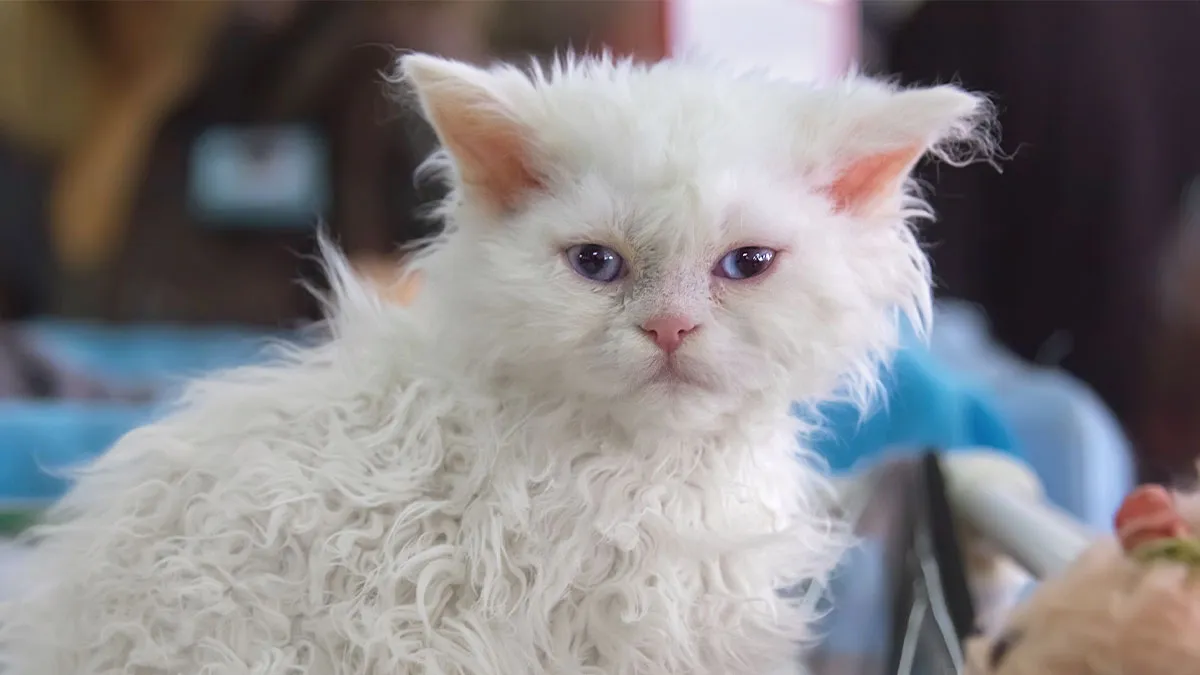
There are also less common curly breeds like the Selkirk Rex, which actually has a fuller coat that feels closer to a standard cat, but still curls. That one surprises people the most. It looks like a plush toy. I once spent nearly an hour just brushing one gently because the owner was nervous about damaging the curls.
How the Curly Coat Changes Care
The biggest mistake I see is people treating these cats like long-haired breeds. That doesn’t work. For curly-coated cats, use a wide-tooth comb or very soft brush only once or twice a week. Avoid vigorous brushing, as it can damage the curls. Instead, use gentle, short strokes, and stop if resistance is felt. I usually tell owners to focus on careful maintenance—removing debris and checking for mats—rather than regular full grooming sessions.
I’ve had a few clients who learned the hard way. One customer last spring brushed her Devon Rex daily with a firm brush, only to end up with a coat that looked flat and uneven. After a few weeks of adjusting her routine and switching to a softer method, the curls began to return slowly. It takes patience.
If someone is unsure where to start, I sometimes suggest they check a resource like Are There Cats with Curly Hair to get a general sense of grooming tools and routines before they experiment on their own. That kind of baseline helps avoid overhandling the coat. From there, it becomes a matter of observing how the individual cat responds.
Bathing is another area where people get confused. These cats can get oily more quickly because their coats don’t distribute natural oils as well. I’ve bathed some every three to four weeks, while others barely needed it twice a year. You have to read the coat. There isn’t a fixed schedule.
Temperament and Personality in Curly Breeds
People expect the coat to be the main difference, but behavior is just as noticeable. Most curly-coated cats I’ve handled have been unusually social. They stay engaged during grooming instead of trying to bolt after five minutes. That alone makes my job easier.
Devon Rexes tend to be energetic. One I groom regularly climbs onto my shoulder every single visit and stays there like a parrot. It’s become routine. In contrast, the Selkirk Rex cats I’ve seen are calmer and heavier in build, often content to sit still for longer sessions.
There’s a common belief that these cats are hypoallergenic. That’s not exactly true. Some people react less to them, likely because of the coat type and reduced shedding, but I’ve seen clients still have mild reactions after extended contact. It varies too much to make any promises.
What It’s Like Living With One
Owners usually mention the same few things after a couple of months. The coat draws visitors’ attention, and people always want to touch it. That can be stressful for the cat if it’s not used to handling, so I often suggest setting boundaries early.
Maintenance is simpler in some ways. There’s less loose hair on furniture, and shedding is noticeably reduced in many cases. However, for skin care, regularly check for dryness or irritation. If you see signs of redness or flakes, reduce grooming or try a vet-recommended cat-safe moisturizing lotion. Don’t assume less fur means less care overall—feel the skin and coat weekly to catch problems early.
Food and environment also play a role. I’ve noticed that diet changes can affect how defined the curls look, especially in younger cats. It’s subtle, but over several grooming sessions, I’ve seen coats shift from slightly limp to more textured after adjustments.
They’re different, but not fragile. That’s something I often remind people. A curly coat doesn’t mean the cat needs constant intervention. In fact, doing less is often the better approach once you understand how the coat behaves.
After years of working with all kinds of cats, these are the ones that still catch my attention every time they walk through the door. The curls aren’t just a novelty. They change how you interact with the animal in small, practical ways that add up over time.