
I run a small boarding and daycare setup on the edge of a rural area, and over the years, I have heard plenty of stories about eagles swooping down and taking dogs. Most of the time, these stories come from worried owners who saw a large bird overhead and imagined the worst. I used to brush it off completely. Now I take a more balanced view, because while it is rare, there are situations where concern is not entirely misplaced.
What Eagles Actually Hunt in the Wild
Eagles are powerful but practical hunters. From my experience and talks with local wildlife, their diet is mostly fish, small mammals, and sometimes birds. Rabbits, rodents, and fish account for most of their prey.
Prey size matters. An eagle is strong but cannot carry heavy animals far. I’ve seen them circle fields, watching for movement in the grass and ignoring large, hard-to-handle targets. They’re efficient, not reckless.
Dogs do not fit neatly into their usual prey category. Even small dogs move differently from wild prey, and they tend to stay closer to people or structures. That alone reduces the chances of an eagle targeting them in most everyday situations.
When Small Dogs Might Be at Risk
I do not tell people that it never happens, because that would not be honest. There have been cases, usually involving very small dogs, in which large birds of prey attempted to attack. I remember a customer last spring who owned a tiny dog under 4 kilos, and she kept a close eye on it anytime she let it into the yard.
She checked advice on whether eagles eat dogs before installing a simple overhead cover in her yard. That small step gave her peace of mind without much change. Practical measures often matter more than worrying over worst-case scenarios.
Very small dogs may be vulnerable, but it requires an open area, few people, and a bold, hungry bird. That combination is rare in my experience. Eagles tend to avoid people, and a barking dog usually acts as a deterrent.ation.
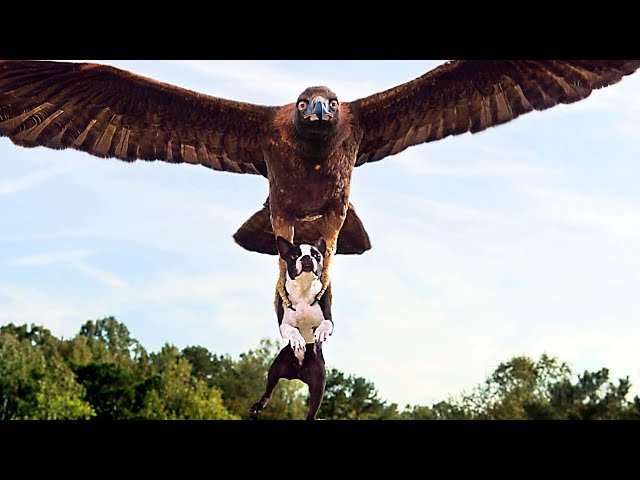
What I Have Seen Around My Own. My yard covers just over half an acre. I board dogs of all sizes and often spot large birds, especially in cooler months. They observe, then move on. ve on.
There was one afternoon when a large bird flew lower than usual, enough that I took notice. The dogs were outside, about six of them, and even the smallest one stood its ground and barked. The bird adjusted course almost immediately and regained altitude. That moment stuck with me.
I have never had a direct incident. That fact shapes how I advise owners about the risk. My focus is always on awareness, not fear.
Noise matters. Dogs are rarely quiet, especially in groups, and their noise changes wildlife behavior nearby. A quiet, isolated yard could be different, but most homes aren’t that still.
Simple Ways to Reduce Any Risk
I never rely on luck. I follow straightforward steps that have consistently worked, especially when caring for very small dogs.
– I avoid leaving tiny dogs outside unattended for long periods
– I keep part of the yard covered with shade cloth or netting
– I stay nearby during outdoor time, especially in open daylight hours
These steps aren’t complicated and don’t change my routine. They just add awareness. Small adjustments are often more effective than reacting after problems arise.
Sometimes owners go to extremes after hearing stories online. I try to keep things realistic. Panic isn’t needed, but paying attention is.
Separating Stories From Reality
Much of what people believe about eagles and dogs comes from viral clips or secondhand stories, often lacking context. A single rare incident can influence many people’s views.
I have learned to ask simple questions. How big was the dog? Where did it happen? Was the area remote or busy? Those details usually change how the story sounds. In many cases, the risk turns out to be much smaller than it first appeared.
Fear fills gaps naturally. I see it in new dog owners still learning what should be real concerns.
I treat eagles with respect, not constant fear. They’re part of the environment like other wildlife. Awareness, simple precautions, and common sense go a long way.
I still look up when a large bird circles—old habits stick. But I don’t rush to gather every dog, because experience shows most birds are just passing through.