
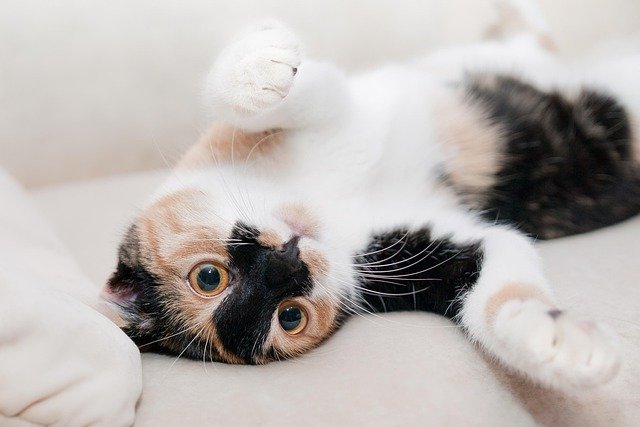
As a licensed veterinarian practicing in Texas for over a decade, I’ve treated hundreds of cats with every imaginable coat pattern. Calicos have always stood out—not because their behavior is magically different, but because owners consistently describe them in strikingly similar ways. “She runs the house.” “She’s sweet, but only on her terms.” “She’s got attitude.”
After years in exam rooms with calicos perched regally on stainless steel tables, I can tell you this: coat color doesn’t create personality. But patterns like calico often correlate with strong-willed, highly expressive cats—especially because most calicos are female. Hormones, genetics, and individual temperament all blend together in ways that can feel larger than life.
The Strong-Willed Reputation
In my experience, calicos tend to be confident and assertive. That doesn’t mean aggressive. It means they’re clear about boundaries.
A client last spring brought in her three-year-old calico because she was “randomly attacking.” After a longer conversation, it became obvious the cat wasn’t unpredictable at all. She was overstimulated. The owner would pet her continuously while watching television, missing the early warning signs—tail flicking, skin rippling, ears angling back. The calico would tolerate it briefly, then enforce her limit with a quick swat.
Once we adjusted how she interacted—shorter petting sessions, watching for body language—the behavior stopped almost entirely.
Calicos often communicate clearly. The challenge is that many people ignore subtle signals until they become dramatic.
Independence with Attachment
I’ve found calicos to be deeply bonded to their chosen person, but not necessarily clingy. They tend to follow one individual from room to room while maintaining a certain dignity.
One of my long-term clients had an older calico who ignored everyone in the household except him. During exams, she would growl at my technicians but soften the moment they spoke. If he left the room, her stress levels spiked immediately—heart rate up, pupils dilated. When he returned, she visibly relaxed.
This selective loyalty is common. Calicos may not distribute affection evenly. They choose.
If you’re expecting a universally social cat who welcomes every guest, a calico may challenge that expectation. They often prefer controlled environments and predictable routines.
Sensitivity to Change
Because many calicos are high-alert personalities, they can be more reactive to environmental shifts.
I once worked with a family who adopted a second kitten without gradual introductions. Their resident calico began urinating outside the litter box within days. Medical tests came back normal. The issue wasn’t physical—it was territorial stress.
We implemented structured introductions: scent swapping, separated feeding areas, and visual barriers at first. It took patience, but the inappropriate urination resolved. The calico didn’t hate the new kitten; she resented the sudden invasion.
This is one of the most common mistakes I see—assuming confidence equals adaptability. Many calicos need thoughtful transitions.
Vocal and Expressive Communication
Calicos are often talkative. Not necessarily loud, but communicative.
They use chirps, trills, and sharp meows strategically. I’ve noticed they’re particularly good at training their humans. If opening a cabinet once led to a treat, they’ll remember. And they’ll remind you.
In the clinic, calicos frequently make direct eye contact and vocalize during exams. It feels less like fear and more like commentary.
That expressiveness can be delightful or exhausting, depending on your expectations.
Handling and Boundaries
Here’s where I give direct advice: respect their autonomy.
Calicos often dislike being restrained unnecessarily. For procedures, I’ve learned that calm, minimal handling works better than firm control. The more pressure applied, the more resistance you’ll see.
At home, forcing lap time rarely succeeds. Let them initiate contact. In households with young children, supervision matters. I’ve treated scratches that were entirely preventable—usually from a child who wouldn’t stop hugging a clearly irritated cat.
Calicos are not mean. They are decisive.
Play Drive and Intelligence
Many calicos have a strong prey drive and high mental stimulation needs. Interactive toys, vertical climbing spaces, and puzzle feeders help prevent boredom-related behavior issues.
I remember a case involving a calico that knocked objects off counters daily. The owner thought it was spite. It wasn’t. The cat had minimal enrichment and excess energy. After adding vertical shelves and scheduled play sessions, the “destructive streak” diminished.
These cats often need engagement. Without it, they’ll invent their own entertainment.
The Myth of “Calico Temper”
The so-called “calico attitude” is likely a mix of genetics and perception. Because most calicos are female, hormonal influences can contribute to territorial or assertive behavior—especially if not spayed. I strongly recommend spaying at the appropriate age, not only for population control but for behavioral stability and health benefits.
Over the years, I’ve seen affectionate, timid, bold, and aloof calicos. The pattern doesn’t determine destiny. But I will say this: many calicos possess a clarity of preference that owners either admire or struggle with.
If you appreciate a cat who sets boundaries, forms strong bonds, and communicates directly, a calico can be an incredibly rewarding companion.
They won’t always conform. And that, in my experience, is exactly why people love them.