
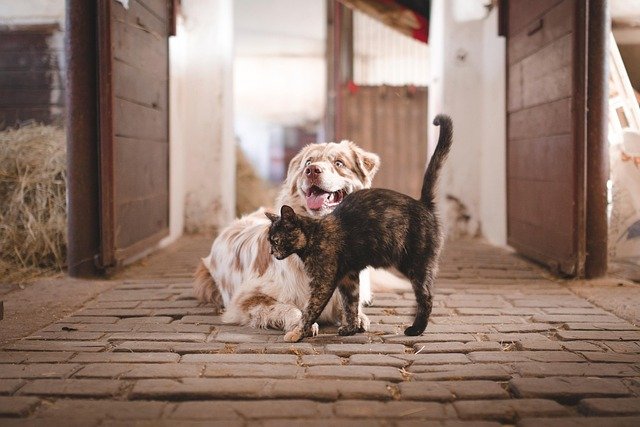
I run a small pet boarding setup just outside the city, and I’ve watched this so-called rivalry play out more times than I can count. Dogs and cats don’t walk in hating each other by default, but the tension shows up fast if you put them together without reading their signals. I’ve had calm Labradors lose their cool over a cat darting across the room, and I’ve seen confident house cats puff up like they’re twice their size. It looks like pure dislike, but most of the time it’s something else entirely.
It Starts With Different Languages
Dogs and cats don’t speak the same body language, and that’s where most of the trouble begins. A dog wagging its tail might mean excitement or curiosity, while a cat flicking its tail often signals irritation or stress. I’ve seen a young dog approach a cat with loose, playful energy, only to get swatted because the cat read it as a threat. That moment sets the tone for future encounters.
Eye contact is another issue. Dogs can stare to focus or engage, but cats often see a direct stare as a challenge. One afternoon, a calm Persian cat sat on a shelf while a medium-sized dog locked eyes with it for a full ten seconds. That was enough to trigger a defensive reaction, even though the dog never moved closer.
Even their movement patterns clash. Dogs tend to move forward, sniff, and investigate, while cats prefer space and controlled interaction. When those styles collide, confusion ensues, and that confusion quickly turns into conflict.
Instincts That Don’t Quite Match
There’s a strong instinctive layer behind these interactions that people often overlook. Many dogs have a prey drive, which means fast, small movements can trigger a chase response almost automatically. A cat running across the floor can flip that switch in less than a second, even in dogs that are otherwise well-behaved. I’ve had to step in more than once when a playful chase started turning serious.
Cats, on the other hand, are wired to protect themselves first. They don’t wait to see if the dog is friendly. They react early. A raised paw, a hiss, or a quick swipe is their way of setting boundaries before things escalate.
For people trying to understand this better, I sometimes point them toward basic behavioral breakdowns, like insights into animal behavior, because it helps them see how deeply these instincts are rooted. Once you see it that way, the tension makes more sense. It isn’t personal. It’s survival wiring.
Some breeds make this more noticeable. Terriers, for example, tend to have a stronger chase instinct, while certain calm dog breeds might ignore a cat completely after a few days. I’ve seen both extremes under the same roof within a week.
Early Experiences Shape Everything
The biggest difference I notice comes from early exposure. Dogs and cats that grow up together often develop a kind of understanding that looks almost like friendship. I boarded a pair last winter, a young cat and an older dog, and they shared space without any tension at all. They even slept within a few feet of each other.
Now compare that to animals meeting for the first time as adults. The lack of familiarity makes every movement feel unpredictable. A dog might see the cat as something to chase, while the cat sees the dog as a potential threat. Neither one is wrong from their point of view.
Socialization matters more than people expect. A dog that has seen at least five different cats in controlled settings behaves very differently from one encountering its first cat at age three. The same goes for cats that have never been around dogs before. They react faster and with more intensity.
I’ve also noticed that negative first encounters stick. One bad chase or scratch can shape behavior for years. Animals remember patterns, and they don’t forget easily.
Territory and Control Play a Big Role
Cats are highly territorial, and they value control over their environment. A new dog entering that space can feel like an invasion, even if the dog is calm and well-trained. I’ve watched cats claim the high ground within minutes, jumping onto shelves or counters to feel safe. They prefer distance over confrontation.
Dogs, especially social ones, don’t always respect that space. They want to approach, sniff, and interact. That mismatch creates friction. One animal is trying to engage while the other is trying to maintain distance.
In my setup, I keep at least two separate zones when both species are boarding at the same time. It reduces stress immediately. When they do share space, it’s controlled and short, usually no more than ten minutes at first. Those small adjustments make a noticeable difference.
Food areas can also trigger tension. A cat guarding its feeding spot might react aggressively if a dog gets too close. I learned that the hard way early on, after a minor scuffle over a bowl that wasn’t even meant for sharing.
So Do They Really Hate Each Other?
From what I’ve seen over the years, “hate” isn’t the right word. It looks like hate because the reactions are sharp and sometimes loud, but most of it comes down to misunderstanding, instinct, and lack of exposure. I’ve seen dogs and cats learn to coexist peacefully in as little as two weeks with the right setup and patience.
There are still cases where it doesn’t work. Some animals just don’t adjust, and forcing interaction only makes things worse. But those are fewer than people think. Most of the time, the situation improves once both animals feel safe and their boundaries are respected.
I don’t try to force friendships anymore. I focus on calm coexistence first. If a bond forms after that, it feels natural instead of forced. And when it does happen, it’s surprisingly quiet. No drama. Just two animals sharing space without tension.
That shift from conflict to calm is what people usually miss, because they expect instant harmony. It takes time, and a bit of patience goes a long way.