
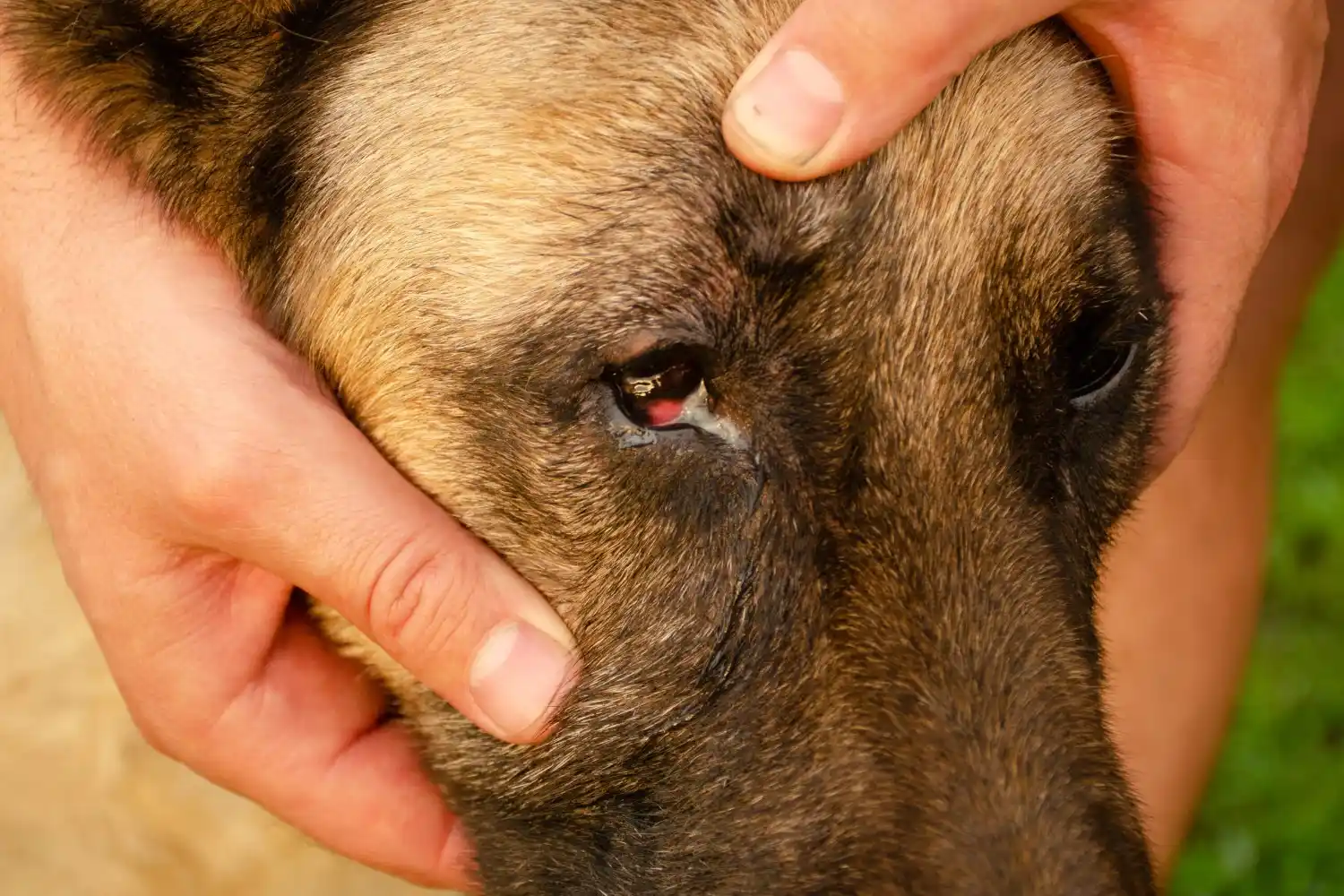
I run a small mobile dog grooming business along the Gulf Coast, and after years of cleaning tear stains, trimming around irritated eyes, and talking with nervous owners in driveways, I have heard this question more times than I can count.
People notice their dog has red or watery eyes, and a few days later, someone in the house wakes up with a red or watery eye. That connection feels suspicious. In some cases, there is a real risk, but most of the time, the answer is more complicated than people expect.
What Pink Eye Actually Means Around Dogs
Most people use the term “pink eye” for almost any kind of eye irritation. In dogs, I usually see redness caused by allergies, debris stuck under the eyelid, dry eye, or mild infections after a long day outdoors. A retriever I groom every six weeks gets red eyes every spring from pollen, and his owner worried for months that the whole family would catch something from him. The veterinarian later confirmed it was allergy-related irritation, not a contagious infection.
Dogs can absolutely develop conjunctivitis, which is inflammation of the eye lining. Sometimes bacteria are involved. Sometimes viruses are involved. A thick yellow discharge is usually the first thing owners notice, especially on light-colored dogs, where it crusts along the fur overnight. I have also seen dogs squint hard enough that they refuse treats during grooming appointments.
The key detail many people miss is that canine eye infections are often caused by organisms that prefer dogs, not humans. Human pink eye also has several causes, and many cases spread through contact between people at schools, offices, and homes rather than from pets. That said, there are rare situations in which bacteria can cross between species, especially when hygiene is poor or someone already has a weakened immune system.
How Transmission Can Happen in Real Life
I learned early in my grooming work that eye discharge gets everywhere. Towels, grooming loops, clipper handles, and even a van door handle can carry bacteria if you are careless. Years ago, another groomer I knew ignored sanitation after handling a spaniel with a severe eye infection, and within days she developed irritation that required a doctor visit. Her case was mild, but it changed how our local grooming circle handled disinfecting tools.
A veterinarian I trust often shares practical advice through American Kennel Club articles, especially for owners trying to understand common eye conditions in dogs. I sometimes point nervous customers there because many online forums make every red eye sound like a medical emergency. Clear information helps people calm down and focus on the actual symptoms rather than panic.
Direct transmission usually requires close contact. Think about a dog rubbing its face on bedding, then a child touching that blanket and rubbing their own eye ten minutes later. It sounds unpleasant because it is. Good hygiene breaks that chain fast. Wash your hands. Clean shared surfaces. Do not wipe your dog’s eyes and then grab your phone or coffee mug without cleaning up first.
Some infections are more concerning than others. Certain bacterial infections, including some strains linked to respiratory illness, can spread between animals and humans under the right conditions. Those situations are uncommon in ordinary households. Kennels, shelters, and grooming facilities tend to carry higher risks because dozens of animals share air, surfaces, and stress simultaneously.
Signs I Tell Owners to Watch Closely
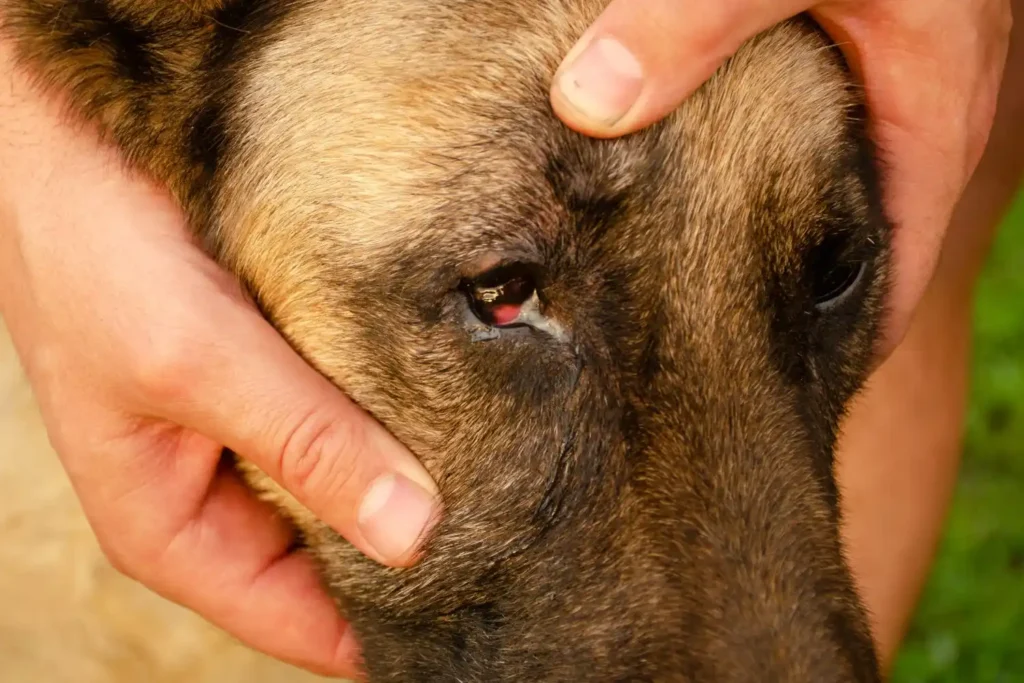
One thing I always mention is timing. If your dog has irritated eyes for one afternoon after running through tall grass, that is different from thick discharge lasting four or five days. Persistent swelling worries me more than mild redness. Dogs cannot explain pain, so behavior changes matter a lot.
Here are the symptoms that usually push me to recommend a vet visit quickly:
Constant squinting, cloudy eyes, green discharge, swelling around the eyelids, or sensitivity to light. I also take it seriously when a normally energetic dog suddenly hides or avoids interaction. A bulldog I worked with last summer stopped chasing treats entirely because a scratched cornea was causing severe pain.
Owners should also pay attention to themselves. Human pink eye often includes itching, tearing, redness, and crusting after sleep. If both the dog and a person in the house suddenly develop symptoms at the same time, I would not assume a coincidence. That does not prove the dog caused it, but it deserves caution and proper medical advice.
What I Changed in My Own Grooming Routine
Back when I first started grooming from a converted cargo van, I underestimated how easily mild infections could spread between dogs. I cleaned visible dirt carefully, but I was less strict about invisible contamination. After one hectic holiday week with several dogs showing eye irritation, I started using separate washable towels for every appointment and disinfecting my grooming table after each session. The difference was obvious within a month.
Now I keep saline wash bottles, disposable gloves, and disinfectant wipes within arm’s reach. Small habits matter. I never reuse a cotton pad around another dog’s eyes, even if it looks clean. Groomers who skip those details sometimes create problems without realizing it.
Pet owners can borrow the same mindset at home. Wash blankets regularly if your dog has eye discharge. Keep children from touching irritated eyes. Replace shared hand towels for a few days. None of this needs to become obsessive. A few smart precautions go a long way.
Why Some Dogs Get Repeated Eye Problems
Certain breeds struggle more than others. Flat-faced dogs like pugs and bulldogs often develop eye irritation because their eyes protrude slightly and collect debris more easily. Long-haired breeds can have fur constantly rubbing near the eye surface. I trim around the eyes of several shih tzus every month because even a few extra millimeters of hair can trap moisture and bacteria.
Allergies are another huge factor. During humid months along the coast, I see dogs rubbing their faces against furniture after walks through heavy grass and oak pollen. Their owners sometimes assume an infection right away, but allergies can cause redness that looks dramatic but isn’t contagious. The treatment path ends up completely different.
Older dogs also tend to develop dry eye conditions that cause thick discharge and chronic irritation. One senior cocker spaniel I groom has to receive medicated eye drops twice daily just to stay comfortable. His owner maintains a strict cleaning routine at home because dried discharge can accumulate quickly around the eyelids and in the fur.
I tell people to trust patterns over panic. A single watery eye after a windy park visit is usually less concerning than recurring redness every few weeks. Dogs are messy creatures. Sometimes their eyes simply react to the world around them.
I still let dogs lick my hands occasionally, but I wash up afterward and stay aware of obvious symptoms. That balance has worked well for me over the years, handling nervous puppies, senior dogs, and every slobbery breed in between. Most owners never catch anything from their pets, yet a little caution around eye infections makes sense for everyone sharing the same couch, blankets, and living space.