
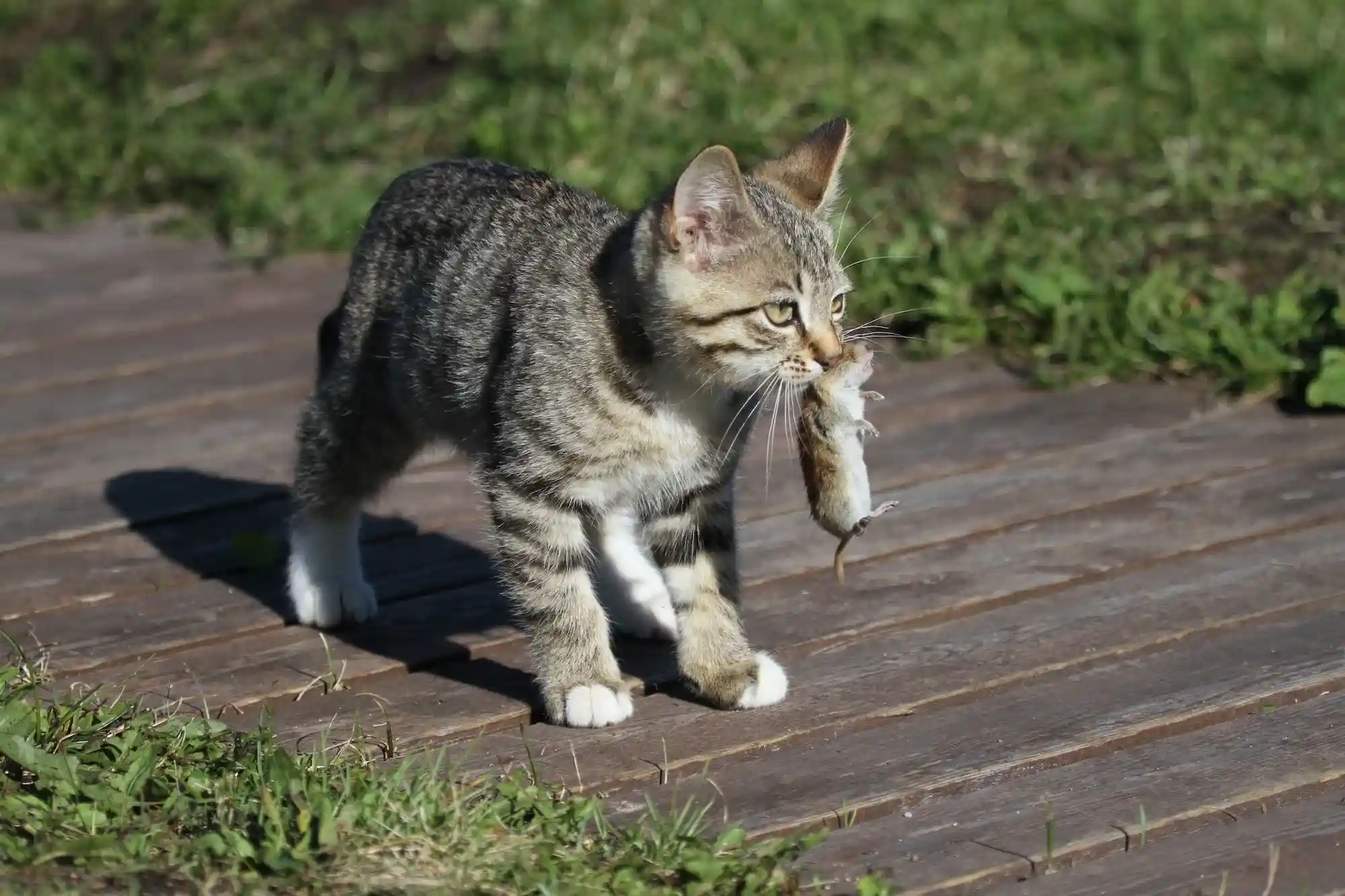
I’ve spent years working around animals in a small wildlife rehabilitation center on the edge of a farming town, and I also foster domestic cats that come through local rescues. The question of whether house cats qualify as apex predators comes up more often than people expect, especially from new volunteers watching a quiet tabby stalk a leaf like it’s prey. I’ve seen both sides of their nature up close, from gentle lap behavior to sudden bursts of hunting focus that feel almost ancient. That contrast is what makes this topic worth unpacking carefully.
The hunting instinct in a domestic body
Working in animal care, I’ve handled cats raised indoors from kittenhood, and others pulled in from barns where they lived more wild than domestic. Even the most sheltered indoor cat still shows the same sequence of hunting behavior: stalking, pausing, pouncing, and the quick bite. I remember a calm foster cat that spent most of the day sleeping on a folded towel, then locked onto a moving insect with a level of focus that surprised a visiting student volunteer. It was a reminder that the instinct is always there, even in a controlled environment.
Cats are obligate carnivores, and that shapes everything from their teeth to their behavior patterns. In my experience, they do not “practice” hunting the way dogs might play chase without intent, because even play has elements of real predatory sequencing. I’ve seen this in clinic observation rooms where toy mice trigger the same crouch-and-wait posture as live prey in outdoor settings. It is a compact, efficient system built for short bursts of high precision rather than endurance.
Where cats sit in the food chain
At the wildlife center, I often compare domestic cats to true apex predators like wolves and large raptors. Apex predators are defined by their position at the top of the food chain, meaning they have no natural predators in a mature ecosystem. House cats, however, play a more complicated role because their environment is shaped by humans rather than the wild ecological balance. They can dominate small prey populations but are still vulnerable to larger animals and human-controlled systems, including shelter management and disease control.
During one intake season, I worked alongside a local vet clinic that partnered with a placeholder anchor to assess feral cat colonies near farmland. We tracked how these cats influenced rodent populations, and while their impact was noticeable, it never reached the kind of ecological control associated with apex predators in stable ecosystems. The cats were effective hunters, but not uncontested rulers of their environment. They existed within a narrow band of influence, heavily shaped by human proximity and resource availability.
This is where the debate usually splits. Some argue that because cats can hunt efficiently and affect local wildlife, they should be considered apex predators in the spaces they occupy. Others point out that apex status requires more than hunting ability, including ecological dominance without meaningful predation risk. From what I’ve observed, house cats don’t fully meet that threshold, even though their behavior can look impressive on a small scale.
Impact on ecosystems and local wildlife
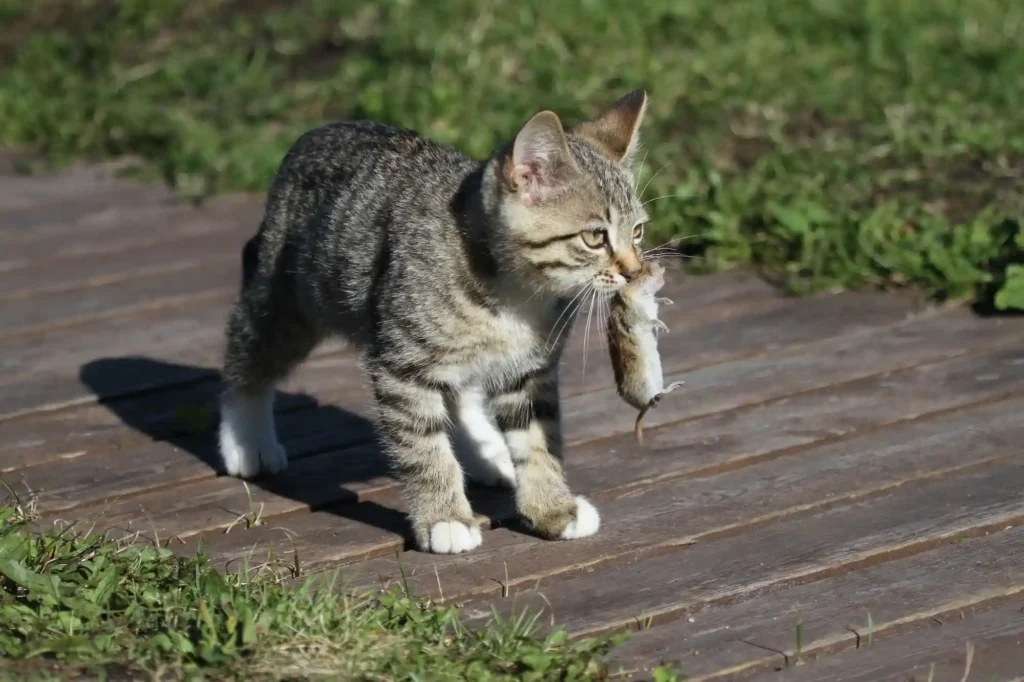
One of the most striking things I’ve seen in my work is how a small number of free-roaming cats can shift bird and rodent activity in a localized area. I once helped monitor a rural property where barn cats reduced visible rodent activity around feed storage, but bird nesting success in nearby hedgerows declined. The change wasn’t abstract; it showed up in fewer nests and quieter mornings. That kind of pressure is real, even if it operates at a small geographic scale.
Still, that influence doesn’t make cats uncontested top predators. In several cases, I’ve seen cats fall prey to larger carnivores or suffer injuries from territorial fights that end badly. Disease and human intervention also play major roles in limiting their populations and range, which is something apex predators typically do not face in the same structured way. Their control is partial, not absolute, and that distinction matters in ecological terms.
What makes house cats unique is how they sit between a wild predator and a companion animal. I’ve had rescue cats that hunted insects indoors while relying entirely on humans for food, warmth, and safety. That dependency significantly changes their ecological role. They are predators by instinct, but not apex predators by definition in most real-world environments.
Living with a controlled predator
At the shelter, I often tell new adopters that they are bringing home a small, efficient hunter with thousands of years of evolutionary refinement behind its behavior. That does not mean danger in the household, but it does mean understanding the instinct is always present. I’ve seen cats switch from sleeping deeply to tracking movement across a room in seconds, which can be unsettling if someone expects purely passive companionship.
There is also a responsibility side to this. Indoor cats live longer, healthier lives on average, and reduce pressure on local wildlife when kept indoors. I’ve watched a once-outdoor rescue adjust slowly to indoor life, initially restless, then eventually calmer as routine replaced constant hunting cycles. The adjustment takes time, but it often leads to a more stable environment for both the animal and the surrounding ecosystem.
People sometimes want a simple label for cats, but they don’t fit neatly into it. They are not apex predators in the strict ecological sense, yet they possess sufficient predatory capacity to influence their surroundings in noticeable ways. That tension is what makes them so fascinating to observe day after day in both clinical and home settings.
