
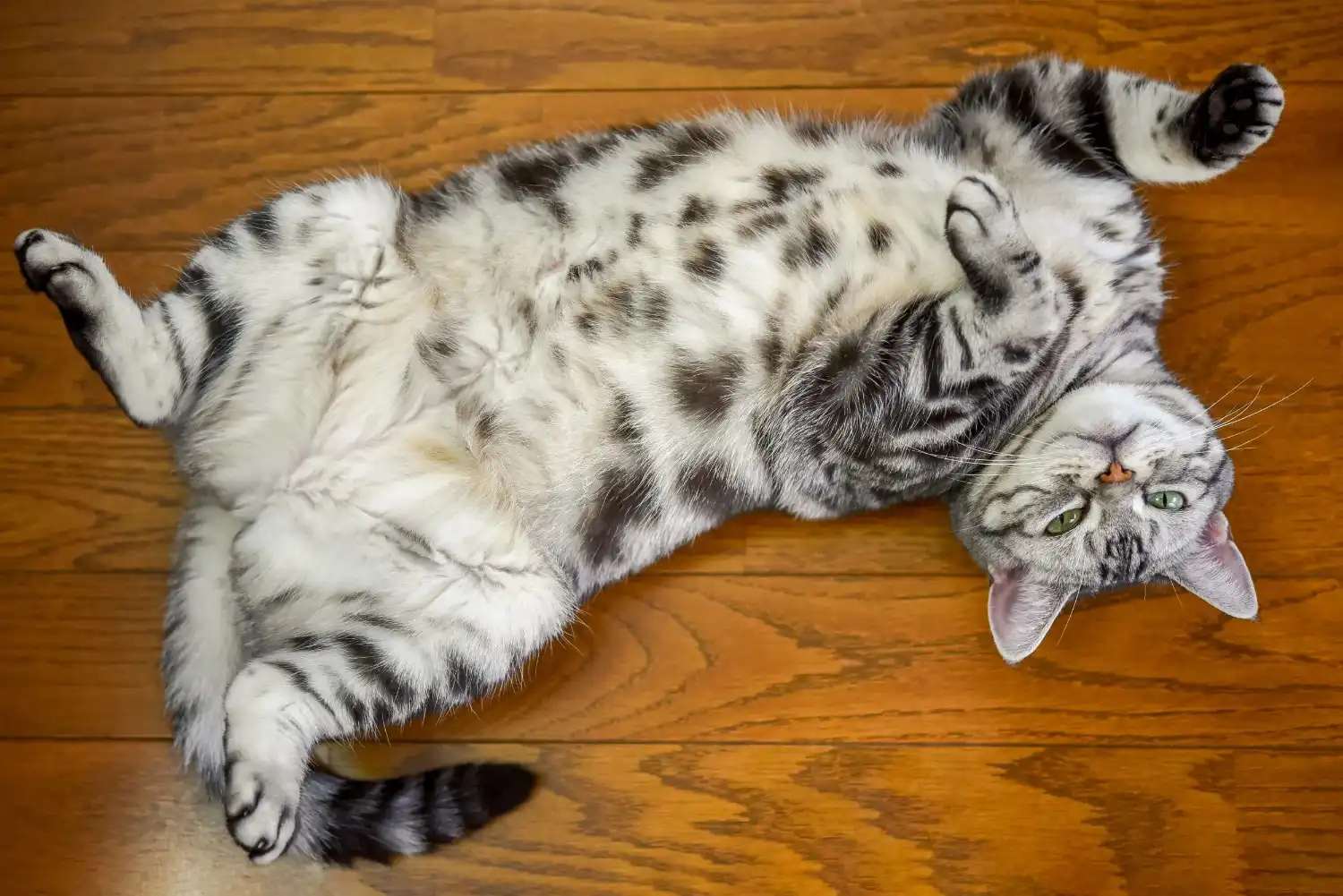
I work as a mobile cat groomer, driving between homes and small boarding catteries across humid suburban routes where I see cats of every shape and build. One of the most common questions I get from cat owners is about that loose flap of skin under the belly, the so-called primordial pouch.
People often think something is wrong when they suddenly notice it, especially in younger cats who are still growing into their bodies. I usually end up explaining that this feature develops gradually and is far more normal than most people expect.
Over the years, I’ve handled hundreds of cats during grooming sessions, and their owners have pointed at their belly folds with concern. I’ve learned that timing matters a lot in how this feature is perceived. Some cats show it early, others much later, and some barely show it at all, even though it is still present. The variation alone can make owners think something has changed when in reality the cat is just following its own development pattern.
What the primordial pouch actually is
The primordial pouch is a loose flap of skin and fat that hangs along a cat’s lower abdomen. I usually describe it to owners as a natural body feature rather than a health issue, because it serves functions such as flexibility and protection during movement. In my grooming van, I’ve handled cats that look lean and athletic yet still have a noticeable pouch swinging slightly when they walk or stretch.
In my experience, this area is most noticeable when a cat runs or jumps onto higher surfaces, since the skin shifts more freely than the rest of the body. A customer last spring brought in a young tabby, worried that sudden weight gain had caused the pouch to appear overnight, but the truth was it had been developing slowly and only became visible as the kitten matured. That moment helped me realize how often timing gets misunderstood with feline growth.
Most veterinarians agree that this structure is completely normal, though debate continues over its evolutionary purpose. Some suggest it protects organs during fights, while others think it helps with flexibility during stretching or running. In my hands-on work, I’ve noticed that even very active indoor cats still develop it, which supports the idea that it is not linked solely to lifestyle.
When cats start developing it
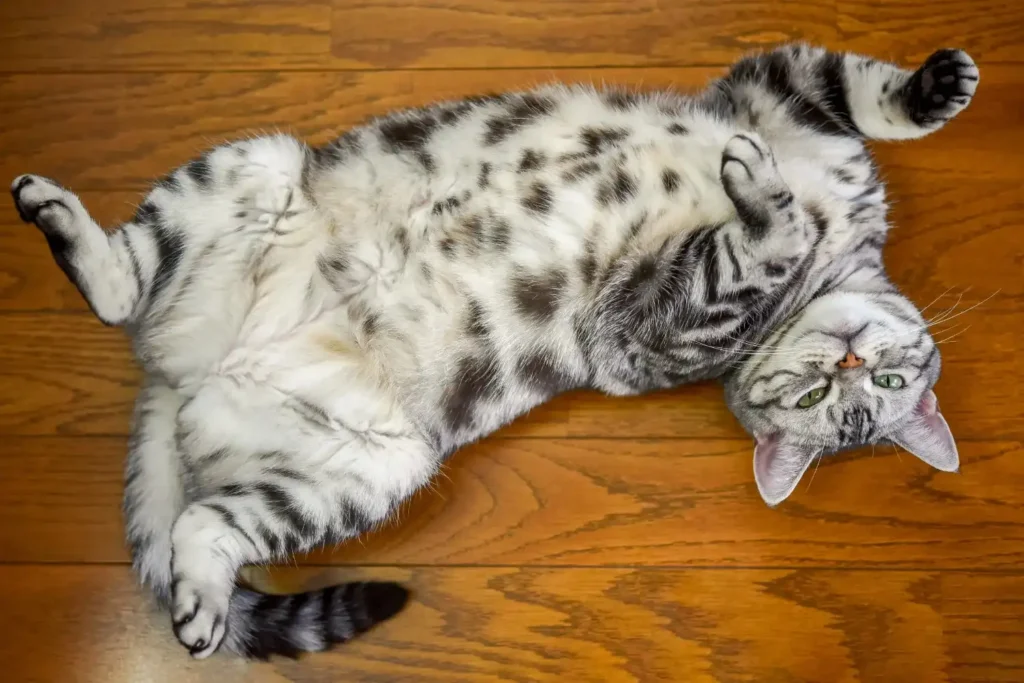
Cats typically begin developing a primordial pouch as they move from kittenhood into adolescence, often somewhere between six months and two years of age. In my grooming rounds, I’ve seen it appear gradually rather than suddenly, starting as a slight looseness that becomes more noticeable as the cat matures. Owners often miss the early stage because the change is subtle and spread over months.
During one grooming visit at a small home clinic, I explained the development process to a new cat owner while trimming nails and checking coat condition. That session was scheduled after they had contacted the local veterinary consultation service to confirm whether their young cat’s belly shape was normal or a sign of illness. The conversation shifted quickly from worry to relief once they understood that the pouch is part of normal feline growth. I still remember how the cat sprawled across the grooming table, completely relaxed, while we talked through the stages of development.
What I’ve consistently observed is that neutered or spayed cats sometimes show the pouch a bit earlier, though this is more related to changes in body composition than to any direct cause. Growth patterns also vary by breed, with lean-bodied cats like Siamese often showing it later or more subtly compared to stockier breeds. I’ve handled cats from multi-cat households where littermates showed noticeable differences in pouch development timing, which always reinforces how individual feline bodies can be.
Some owners assume the pouch means their cat is overweight, but I usually check body condition from multiple angles before making any judgment. The pouch is separate from fat distribution elsewhere on the body, so a cat can be perfectly healthy and still have a pronounced flap. I’ve seen athletic outdoor cats with strong muscle tone that still swing a visible pouch when they run across a yard fence.
Why does timing vary so much between cats
The timing of primordial pouch development is influenced by genetics, growth rate, and overall body composition. In my day-to-day grooming work, I’ve noticed that cats raised in different environments but with similar genetics often develop the pouch at almost the same stage. That tells me genetics plays a larger role than diet or activity in most cases.
Environmental factors still matter in how noticeable the pouch becomes. Cats that gain and lose small amounts of weight during growth spurts may show it earlier because the skin stretches and settles differently. I’ve worked with a household of three rescue cats where one developed a very visible pouch by one year of age, while another barely showed it until closer to two years old, even though they shared the same diet and space.
Another factor I see often is body posture and movement style. Some cats are naturally more stretchy or low-slung in their movement, which makes the pouch more obvious during everyday activity. Others carry themselves in a tighter, more upright way, so it’s hidden unless you lift or examine the belly area directly.
It also helps to understand that development is not linear. I’ve had clients call me thinking the pouch “appeared overnight,” when in reality it had been forming slowly and only crossed a visibility threshold after a minor growth change. Cats grow in phases, and the primordial pouch simply follows that rhythm without any strict timeline.
What owners usually notice first
Most owners first notice the pouch when their cat starts jumping more confidently or stretching farther. That’s usually when the loose skin becomes visible in motion rather than when the cat is resting. I often see people point it out during grooming sessions only after the cat stretches across the table for the first time.
Some cats make the pouch more noticeable by the way they walk. A relaxed, slow gait can cause the flap to sway gently, which draws attention even if the cat is perfectly healthy. I’ve had owners ask me during home visits if something is “hanging wrong,” and in most cases, it’s just natural movement revealing something they hadn’t observed before.
In a few cases, seasonal coat changes also affect perception. When a cat sheds heavily, especially in warmer months, the reduced fur volume can make the belly area look more defined. I’ve seen this happen in long-haired breeds where grooming reveals shapes that were previously hidden under dense coats.
It is usually around this stage that reassurance matters most. I’ve learned that explaining the gradual nature of development helps owners feel more comfortable, especially when they compare their cat to images online that show exaggerated examples. Real cats vary widely, and that variation is part of what makes the primordial pouch such a common but misunderstood feature.
After enough years working hands-on with cats in real homes, I’ve stopped thinking of the primordial pouch as something that “appears” at a single moment. It is more like a slow signature of maturity that shows up differently in every cat, shaped by genetics, growth, and simple individuality.