
I work as a mobile cat groomer, moving between homes with a small van stocked with grooming tools, flea combs, and the kind of calming sprays I only learned to trust after years of trial and error. Over the seasons, I have stepped into hundreds of backyards while picking up or dropping off cats, and I’ve noticed how often ornamental plants sit right where curious paws can reach them.
Hollyhocks are one of those plants that show up more than people expect, especially in older gardens where they grow tall along fences. I’ve had enough conversations with cat owners standing in flower beds to know why this question keeps coming up.
What hollyhocks mean for curious cats
Hollyhocks are those tall, old-fashioned garden flowers with wide, colorful blooms that can grow higher than a person’s shoulder. I see them most often along cottage-style walls or near porch edges, where they create a soft, nostalgic look. Cats, of course, treat these areas like part of their territory, and that is where concern starts. I’ve had clients point at their cats sniffing leaves and asking if they need to panic immediately.
From what I’ve seen and discussed with veterinarians during grooming visits, hollyhocks are generally considered non-toxic to cats. That means they are not known to cause severe poisoning, unlike lilies or sago palms. However, “non-toxic” does not always mean “completely harmless” in practice. A cat chewing large amounts of plant material can still develop mild stomach upset, vomiting, or drooling simply because their digestive system is not built for it.
One customer last spring called me after her young cat started nibbling at garden plants during supervised outdoor time. The cat had mild vomiting, but the vet linked it more to plant irritation than poisoning. That situation is fairly typical and usually resolves quickly once plant access is removed. I’ve seen similar cases with grass, herbs, and even safe houseplants when cats overindulge out of boredom.
Real risks I’ve seen in home gardens
During grooming visits, I often walk through yards to collect cats, and I naturally notice what plants are within reach. In one neighborhood, a client had hollyhocks growing along a narrow walkway, and her indoor-outdoor cat treated them like a personal snack station. Nothing serious happened, but the repeated chewing left the plant damaged and the cat slightly gassy afterward. It was a reminder that “safe” does not always mean “ignored by cats.”
For pet owners looking for local guidance or urgent help, I sometimes recommend checking the local pet poison control resource when they are unsure about plant exposure or symptoms after ingestion. I have seen people wait too long simply because they assumed a plant was harmless without checking symptoms. Having a quick reference can reduce panic and help separate mild irritation from real emergencies. It also helps owners avoid unnecessary vet trips for minor cases.
In my experience, the bigger issue with hollyhocks is not toxicity but accessibility. Cats are climbers, and these plants often grow in open soil beds without barriers. I once groomed a long-haired tabby that used a hollyhock patch as a hiding spot during the heat of the day. The owner was more concerned about insects and dirt than about poisoning, which is often the more realistic problem in these settings.
How cats actually interact with hollyhocks
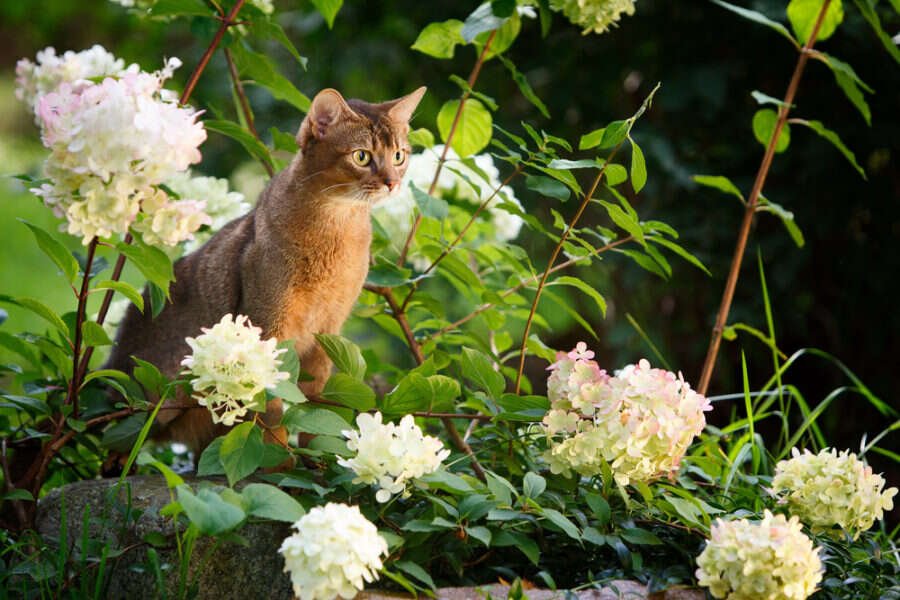
Cats rarely treat hollyhocks as a primary food source. Most interactions I’ve observed involve brief chewing, rubbing against stems, or investigating moving leaves. The texture seems to draw more attention than the taste itself. In multi-cat homes I visit regularly, the behavior is usually curiosity-driven rather than consistent grazing.
I remember one household with three indoor cats and a backyard filled with a mix of flowers, including hollyhocks and marigolds. The cats spent more time chasing insects around the plants than touching them. When they did interact, it was light nibbling, usually followed by disinterest. That pattern repeated across several similar homes I’ve worked in over the years.
Still, I always caution owners not to assume all plant behavior is harmless play. Some cats develop habits of chewing plants during stress or boredom, especially if they lack indoor stimulation. I’ve seen cases where even safe plants became a repetitive chewing target during seasonal changes when cats stayed indoors more often. The behavior itself tells more about the cat than the plant.
Keeping gardens safe without removing everything
I often advise owners to think in terms of boundaries rather than elimination. Removing every plant is rarely practical, and most people don’t want to turn their garden into a bare space. Instead, simple barriers or raised planters can reduce access without altering the yard’s appearance. I’ve seen lightweight fencing around flower beds work surprisingly well for curious cats.
Another approach I suggest during grooming visits is observation. Watching when a cat interacts with plants helps identify whether it is curiosity, boredom, or dietary behavior. One client noticed that her cat approached hollyhocks only in the early morning, which turned out to be linked to hunting insects around the flowers. Once she adjusted feeding and playtime routines, the plant chewing stopped almost entirely.
In multi-cat households, I also recommend adding indoor enrichment so outdoor plants are not the only source of stimulation. Scratching posts near windows, climbing shelves, or even simple interactive toys can shift attention away from garden plants. I’ve seen behavior changes within a couple of weeks when owners consistently adjust the environment. Small changes often matter more than major garden redesigns.
Working in cat grooming for years has shown me that hollyhocks are not a major toxicity concern for cats, but they still sit in that gray area where curiosity meets mild digestive sensitivity. Most issues are minor and preventable with a bit of awareness and routine observation. Gardens and cats can absolutely share the same space without constant worry, as long as owners stay attentive to behavior patterns rather than assumptions about plants alone.