
I’m a mobile cat groomer who spends most of my week moving between homes and small veterinary clinics across Faisalabad and nearby cities. Over the years, I’ve seen cats get into all kinds of human snacks while owners aren’t looking.
Popcorn is one of those foods that comes up more often than people expect, especially during movie nights or family gatherings. I’ve had enough close observations to know this is not as harmless as it looks at first glance.
Why Cats Even Get Interested in Popcorn
Cats don’t naturally seek popcorn, but curiosity gets the better of them in shared spaces. I often see them sniffing bowls left on low tables because the smell of butter or salt is mildly interesting to them. A cat doesn’t understand “snack food” the way humans do, so anything crunchy becomes a target for investigation.
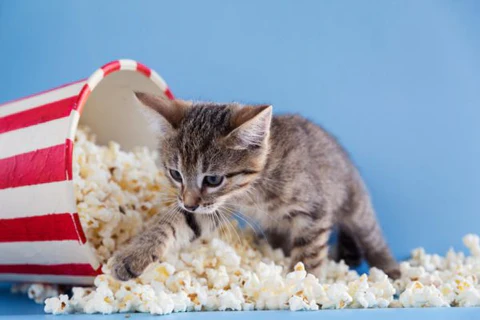
In one home visit last spring, I noticed a young tabby repeatedly pawing at a bowl during a family movie night setup. The owners thought it was harmless behavior, but the cat was clearly drawn to the sound and movement of popcorn being tossed around. It looked playful, but the interest was purely instinct-driven rather than nutritional.
The appeal is more about texture and curiosity than taste. Plain air-popped kernels might not even be that attractive, but once butter, salt, or caramel is added, the smell becomes stronger. That’s usually when I start getting questions from owners about whether a few pieces are okay.
What I’ve Seen in Real Cases
During my grooming and home visits, I’ve seen both harmless nibbling and a few concerning situations involving popcorn. In most cases, cats only eat one or two pieces and lose interest quickly. But there have been a few moments where things didn’t go as smoothly, especially with flavored popcorn varieties.
One situation stands out from a household where I was working alongside a local vet technician service that regularly checks pets after dietary mishaps. A cat had eaten several pieces of buttered popcorn left on a sofa tray, and the owner didn’t realize it until later that night. The cat developed mild stomach upset, which required monitoring but not emergency treatment. It was enough to remind everyone that even small snacks can cause issues depending on ingredients and quantity.
From what I’ve observed, plain popcorn isn’t toxic to cats in the strict sense, but that doesn’t make it truly safe either. The real concern is everything added to it and the choking risk from unpopped kernels. I’ve seen a cat cough repeatedly after trying to chew a half-popped kernel, and that moment alone changed how the owner stored snacks afterward.
The Hidden Risks I Watch For
When I enter a home for grooming, I often pay attention to small environmental risks, and food placement is one of them. Popcorn bowls left unattended are surprisingly common, especially during evening routines. Cats rarely resist the opportunity to investigate something new when it’s sitting at their level.
Choking is the most immediate concern I notice. Unpopped kernels are hard and small enough to get stuck in a cat’s throat or teeth, causing panic for both the pet and the owner. I always tell people that even a single kernel can cause trouble if a cat is fast and curious enough.
Salt and butter are another issue that often gets overlooked. Cats are not designed to handle high sodium intake, and even small amounts over time can strain their system. This is one of those situations where the problem is not instant but builds quietly if habits continue.
Digestive sensitivity is also something I see in certain cats more than others. Some will eat a piece and show no reaction, while others might experience vomiting or lethargy within hours. Every cat reacts differently, which makes it harder for owners to judge risk by a single experience.
Popcorn is often treated like a harmless snack in households, but I’ve learned that “harmless” depends heavily on context and frequency. A cat that steals a single plain piece once a month is in a very different situation than one regularly fed flavored popcorn during shared meals. The difference becomes clearer only when you observe patterns over time.
Safer Snack Habits I Suggest
When owners ask me what I recommend instead, I usually steer them away from human snacks altogether. Cats have very specific dietary needs, and even seemingly simple foods can cause problems. I’ve seen better outcomes when people stick to treats designed specifically for feline digestion.
Portion control matters more than most people realize. Even safe treats can become a problem if given too often or in large amounts. I once worked with a household where overfeeding “small treats” led to gradual weight gain in an indoor cat that otherwise seemed active and healthy.
Another habit I encourage is keeping food completely out of reach, not just during meals but also during preparation. Cats learn routines quickly, and once they associate popcorn bowls with opportunity, they will return to them repeatedly. Breaking that pattern is easier than trying to correct it later.
Temperature also plays a role in safety awareness. Freshly made popcorn often sits in bowls on coffee tables, which are easily accessible to curious cats. Cold or stored snacks are less tempting, but not entirely ignored if the habit has already formed.
At times, I get asked whether a tiny piece is “fine once in a while.” I usually answer that it depends on the cat’s health, but I still discourage it because consistency is easier than exception management. Cats don’t benefit from variety in human snack terms the way we assume they might.
Over time, I’ve noticed that households with clear feeding boundaries experience fewer accidental ingestions. It’s not about strict control, but about reducing opportunities for confusion. A stable routine keeps both the cat and the owner from second-guessing every small incident.
Safe feeding habits are less about fear and more about awareness. Once people understand what actually goes into popcorn seasoning and how cats process food differently, the decision becomes easier. I’ve rarely seen regret come from being cautious, but I’ve seen plenty come from assuming “just a bite” won’t matter.
I still remember one quiet evening visit where a cat sat watching a movie night from a distance, clearly interested in the popcorn bowl but never given access. The owner had learned from a previous scare and changed how snacks were handled. The cat stayed calm, and nothing needed fixing afterward, which is usually the best outcome I see in my line of work.