
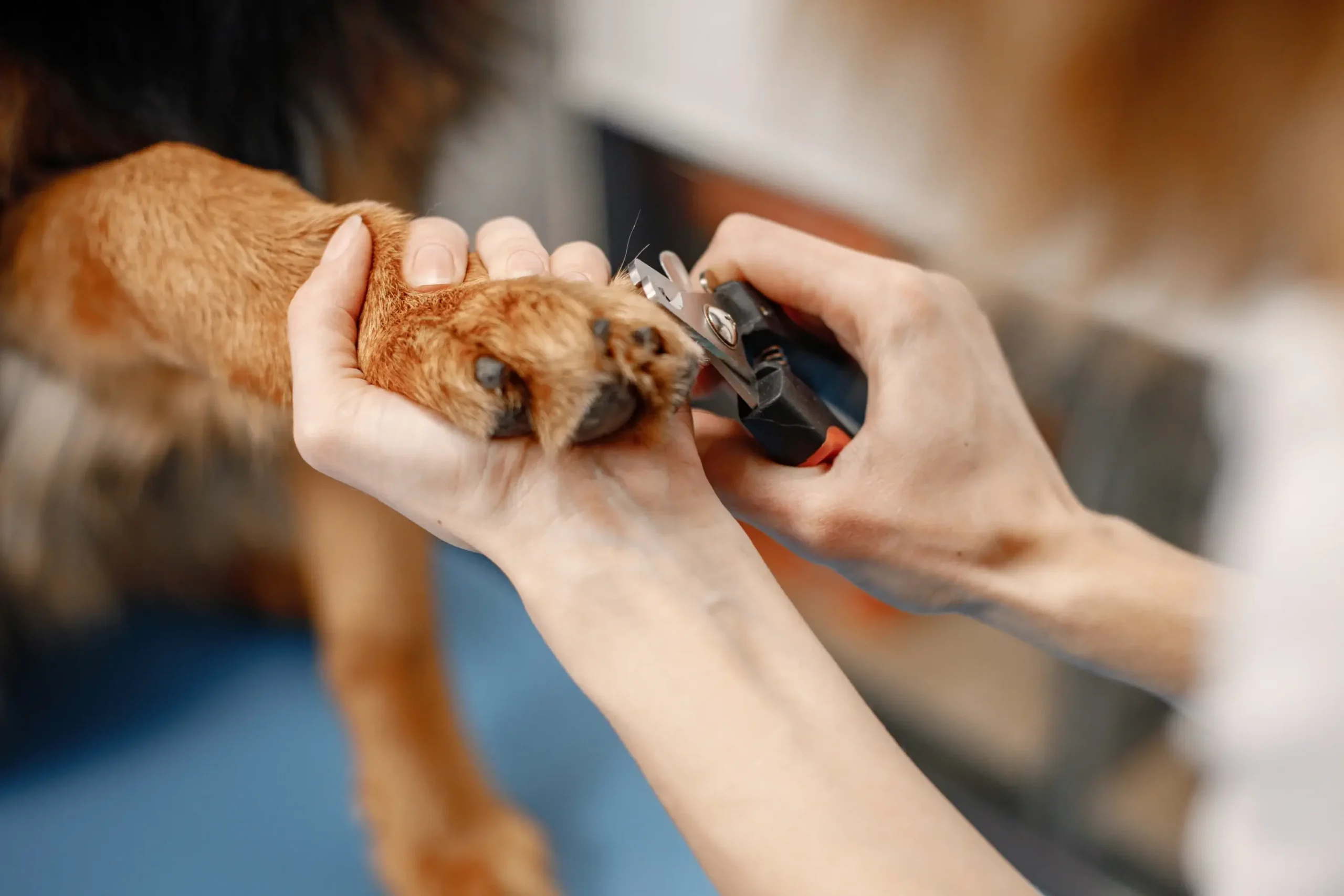
I run a small mobile grooming van along the Gulf Coast, and long dog nails are one of the most common problems I deal with every week. Some dogs come to me with nails curling sideways, tapping hard against the floor, or pushing their toes out of position when they stand.
Owners usually feel bad about it, but most of the time, life just gets busy, and the dog stops tolerating trims somewhere along the line. I have learned that safely clipping overgrown nails has less to do with fancy tools and more with patience, timing, and knowing exactly when to stop.
What Long Nails Actually Change
A lot of people think long nails are mostly cosmetic. They are not. I have watched older dogs shift their weight backward because their front nails were so long that standing normally became uncomfortable, and after enough months of that, the legs and shoulders start compensating in strange ways. The sound alone tells me plenty. If I hear nails clicking from across a tile floor, I already know I am probably dealing with at least a few weeks of overgrowth.
The tricky part is the quick growing out with the nail. That is the blood vessel inside the nail, and the longer the nail gets, the farther forward the quick usually extends. People often panic because they think one trim should solve the whole problem, but aggressive clipping is what makes dogs bleed and makes future nail sessions more difficult. I usually explain that bringing nails back to a healthy length can take four to eight weeks of gradual work.
Black nails make the job harder. Clear nails give you some warning because you can often see the pink quick through the nail. With black nails, I rely on texture and the appearance of the cut surface. Once I start seeing a pale center with a tiny dark dot in the middle, I stop immediately. That little dot matters.
How I Clip Nails Without Creating a Fight
I rarely start with the clippers right away. Dogs read tension quickly, especially those who have already had a bad experience at another salon or vet office. I usually spend a few minutes touching the paws, pressing lightly on the toes, and letting the dog pull away without turning it into a wrestling match. A nervous dog can go from manageable to impossible in under thirty seconds.
For owners trying to build better habits at home, I sometimes recommend checking demonstrations and handling techniques for safely trimming dog nails, because seeing calm handling in real time helps more than reading short instructions on a package. I learned early in my grooming career that technique matters far more than strength. Dogs remember rough handling for months. Some remember it for years.
I clip tiny amounts at a time. Really tiny. On badly overgrown nails, I may remove only one or two millimeters from each nail during the first session. Then I ask the owner to come back in about ten days. Frequent small trims encourage the quick to recede naturally over time, which is safer than trying to force a short nail in one sitting.
Grinding helps too, especially after clipping. I use a cordless grinder with a low-vibration motor because loud tools make some dogs panic instantly. The grinder smooths sharp edges and lets me shorten nails in finer increments than clippers allow. It sometimes smells a little like burnt hair. That part is normal.
The Dogs That Need Extra Time
Senior dogs are often the hardest cases. Arthritis changes how they stand, and many stop wearing their nails down naturally once their walks become shorter. I had a shepherd mix last winter whose front dewclaws had curled almost into the pads because the owner did not realize those nails never touched the pavement. The dog was sweet, but every paw touch made him flinch.
Small breeds can be surprisingly difficult, too. Chihuahuas and toy poodles tend to twist, scream, or yank their feet at the exact wrong moment, even when they are not aggressive. I move slower with them than I do with most large dogs. One clean clip is better than rushing through ten sloppy ones.
Then there are the dogs that were restrained too hard somewhere else. You can tell almost immediately. They freeze instead of relaxing, and their paws stiffen before you even touch the nail. With those dogs, I sometimes spend an entire appointment rebuilding tolerance and end up successfully trimming only two or three nails. That still counts as progress.
What I Tell Owners About Bleeding Nails
Eventually, almost everyone clips a quick one by accident. I have done it myself after years of grooming, especially on squirmy dogs with thick black nails. The important part is staying calm because dogs react to panic faster than they react to pain. Most quick nails look dramatic because they bleed more than people expect, but the injury is usually minor.
I keep styptic powder within arm’s reach at all times. Cornstarch works in a pinch, too, though it takes longer. After applying pressure for a minute or two, I let the dog stand quietly before attempting anything else. If the dog is stressed, I stop the session. There is no prize for finishing every nail that day.
One mistake I see often is owners apologizing over and over while gripping the paw tighter. That usually makes the dog more nervous. Calm hands matter. Quiet voices help. Dogs do not understand the apology, but they absolutely understand tension.
Why Regular Trims Matter More Than Perfect Trims
I would rather see a dog get mediocre nail trims every two weeks than a perfect trim twice a year. Consistency changes the whole experience. The quick stays shorter, the dog stays familiar with the process, and the owner stops treating nail care like a dreaded event that hangs over the calendar for months.
Walks on concrete help a little, especially for active dogs over 40 pounds, but they are not enough for most pets living normal suburban lives. Dewclaws still need manual trimming, and many indoor dogs simply do not wear their nails down evenly. I trim my own dogs every fourteen days because shorter sessions create less stress for everybody involved.
Some owners ask if sedation is the answer. Occasionally, it is. I have worked alongside veterinary clinics where severely anxious dogs needed medication just to get through a safe grooming session. There is no shame in that. A dog that bites out of fear is usually terrified, not stubborn.
Long nails rarely happen because somebody does not care. More often, I meet people who waited too long after one bad experience and then felt embarrassed to ask for help. Dogs recover from overgrown nails gradually, and most of them tolerate the process much better once the pressure on their feet starts easing. A few careful trims over several weeks can change how a dog walks, stands, and even plays around the house.