
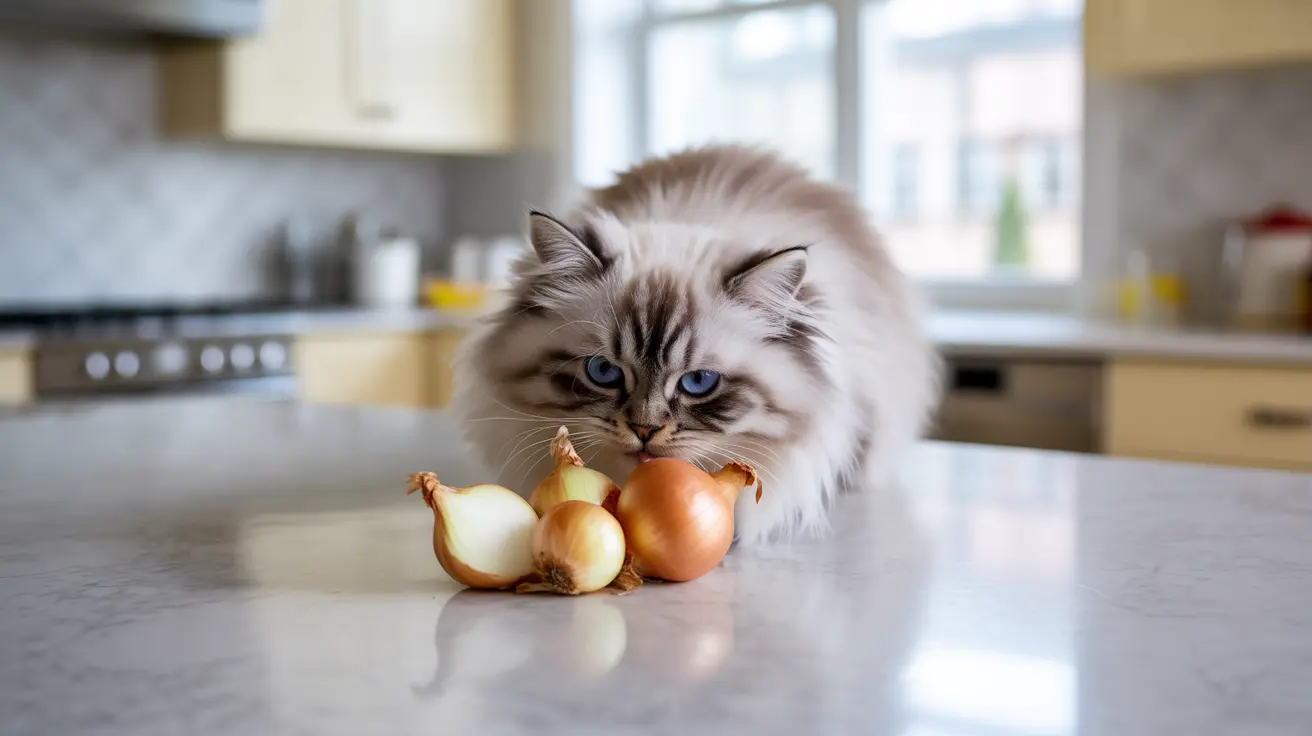
I work as a mobile cat groomer and assist part-time at a small veterinary clinic in Punjab. Over the years, I’ve seen a handful of cases where household foods caused more harm than people expect, and onions are one of the most dangerous for cats.
Most pet owners are surprised when I mention it because a tiny amount in food seems harmless at first glance. But in real situations, even a small exposure can quickly turn serious.
Why is an onion toxic to a cat’s system
Onions contain compounds that damage a cat’s red blood cells, which can lead to a condition called hemolytic anemia. I first learned how serious this could be during a busy week at the clinic when a young tabby was brought in after eating leftover food containing onion. The cat looked weak and had pale gums, and the owner had no idea the food could be harmful.
Inside a cat’s body, the compounds in onions attach to red blood cells and cause them to break down faster than the body can replace them. This is not something that happens instantly in every case, but the process can start within hours, depending on how much was eaten. Cats are much more sensitive than dogs, and that difference matters more than most people realize. Small bite, big risk.
I’ve seen cases where owners thought cooked onions were safe because the sharp smell was gone, but cooking does not remove the toxic effects. Even powdered onion in seasoning mixes can be enough to trigger symptoms if consumed repeatedly. Cats don’t need a large portion to get into trouble, which is why I always tell clients to be strict with table scraps. Cats react fast. Do not wait.
Many people also underestimate how often onions hide in everyday foods like gravies, instant noodles, or seasoned meats. In a grooming visit last spring, a customer casually mentioned their cat loved licking leftover curry plates, which often contained onion and garlic. That conversation turned into a long discussion about hidden ingredients and how easily exposure can happen without direct feeding.
What happens after a cat eats an onion
In my work, I’ve seen symptoms vary depending on the amount eaten and the cat’s size, but the pattern often follows a similar path. A cat may start showing weakness, reduced appetite, or unusual lethargy within a few hours or, in some cases, a day. As cases worsen, breathing becomes faster, and the gums may lose their healthy pink color. It can be subtle at first, which makes it easy to miss.
During one clinic shift, a colleague suggested we double-check a case history because the cat’s symptoms did not match a simple stomach issue. That case later turned out to involve onion intake from flavored meat scraps. The owner had been feeding small leftovers regularly, thinking it was harmless comfort food. For reference and guidance on toxic food exposure in pets, I often direct people to the ASPCA Animal Poison Control Center, which helps clarify emergency steps and ingredient risks in simple terms that pet owners can follow.
What makes onion poisoning tricky is the delay between eating and the onset of visible symptoms. I’ve seen cats seem fine for most of a day before suddenly becoming very weak. That delay creates confusion for owners who don’t connect the food to the reaction. In clinic discussions, we often stress the importance of observation over time rather than reacting only to immediate changes. Slow decline can still be serious.
Not every exposure leads to severe illness, but repeated small exposures can build up damage over time. I remember one household where a cat kept getting mild scraps containing onion powder, and the gradual decline was only noticed after weeks. That case taught me how important consistency is in prevention. No onion is the safest rule.
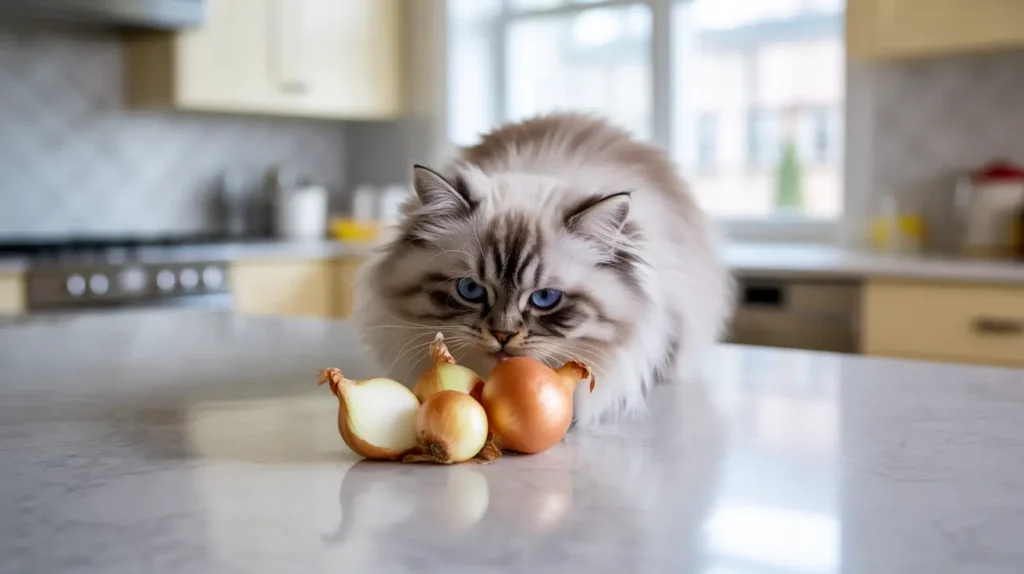
Signs I’ve personally noticed in affected cats
In grooming sessions and clinic observations, I’ve learned to spot early warning signs that often get overlooked. A cat that suddenly seems tired after eating something unusual is one of the first red flags I watch for. Another common sign is reduced interest in movement or play, which owners sometimes dismiss as mood changes. These subtle shifts matter more than people think.
One of the clearest symptoms I’ve seen is pale or slightly yellow gums, which usually indicates red blood cell damage is already happening. This is not something that improves on its own; it requires proper treatment. I’ve handled cats where the gum color change was the only obvious clue at first. It can be easy to miss without a close look.
Breathing changes are another concern I’ve noticed during transport to the clinic. A cat may breathe faster even at rest, which signals that the body is struggling to deliver oxygen properly. I once helped a client bring in a cat from a rural area where onions were commonly used in home cooking, and the breathing pattern was the main symptom that pushed them to seek help.
Vomiting and loss of appetite also appear in several cases, but they are not unique to onion toxicity, which makes diagnosis more challenging. That is why I always ask detailed questions about recent meals and any shared food from the kitchen. Even a small detail, like “a bite of gravy,” can quickly change the direction of treatment.
How I advise prevention in everyday homes
After seeing enough cases, my approach with cat owners has become very simple and strict. I recommend keeping all onion-based foods completely out of reach of cats, including cooked dishes and processed seasoning blends. Many kitchens in my area use onions as a base ingredient, so separating human food from pet food becomes essential. Clean boundaries prevent most accidents.
I also suggest checking ingredient labels on packaged food more carefully than people usually do. Even foods that do not taste strongly of onion can still contain onion powder as a flavor enhancer. In small households I visit during grooming work, I often remind families that cats are curious and will sample unattended plates without hesitation. Prevention is easier than emergency treatment.
One practical habit I encourage is cleaning plates and cookware immediately before a cat has access to the kitchen area. I’ve seen more accidental exposures after meals than during cooking itself. A cat does not need supervision all the time, but food access control is non-negotiable in my experience.
There was a case I still remember where a family made one small change after an incident involving onion scraps, and they never faced the problem again. They simply stopped sharing table leftovers entirely and switched to designated cat treats. That single adjustment removed the risk completely. Simple habits make a big difference.
Working closely with cats over the years has made me cautious about what seems harmless in human food culture. Onions are common in almost every kitchen, yet they pose a risk that many owners learn about only after an emergency visit. I’ve seen enough cases to treat it as something that should never be part of a cat’s environment at all.