
A Step-by-Step Guide
The answer to this question forms the core of what every dog owner needs to know: regular brushing is not just a suggestion—it is essential for your pet’s health.
I’ve spent the better part of fifteen years in clinical practice here in Texas, and if I had a nickel for every time a client looked at me with genuine disbelief when I mentioned brushing their dog’s teeth, I’d have retired to a ranch in Hill Country years ago.
There is a common misconception that, because dogs are descended from wolves, their mouths are self-cleaning machines. In reality, the modern kibble-fed Labrador has about as much in common with a wild wolf as I do with a marathon runner—very little, especially when it concerns oral hygiene.
The answer is yes—you should brush your dog’s teeth. The alternative often involves expensive, preventable surgery.
The Reality of “Dog Breath”
One of the most frequent things I hear in the exam room is, “Oh, he just has dog breath.” I usually have to gently correct the owner by explaining that healthy mouths don’t actually smell like a swamp. Chronic bad breath is almost always due to an active infection.
A few years ago, a Beagle came in for a routine visit. The owner noticed no pain, but the smell filled the room. The dog’s gums were red and bled easily. After pulling six teeth, the owner reported her dog acted like a puppy again, no longer slowed by the pain of periodontal disease.
Why Water Additives and Chews Aren’t Enough
I often see people trying to bypass the brush with dental treats or water additives. While these are better than nothing, they are supplementary at best. Think of it like a human eating a piece of gum instead of brushing their teeth for a month. It might mask the scent, but the plaque—that soft, sticky film of bacteria—is still sitting there.
If that plaque isn’t physically wiped away within about 48 hours, it mineralizes into tartar (calculus). Once it hits the tartar stage, you cannot brush it off. It becomes a concrete-like substance that requires a professional ultrasonic scaler to remove.
I’ve had many well-meaning clients show me the “dental bones” they buy by the bagful, only for me to point out the thick brown crust still lining their dog’s upper molars. The mechanical action of a brush is the only thing that effectively disrupts that biofilm.
Common Pitfalls and Practical Advice
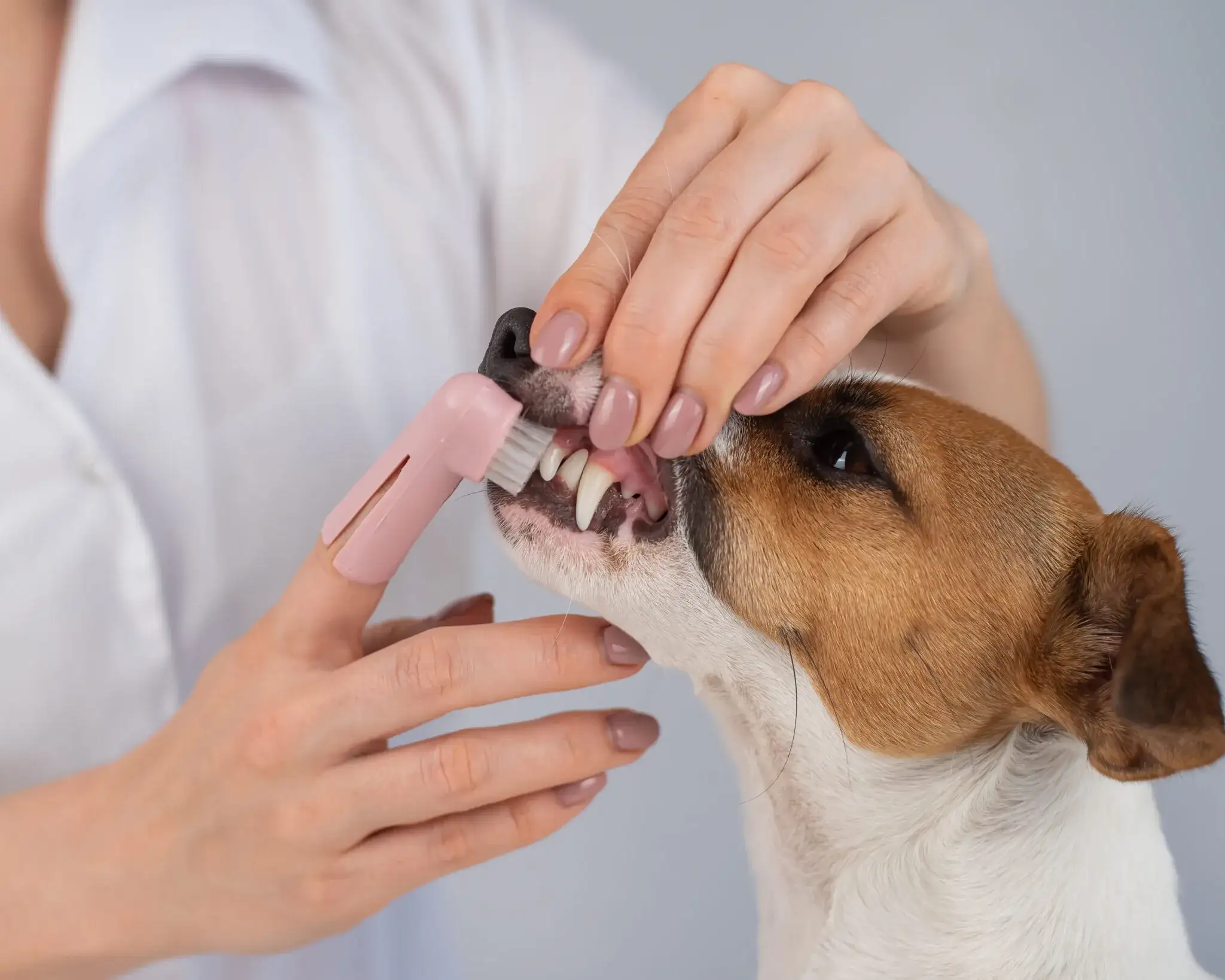
The biggest mistake I see owners make is trying to do too much too fast. I once had a client who decided to start a “dental regime” and immediately shoved a finger brush into her nervous German Shepherd’s mouth. She ended up with a nipped finger and a dog who hid whenever he saw a toothbrush.
In my experience, starting with dog toothpaste as a treat works best. Let your dog lick it off your finger for a week before touching the teeth. Once they associate the paste with a treat, brushing becomes much easier.
One thing to keep in mind: you don’t need to brush the insides of your teeth. A dog’s tongue does a decent job of keeping the interior surfaces clean. Focus entirely on the outside—the part touching the cheeks—where the most saliva sits, and the most tartar builds up.
The Cost of Neglect
I try to be blunt with my clients about the economics. A toothbrush and a tube of dog-safe paste cost about $20 and last for months. A full dental cleaning under anesthesia, which may include bloodwork, IV fluids, and potentially extractions, can easily run several thousand dollars, depending on the severity of the decay.
Last autumn, a toy poodle came in after years of delayed dental care due to fear of anesthesia. By then, mouth bacteria likely contributed to a heart murmur. We had to remove nearly all the dog’s teeth—a preventable, but common situation.u can manage to brush even three times a week, you are significantly lowering the risk of systemic issues like kidney or heart disease.
It’s not about having a “pretty” smile; it’s about making sure your dog doesn’t have to go through a major surgery that could have been avoided with sixty seconds of effort a day.