
Everything You Need to Know
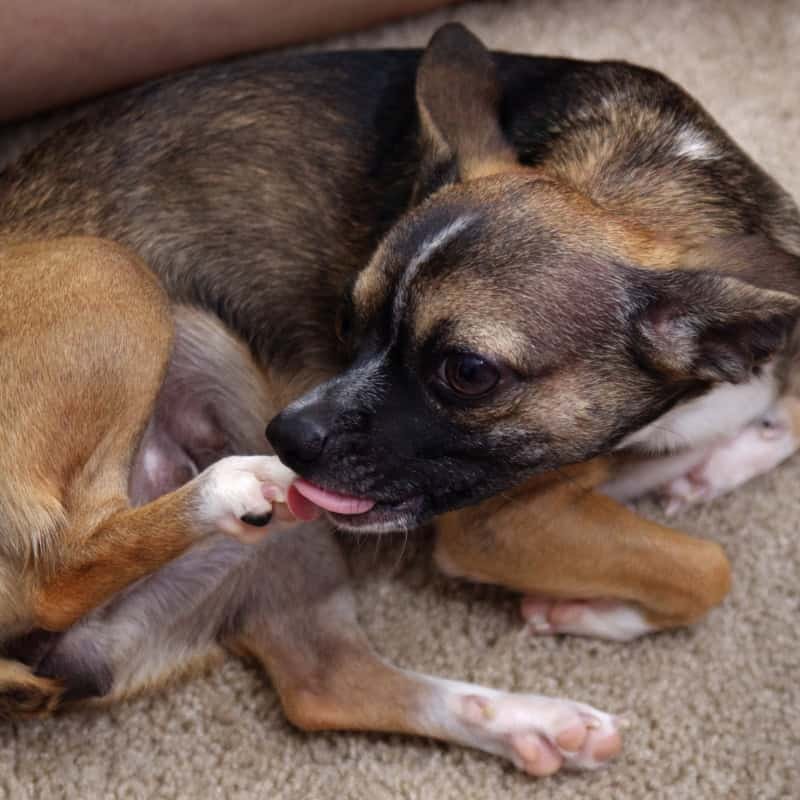
I’m a small-animal veterinarian with a little over a decade in clinical practice, and paw chewing is one of those issues I see every single week. It frustrates owners because it looks harmless at first—just a bit of licking—but it can quickly turn into raw skin, infections, and a miserable dog.
In my experience, paw chewing is never random. There’s always a reason. The trick is figuring out which one you’re dealing with, because the solution depends entirely on the cause.
The First Case That Changed How I Handle This
A few years back, a client brought in a young Labrador who had been chewing her paws so aggressively that the fur between her toes was stained reddish-brown. The owner assumed it was boredom. They bought more toys, walked her longer, and even tried bitter sprays.
Nothing worked.
When I examined her, the skin between her toes was inflamed and slightly swollen. It turned out to be environmental allergies—likely something as simple as grass. Once we treated the inflammation and adjusted her routine (including wiping her paws after walks), the chewing stopped within a couple of weeks.
That case stuck with me because it’s so common: people treat the behavior instead of the cause.
What Paw Chewing Usually Means
Most dogs chew their paws for one of four reasons. In the clinic, I mentally work through these like a checklist.
Allergies (the most common culprit)
This includes environmental triggers such as pollen, dust, and grass, as well as sometimes food sensitivities. Dogs don’t sneeze as we do—they itch. And paws are a favorite target.
Parasites
Fleas aren’t always visible. I’ve had owners insist their dog couldn’t possibly have fleas, only for us to find flea dirt during an exam. Even a single bite can trigger intense itching in sensitive dogs.
Infections
Bacteria or yeast can build up between the toes, especially if the paws stay damp. You’ll often notice a smell or discoloration.
Behavioral causes
Boredom or anxiety can lead to repetitive licking, but in my experience, this is overdiagnosed. Many dogs labeled “anxious” actually have untreated skin irritation.
A Case Where It Wasn’t Medical at All
Not long ago, a client with a rescue mixed breed came in for chronic paw licking. We ran through all the usual tests—no infection, no parasites, no obvious allergies.
Then the owner casually mentioned the dog only chewed her paws in the evening, right around the time the household got quiet.
That detail changed everything.
The dog had mild separation-related anxiety. Not full-blown destruction or barking—just a nervous habit. We introduced structured evening activity, food puzzles, and a predictable routine. Within a month, the paw chewing dropped off significantly.
That’s the minority of cases—but it does happen.
What I Actually Recommend in Practice
If you walked into my clinic with this issue, here’s how I’d guide you.
Start simple, but be observant.
First, look closely at the paws. Are they red? Swollen? Do they smell? If so, you’re likely dealing with inflammation or an infection, and it needs treatment—not guesswork.
If the paws look normal but the behavior persists, consider timing and patterns. Does it happen after walks? During certain seasons? At night?
Some practical steps I regularly suggest:
- Rinse or wipe your dog’s paws after outdoor walks, especially if allergies are suspected.
- Keep the fur between the toes trimmed to reduce moisture buildup.
- Stay consistent with flea prevention—even if you don’t see fleas.
- Avoid overusing over-the-counter sprays; many just mask symptoms.
One mistake I see often is owners trying five different home remedies at once. That makes it impossible to know what’s helping—and it can even irritate the skin further.
When You Should Stop Trying to Fix It Yourself
There’s a point where home care isn’t enough. I tell clients to come in if:
- The skin is broken, bleeding, or oozing
- The chewing is constant or worsening.
- There’s a strong odor from the paws.
- Your dog seems restless or uncomfortable, even when not chewing.
I once treated a spaniel whose owner waited too long, assuming it was “just a habit.” By the time I saw him, he had a deep bacterial infection that took weeks of medication to resolve. Earlier intervention would have saved both time and discomfort.
My Professional Take on “Quick Fixes”
People often ask me about anti-chew sprays, cones, or dog booties. They have their place—but they’re not solutions.
There are barriers.
I use them occasionally to prevent further damage while we treat the underlying issue. But if you rely on them alone, the problem usually comes right back.
What Most Owners Get Wrong
If I had to point out one consistent mistake, it’s assuming paw chewing is behavioral before ruling out medical causes.
In my clinic, it’s the opposite about 80% of the time.
Dogs don’t sit around overthinking their day. If they’re obsessively chewing their paws, something is bothering them—physically or emotionally.
The Bottom Line From Years in Practice
Paw chewing is your dog’s way of telling you something isn’t right. Sometimes it’s as simple as irritation from the grass in your yard. Other times, it’s an infection or a deeper allergy issue.
And occasionally, it’s emotional.
The key is not to jump to conclusions. Pay attention to patterns, look closely at the paws, and don’t wait too long if things aren’t improving.
I’ve seen this problem resolve quickly when properly addressed—and linger for months when misdiagnosed. The difference usually comes down to understanding the “why” behind the behavior.