
Why Proper Technique Matters
As a licensed veterinarian practicing in Texas for over a decade, I’ve helped hundreds of cat owners navigate the sometimes stressful process of putting a cone—or Elizabethan collar—on their cat.
I’ve found that while the concept seems simple, the execution often leaves both owners and cats frustrated. In my experience, patience, timing, and understanding your cat’s behavior are the keys to success.
First Lesson: The Power of Gradual Introduction
The first time I encountered a particularly stubborn case was with a six-year-old domestic shorthair recovering from a minor surgery. She had a strong personality and a low tolerance for restraint.
Her owners were worried they would have to hold her down for hours, but I explained that forcing the cone usually increases anxiety and resistance. Instead, we started by letting her sniff and investigate the cone for a few minutes while offering gentle praise.
Within moments, she was more willing to allow the collar to be gently placed over her head. This approach highlights the importance of gradual introduction rather than sudden restraint.
Choosing the Right Size
Before attempting to put the cone on, I always advise ensuring that it’s the right size for your cat. I once had a patient, a young Maine Coon, whose owners had purchased a standard small cone. Not only was it uncomfortable, but it also interfered with her eating.
Measuring from the tip of the nose to just past the ears ensures the collar prevents licking or biting at wounds without restricting breathing or movement. I’ve seen many owners skip this step and end up with frustrated cats, repeated attempts, and even minor injuries from struggling.
Step-by-Step Approach: Calm and Controlled
When it comes to the actual process, I recommend starting in a quiet space where your cat feels secure. I usually suggest placing the cat on a non-slip surface, such as a carpet or towel.
I remember a case with a senior cat who was extremely anxious; simply sitting on the floor at her level, speaking softly, and gently slipping the cone over her head was far more effective than trying to lift her onto a table.
Holding the cone base steady while letting your cat move her head slowly through it helps prevent panic and reduces the risk of scratching.
Proper Fit: Not Too Tight, Not Too Loose
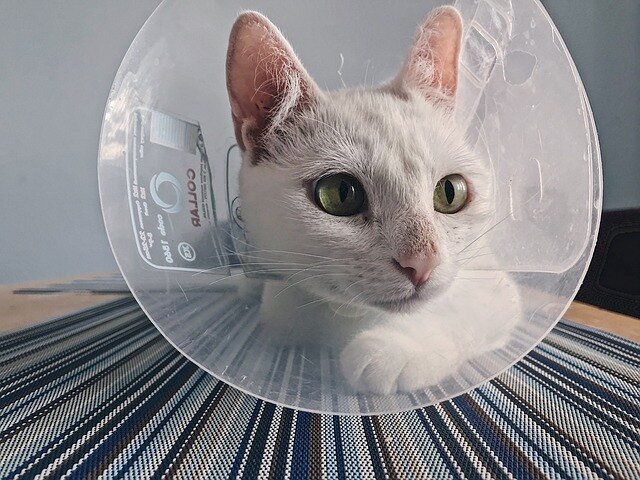
Once the cone is on, fasten it snugly but not tightly. In my practice, I’ve occasionally encountered cats with cones fastened too loosely, allowing them to slip out and undo the purpose entirely. Conversely, cones that are too tight can irritate the neck and even cause injury.
A rule of thumb I share with owners is to ensure two fingers fit comfortably between the collar and the cat’s neck. This balance between security and comfort is something I’ve learned from years of observing cat behavior post-surgery.
Monitoring Your Cat After Placement
I also encourage owners to supervise their cats for the first hour or two. Some cats may try to paw at the collar or panic, and keeping a close eye helps prevent accidents.
I recall a family last year whose kitten knocked over a lamp while trying to escape the cone. A simple adjustment to the room setup—removing fragile objects and offering a cozy spot to retreat—made a huge difference.
Using Positive Reinforcement
In addition to physical adjustments, I often recommend positive reinforcement. Treats, gentle petting, or soft praise while the cone is on helps the cat associate it with safety rather than punishment. I’ve found that cats who receive consistent encouragement tolerate the cone far better and resume normal behaviors like eating and grooming sooner.
Final Thoughts: Patience Makes the Difference
Putting a cat cone on may seem straightforward, but my experience has taught me that preparation, gentle handling, proper sizing, and a calm environment are critical.
Each cat reacts differently, and observing your cat’s comfort level while offering reassurance makes the process far smoother. With patience and careful attention, even the most reluctant cat can adjust to wearing a cone, allowing their healing process to continue safely.
