
How I Tell the Difference in Real Homes
After years working as a small-animal veterinarian, one of the most common (and frustrating) questions I hear from cat owners is: “Is my cat peeing, or is this spraying?”
It sounds like a small distinction, but in practice, it completely changes how I approach the problem—and how quickly we can fix it.
I’ve walked into homes where the smell hits before the door even closes, and the owner is convinced their cat is “just having accidents.” In many of those cases, it wasn’t accidental at all. It was communication.
Let me show you how I tell the difference, based on what I’ve seen again and again in real households.
The Physical Clues Most People Miss
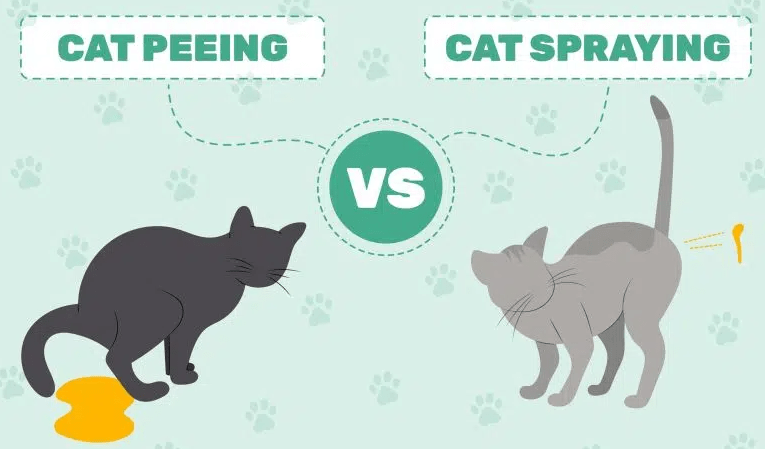
The easiest way to distinguish peeing from spraying isn’t the smell—it’s the position and location.
When a cat urinates normally outside the litter box, it typically squats. You’ll find urine on horizontal surfaces: carpets, beds, laundry piles, or rugs. The volume is usually large because they’re emptying their bladder.
Spraying looks very different. The cat stands upright, often with a slightly quivering tail, and directs a small amount of urine onto vertical surfaces—walls, doors, furniture edges.
I remember a case not long ago where a client insisted her male cat had a “bladder issue.” But when I visited, I noticed small, strong-smelling spots about a foot off the ground on multiple walls. That wasn’t a medical problem—that was territorial marking.
Why Cats Spray (And Why It’s Not “Bad Behavior”)
Spraying is communication. Cats use it to mark territory, express stress, or respond to environmental changes.
I’ve seen it triggered by surprisingly subtle things. One household I worked with had a perfectly healthy indoor cat that suddenly started spraying near the front door. The cause? A stray cat had begun roaming outside the window. That invisible “intruder” was enough to trigger a territorial response.
Another time, a client had just rearranged furniture and brought in a new sofa. Within days, her cat began spraying the corners of the room. To us, it’s décor. To a cat, it’s a disruption of their familiar scent map.
When It’s Actually Peeing Outside the Litter Box
If your cat is squatting and leaving larger puddles, I start thinking about two main categories: medical issues and litter box dissatisfaction.
Medical causes are more common than people expect. I’ve treated countless cats with urinary tract infections, bladder inflammation, or even early kidney disease that first showed up as “accidents.” One older cat I saw had been peeing on the owner’s bed for weeks. It turned out he was in pain while urinating and had started associating the litter box with discomfort.
Then there’s the litter box itself. Cats can be incredibly particular. I’ve seen problems caused by:
- Switching to a strongly scented litter
- Not cleaning the box often enough.
- Placing the box in a noisy or high-traffic area
One client solved months of frustration simply by adding a second litter box in a quieter room. The behavior stopped almost overnight.
The Smell Difference (Subtle, But Real)
Both pee and spray smell unpleasant, but spraying tends to have a stronger, more pungent odor. That’s because it contains additional pheromones meant for communication.
In practice, though, I don’t rely on smell alone. By the time most owners notice it, everything smells bad. I focus on location, posture, and pattern.
Common Mistakes I See All the Time
One mistake I see repeatedly is punishing the cat. Owners assume the behavior is deliberate or spiteful. It’s not.
I once worked with a family who had started yelling at their cat whenever they found a sprayed area. The result? The cat became more anxious—and the spraying increased. Once we addressed the underlying stress and stopped the punishment, the behavior gradually faded.
Another mistake is cleaning with products that don’t fully remove odor. If a cat can still smell urine—even faintly—they’re more likely to return to that spot. I always recommend enzymatic cleaners for this reason.
How I Approach the Problem Professionally
When I’m trying to figure out whether a cat is peeing or spraying, I mentally run through three questions:
- Where is it happening? Vertical or horizontal surfaces tell me a lot.
- How much urine is there? Small amounts suggest spraying; larger puddles suggest urination.
- What’s changed recently? New pets, visitors, furniture, or even schedule shifts can be triggers.
From there, the solution becomes much clearer.
If it’s spraying, I focus on reducing stress, blocking access to trigger areas, and sometimes using pheromone diffusers. If it’s inappropriate urination, I look more closely at health and the litter box setup.
What I Tell Cat Owners Honestly
If you’re dealing with this, don’t guess. First, observe your cat closely, focusing on their posture, the amount of urine, and the surfaces involved. This distinction guides whether you address a behavioral issue or seek medical help.
In my experience, the sooner you identify which one it is, the easier it is to fix. I’ve seen situations spiral out of control simply because the initial signs were misunderstood.
And I understand whether your cat is peeing or spraying is more than just solving an inconvenience—it’s about listening to what your cat is telling you. If you address the real reason behind the behavior, both you and your cat can get back to a happier, stress-free home.