
As a licensed veterinarian practicing in Texas for over a decade, I’ve learned that most “bad cat behavior” isn’t about a cat being difficult. It’s communication. And if you miss what they’re trying to say, the problem usually escalates.
I’ve had clients arrive embarrassed, frustrated, even angry. They’ll say their cat is spiteful, stubborn, or acting out on purpose. In my experience, that assumption is almost always wrong. Cats are efficient creatures. They don’t waste energy on revenge. They react to stress, pain, instinct, or unmet needs.
Let me walk you through the behaviors I see most often in my exam room — and what’s usually behind them.
Litter Box Problems: The Red Flag Most People Miss
If I could convince cat owners of one thing, it would be this: inappropriate urination is a medical issue until proven otherwise.
A few months ago, a client brought in her seven-year-old cat after he started urinating on her guest bed. She was certain he was angry because relatives had stayed over. She had already changed litter brands, moved the box, and even tried a spray she bought online.
We ran a urinalysis. He had a painful urinary tract infection.
Within days of treatment, the “bad behavior” stopped.
I see this constantly. Urinary infections, bladder stones, kidney disease, diabetes — they often show up first as litter box avoidance. Cats associate the litter box with pain if urination hurts. So they choose a softer surface. It’s not defiance. It’s avoidance learning.
Even when it isn’t medical, the cause is usually environmental. I’ve visited homes where the litter box was tucked beside a loud washing machine or shared between three cats in a tense household. Cats want privacy, safety, and cleanliness. I generally recommend one litter box per cat plus one extra. And scoop daily — not every few days.
Skipping the medical check is the biggest mistake I see.

Aggression That Seems to Come Out of Nowhere
“Doc, he just attacked my ankle.”
I hear that sentence more than you’d think.
Last spring, a couple brought in a young male cat who had started ambushing them in the hallway at night. They were worried he was becoming dangerous. After asking a few questions, the pattern became clear: both owners had started working longer hours. The cat was alone most of the day with minimal stimulation.
This wasn’t aggression. It was redirected hunting behavior.
Cats are predators wired for short bursts of action. If they don’t get structured play, they create their own opportunities. Ankles moving down a hallway resemble prey.
I advised them to introduce two daily interactive play sessions using a wand toy—not exclusively laser pointers, but toys he could physically “catch.” Within two weeks, the attacks stopped.
True aggression does happen, but sudden changes in behavior always push me to check for pain first. Dental disease, arthritis, and even subtle spinal issues can make a cat lash out. I’ve diagnosed severe tooth root abscesses in cats whose only outward sign was irritability.
Behavioral labels often hide medical problems.
Scratching Furniture (And Why Punishment Backfires)
Scratching is normal. Declawing is not something I recommend, except in rare medical circumstances. I’ve treated too many declawed cats with chronic pain and behavioral complications to support it casually.
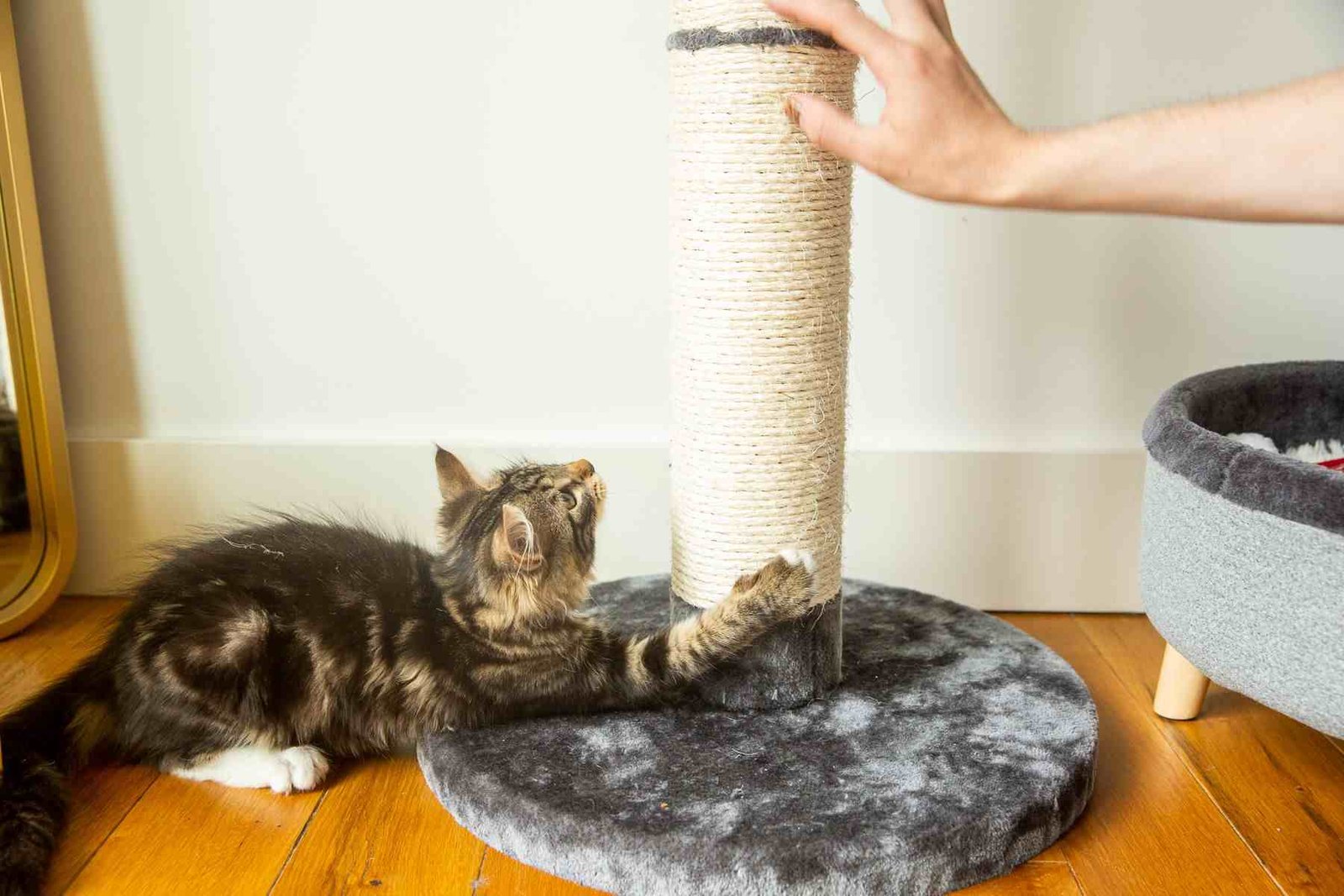
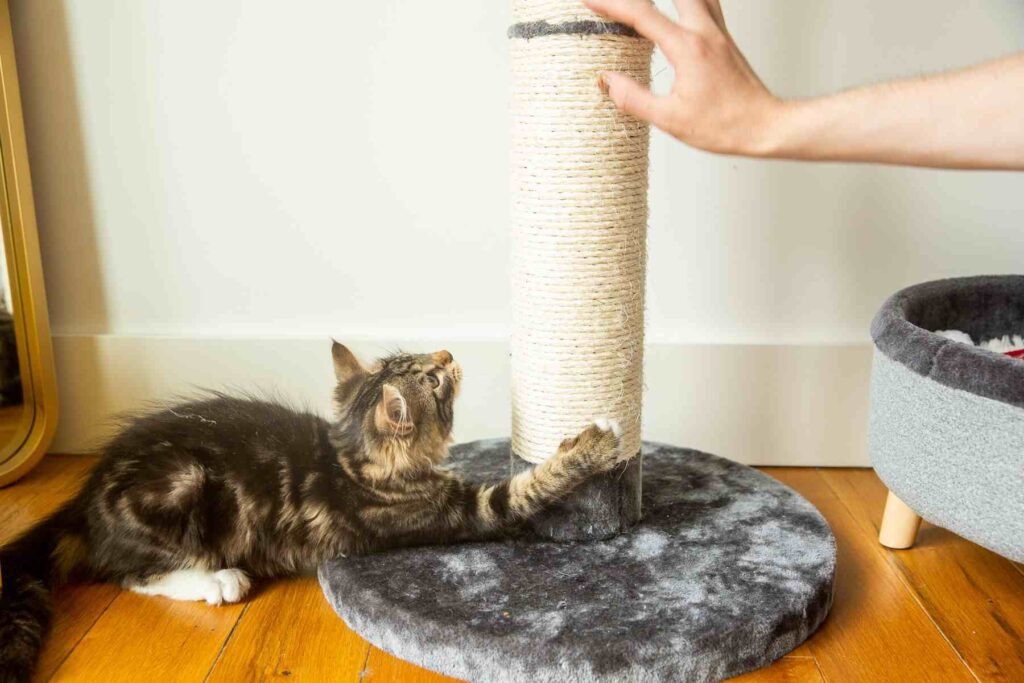
Scratching serves multiple purposes: claw maintenance, stretching, and scent marking. If your cat chooses the couch, it usually means the couch meets their needs better than the scratching post you bought.
I remember visiting a home where a beautiful, expensive scratching post stood unused in the corner. The cat preferred the arm of a linen sofa. The issue? The post was short and wobbly. The sofa was tall and sturdy.
Cats prefer vertical surfaces they can fully extend on. When the owners replaced it with a tall, stable post near the cat’s favorite resting area, the damage to the sofa gradually stopped.
Punishment, especially yelling or spraying water, only creates anxiety. Anxious cats scratch more, not less.
Excessive Meowing That Tests Your Patience
Some breeds are naturally vocal, but sudden excessive meowing is different.
An older cat I treated a while back began yowling at night. The owner assumed it was attention-seeking. Bloodwork revealed early hyperthyroidism. After treatment, the nighttime vocalizing significantly improved.
In senior cats, cognitive dysfunction can also cause disorientation and nighttime crying. Younger cats may meow excessively out of boredom or routine reinforcement — meaning they’ve learned that noise equals attention or food.
I’ve found that consistency matters more than intensity. If you respond to meowing sometimes but not others, you accidentally train the behavior to persist. Cats are very good at gambling systems like that.
Destructive Behavior After Changes in the Home
Cats thrive on predictability.
I saw a spike in behavioral complaints one year after a large number of families in my area moved homes. New house, new smells, new routines — and suddenly, cats were hiding, spraying, or knocking items off counters.
One client’s cat began spraying near windows shortly after a new neighborhood cat started roaming outside. The indoor cat wasn’t “acting out.” He felt his territory was threatened.
We added window film to reduce visual triggers and increased vertical space inside the home. Within weeks, the marking reduced dramatically.
Environmental enrichment is often underestimated. Cats need:
- Vertical territory
- Predictable feeding routines
- Safe hiding spots
- Interactive play
- Clean litter areas
Without these, behavior problems become more likely.
The Human Factor
I say this gently: sometimes the problem isn’t the cat.
I’ve met owners who unintentionally reward biting during play, allow inconsistent boundaries, or change feeding schedules daily. Cats respond to patterns. If the pattern keeps shifting, anxiety increases.
I once treated a young cat labeled “unadoptable” for aggression. After observing him in a quieter exam room, it became clear he was overstimulated by constant rough play at home. We coached the family on calmer interactions and appropriate toys. Within a month, he was a different animal.
Consistency and structure go a long way.
When to Worry
If your cat’s behavior changes suddenly — especially appetite, litter habits, sociability, or aggression — I recommend a veterinary exam before assuming it’s behavioral.
In my practice, I’ve diagnosed diabetes, kidney disease, chronic pain, and hormonal disorders that first appeared as “bad behavior.” Cats hide illness remarkably well. Behavior is often the first clue.
On the other hand, if your cat has always scratched, climbed, hunted, or vocalized, that’s part of its personality and instinct. The goal isn’t to eliminate natural behavior. It’s to redirect it so it works inside your home.
My Professional Take
I don’t believe in labeling cats as bad. I believe in solving the problem in front of you.
Start with a medical evaluation. Improve the environment. Increase structured play. Be consistent. Avoid punishment. And understand that most unwanted behaviors are a symptom of something deeper — stress, pain, boredom, or confusion.
After years in exam rooms and countless conversations with frustrated owners, I can tell you this: when you address the underlying cause, most “bad” behavior softens surprisingly quickly.
Cats are rarely trying to make your life harder. They’re trying to make theirs manageable.