
Many pet owners assume that if a female cat instinctively cares for her kittens, a male cat in the same household might do the same. The idea of a “fatherly” tomcat grooming or protecting kittens is appealing. In reality, male cat behavior around kittens is highly variable — and sometimes unpredictable.
Understanding what is biologically normal, what is possible, and what is risky helps owners make safer decisions for both adult cats and vulnerable kittens.
The Natural Role of Male Cats
In the wild and in free-roaming populations, male cats typically do not participate in raising kittens. Maternal behavior — nursing, cleaning, protecting, and teaching — is driven by hormones released during pregnancy and after birth. Male cats do not experience these hormonal changes.
From a biological standpoint, kittens are the mother’s responsibility. A male cat may remain nearby if he shares territory with the mother, but active caregiving is not instinctive.
This does not mean male cats are always dangerous. It means caregiving is not built into their natural behavioral programming.

Can Male Cats Be Gentle With Kittens?
Yes, some male cats can be calm and tolerant around kittens. This is most commonly seen in:
-
Neutered males
-
Cats raised in multi-cat homes
-
Individuals with naturally relaxed, social temperaments
In stable indoor environments, a neutered male may groom kittens, allow them to sleep nearby, or engage in gentle play. These behaviors are social, not parental. The male cat is responding to social bonding, not paternal instinct.
The key distinction is this: tolerance and occasional nurturing behavior can occur, but consistent caregiving should not be expected.
Is It Safe to Leave a Male Cat Alone With Kittens?
This is the question most owners care about. The safest answer is caution.
Kittens are small, fragile, and unable to defend themselves. Even a playful swat from an adult cat can cause injury. The risks increase if:
-
The male cat is unneutered
-
He shows territorial or dominant behavior
-
The kittens are newborns (under 4 weeks)
-
The environment is stressful or crowded
Unneutered males are more likely to show aggression toward kittens, especially if they perceive them as competition or unrelated offspring. In some cases, intact males may harm kittens. This behavior, while distressing, has biological roots related to reproductive competition.
Because risk cannot always be predicted by personality alone, unsupervised access is not recommended until behavior has been carefully observed over time.
Why Some Male Cats Show Aggression
Owners are often surprised when a previously calm male reacts poorly to kittens. The behavior usually stems from one of three causes:
Territorial stress
Cats are territorial animals. A sudden addition of kittens changes scent patterns, noise levels, and space usage. A male may respond defensively.
Resource competition
Food bowls, litter boxes, resting spots, and human attention are valuable resources. If these feel threatened, tension can escalate.
Hormonal influence
Testosterone increases territorial and mating behaviors. Intact males are more prone to assertive or aggressive reactions.
Aggression does not necessarily mean the male cat is “bad.” It often signals stress, confusion, or instinctive behavior. The responsibility lies in managing introductions carefully.
Common Misunderstandings
Several myths can lead to risky decisions.
Myth: The father will naturally protect his kittens.
Domestic cats do not form structured nuclear families. A male does not automatically recognize or protect offspring.
Myth: If he is calm with adult cats, he will be gentle with kittens.
Adult cats can defend themselves. Kittens cannot. Behavior around adults does not guarantee safety with babies.
Myth: Curiosity means acceptance.
Sniffing, staring, or hovering may look gentle but can escalate quickly. Early curiosity should always be supervised.
Understanding these distinctions prevents assumptions that could endanger kittens.
The Role of Neutering
Neutering significantly reduces hormone-driven aggression and territorial intensity. Neutered males are statistically less likely to harm kittens and more likely to coexist peacefully.
However, neutering does not automatically create nurturing behavior. It lowers risk; it does not eliminate it.
From a safety perspective, neutering is one of the most responsible steps an owner can take when managing multi-cat households.
Introducing a Male Cat to Kittens Safely
Gradual introduction reduces stress and lowers the chance of negative reactions. A safer approach includes:
-
Keeping newborn kittens in a separate, quiet space
-
Allowing scent exchange before visual contact
-
Supervising all early interactions
-
Providing multiple food and litter stations
-
Watching closely for stiff posture, tail flicking, or intense staring
Short, calm interactions are preferable to long, uncontrolled exposure. If tension appears, separation should be immediate.
Rushing introductions is one of the most common mistakes owners make.
When Separation Is the Safest Choice
In some households, permanent or long-term separation is necessary. This is especially true if:
-
The male cat displays repeated aggression
-
He fixates intensely on the kittens
-
The mother cat becomes defensive or stressed
-
Injuries or near misses occur
The wellbeing of kittens must take priority. Even one aggressive incident can cause serious harm.
If there is uncertainty, erring on the side of physical separation is the most responsible decision.
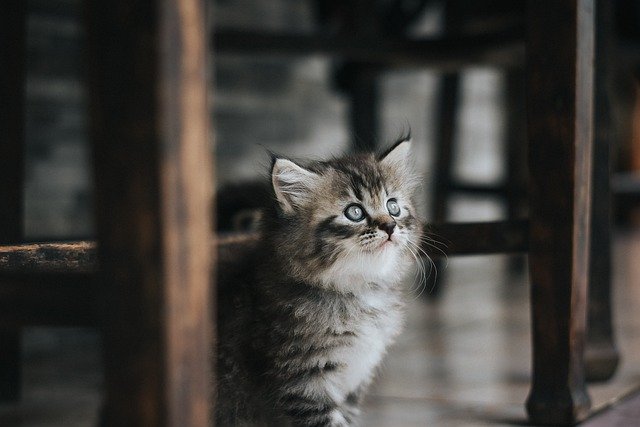
What About Orphaned Kittens?
Occasionally, owners hope a male cat will “adopt” orphaned kittens. While some males may show warmth or grooming behavior, they cannot nurse and are not hormonally primed to regulate temperature or stimulate elimination in newborns.
Orphaned kittens require:
-
Bottle feeding on a strict schedule
-
Warmth control
-
Careful hygiene
-
Monitoring for weight gain
A male cat may provide social comfort, but he cannot replace maternal care.
The Safest Approach for Pet Owners
Male cats can sometimes coexist peacefully with kittens. A few may even display gentle social behavior. However, this outcome is not guaranteed and should never be assumed.
The safest path forward includes:
-
Neutering male cats
-
Supervising all early interactions
-
Providing separate safe spaces
-
Avoiding forced contact
-
Monitoring behavior carefully
Kittens are vulnerable during their first weeks of life. Protecting them requires thoughtful planning rather than hopeful expectations.
A calm, supervised, and gradual approach protects both the adult cat and the kittens. Responsible management — not assumption — is what ensures safety in a multi-cat home.
