
As a licensed veterinarian practicing in Texas, I hear this question more often than most people expect. It usually comes from a concerned cat owner who has discovered their cat sneaking bites from the dog’s bowl. Sometimes it comes after a few days of shared feeding and growing worry.
The short answer is this: a small amount of dog food is unlikely to harm a cat in the short term. But feeding dog food regularly can absolutely cause health problems over time. Cats and dogs have very different nutritional needs, and those differences matter more than many owners realize.
Why Cats Cannot Thrive on Dog Food
Cats are obligate carnivores. That means their bodies are designed to depend on nutrients found almost exclusively in animal tissue. Dogs, by contrast, are more flexible eaters. They can tolerate a wider range of ingredients, including more carbohydrates and plant-based components.
One of the most critical differences is taurine. Cats cannot produce enough taurine on their own, and they must get it from their diet. Dog food does not contain the level of taurine cats require because dogs do not need as much. Over time, a taurine deficiency can lead to heart disease (dilated cardiomyopathy), vision problems, and reproductive issues in cats.
I once treated a middle-aged indoor cat whose owner believed she was being “efficient” by feeding both pets the same premium dog kibble. The cat had gradually become lethargic and lost weight. Blood work and cardiac evaluation showed early signs of heart muscle changes consistent with taurine deficiency.
After transitioning to a proper feline diet and supplementing appropriately, the cat improved, but the damage could have been far worse if it had continued.
That case is not rare. It reflects a common misunderstanding: quality dog food is still not nutritionally appropriate for cats.
Short-Term vs. Long-Term Effects
If a cat steals a few bites of dog food occasionally, most of the time, there will be no immediate crisis. Some cats may experience mild digestive upset—such as soft stool or vomiting—especially if the dog food is high in fat.
The real concern is consistent feeding. Over weeks and months, nutritional imbalances develop. In my experience, these issues show up gradually:
- Weight loss despite normal appetite
- Dull coat and increased shedding
- Reduced energy
- Muscle loss
Owners often don’t connect these changes to diet right away because they develop slowly. By the time symptoms are obvious, the deficiency may already be significant.
Common Situations I See in Practice
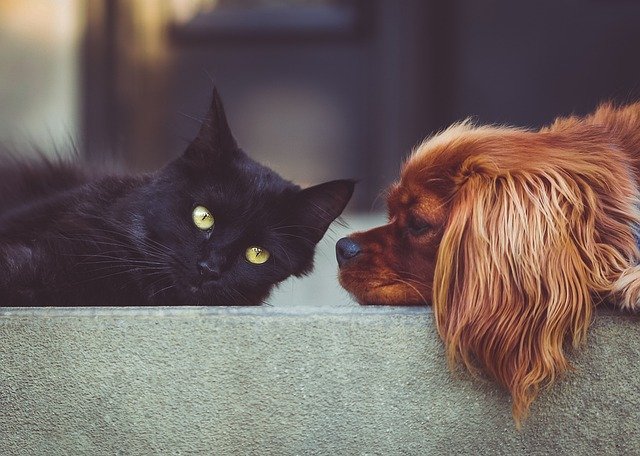
One common scenario involves free-feeding. A dog’s bowl is left out all day, and the cat helps herself. Owners may not even realize how much the cat is eating. I’ve had clients insist their cat “barely touches” the dog food, only to discover later that it was a substantial portion of the cat’s daily intake.
Another frequent situation occurs in multi-pet households, where a cat may prefer the taste of dog food. Dog food is sometimes higher in certain fats, which can make it appealing to cats. A few months ago, a client brought in a young cat with chronic diarrhea and weight loss. The owner had recently switched to an open feeding system for convenience.
The cat was eating mostly from the dog’s bowl. Once we separated feeding stations and returned the cat to a balanced feline diet, her digestion stabilized within weeks.
These are not dramatic emergencies. They are slow-building nutritional problems that could have been prevented.
The Reverse Is Also Risky
Interestingly, while dog food can harm cats if fed long-term, cat food can also create issues for dogs. Cat food is typically higher in protein and fat. Dogs that regularly consume it may develop gastrointestinal upset or gain excess weight. I have treated more than one dog for pancreatitis after repeated access to cat food.
Each species has been formulated differently for a reason.
What About Occasional Accidents?
If a cat eats dog food once or twice, there is usually no need to panic. Monitor for vomiting, diarrhea, or changes in behavior. Persistent symptoms should prompt a veterinary visit.
The greater risk lies in repeated substitution. Feeding a cat dog food as its primary diet is not a safe long-term choice, even if the cat appears healthy initially.
Practical Advice for Multi-Pet Homes
In households with both cats and dogs, prevention is straightforward but requires consistency:
- Feed pets in separate areas.
- Pick up uneaten food rather than leaving bowls out all day.
- Use elevated feeding spots for cats if necessary.
- Monitor body weight and appetite changes closely.
These adjustments may seem minor, but they prevent the gradual nutritional imbalances that are harder to correct later.
Professional Perspective
From a clinical standpoint, dog food will not typically poison a cat in a single exposure. The concern is not toxicity; it is deficiency. Cats require nutrients in specific amounts that dog food cannot provide.
In my practice, I strongly advise against using dog food as a substitute for cat food, except for an occasional accidental bite. The nutritional differences are not trivial, and the consequences can be serious if ignored.
Feeding each pet a diet formulated for their species is one of the simplest and most effective ways to protect their long-term health.