
During my years working as a practicing veterinarian in a busy small-animal clinic, one behavior owners frequently bring up in a worried voice is food aggression. A dog that growls, snaps, or guards its bowl can make even experienced pet owners uneasy. I’ve seen families shocked by it, especially when their dog is otherwise gentle and affectionate.
Food aggression—often called resource guarding in veterinary behavior circles—isn’t unusual. In fact, I encounter it regularly in clinic consultations. Understanding why it happens makes it much easier to manage safely.
Food Aggression Often Starts With Instinct
Dogs may live comfortably in homes now, but their survival instincts didn’t disappear just because they sleep on couches.
In the wild, food was never guaranteed. A dog or wolf that hesitated could lose its meal to another animal. Guarding food was a survival skill, not a behavioral problem.
I often explain to clients that a dog growling over its bowl isn’t being “bad.” It’s responding to an instinct that once helped its ancestors survive.
One case I remember clearly involved a young rescue shepherd mix. The dog adored its new family but stiffened and growled whenever anyone walked past during meals. The owners were worried they had adopted an aggressive dog. After a few conversations about the dog’s background—several months as a stray—it became obvious that food had likely been scarce for a long time. Guarding meals was simply a habit formed during survival.
Past Experiences Can Shape the Behavior
A dog’s history plays a major role in whether food aggression develops.
Rescue dogs and former strays show it more often in my experience. Many of them have gone through periods where meals were unpredictable. Once food appears, protecting it becomes automatic.
Last spring, a couple brought in a mixed-breed dog they had adopted from a shelter. The dog was affectionate and playful, but it snapped at their teenage son when he reached down to pick up the food bowl after dinner. The dog didn’t bite, but the warning was clear.
After discussing the dog’s background with them, we learned it had been found scavenging around restaurant dumpsters. For that dog, every meal had probably involved competition—from other animals or even people trying to shoo it away.
That kind of experience leaves a strong impression.
Competition in Multi-Dog Homes
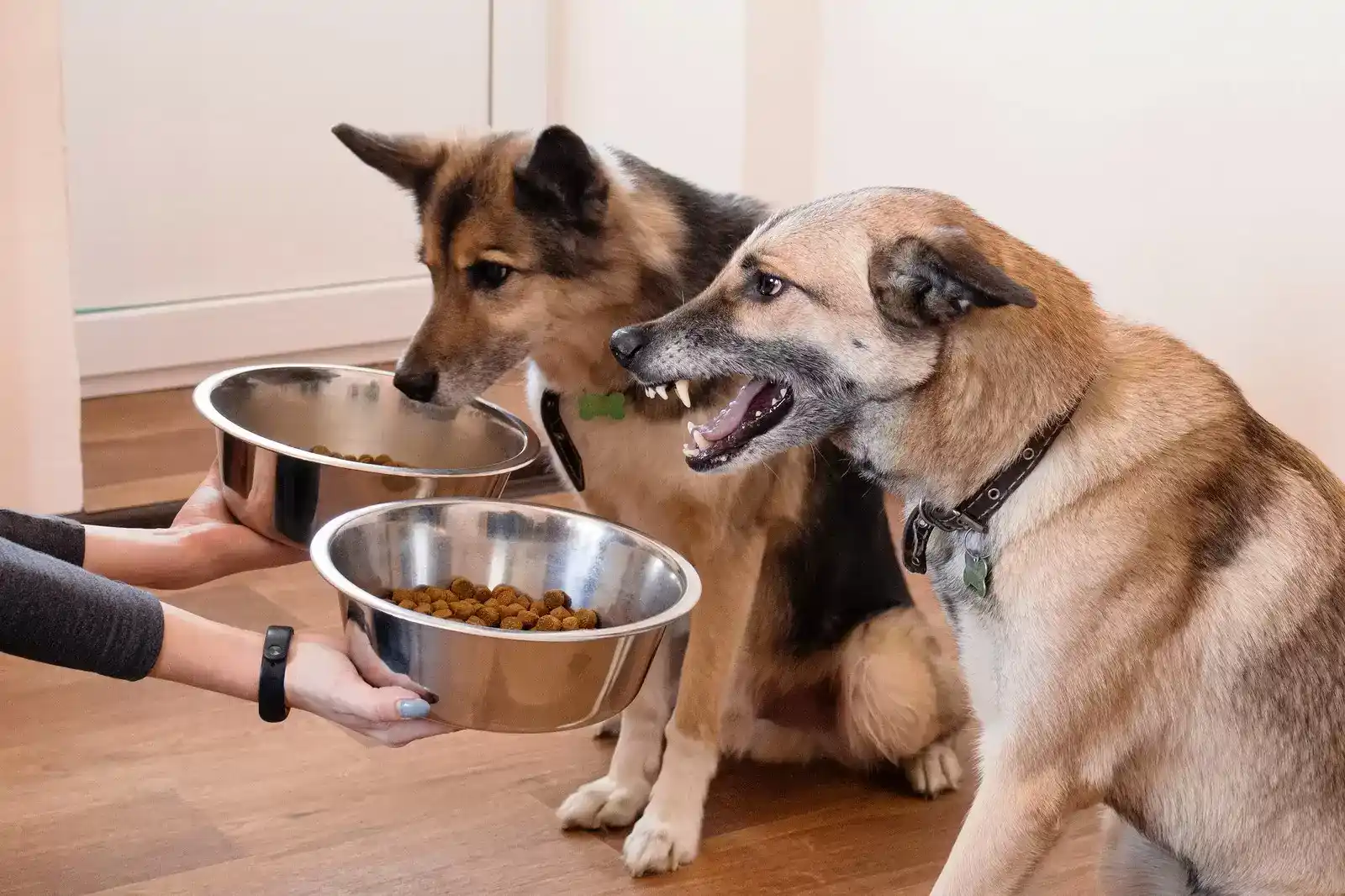
Another pattern I’ve seen repeatedly involves homes with more than one dog.
Even dogs that grew up together may develop tension around food. It doesn’t necessarily mean they dislike each other. Food is simply a high-value resource.
Several years ago, a family came in with two Labrador retrievers that had always gotten along beautifully. Then one evening, the younger dog lunged when the older one wandered too close to its bowl. The owners were surprised because they had never seen conflict between them.
After observing their feeding routine, the reason became obvious: both dogs were eating only a few feet apart. The younger dog felt pressured, even if the other dog wasn’t actively trying to steal food.
Once the owners started feeding them in separate areas, the problem disappeared almost immediately.
Some Dogs Are Naturally More Guarding-Prone
Breed tendencies and personality also influence behavior.
Working and guarding breeds sometimes show stronger resource-protective instincts. That doesn’t mean those dogs are aggressive or dangerous—it simply means they may take ownership of valued items more seriously.
I’ve also noticed that confident dogs tend to guard more openly, while anxious dogs may skip the warning signs and snap more quickly. That difference can catch owners off guard.
Common Mistakes Owners Make
Food aggression often worsens because of well-intentioned mistakes.
One mistake I see frequently is owners repeatedly taking a dog’s bowl away while it’s eating to “show dominance.” Years ago, this advice circulated widely, but in practice, it often makes things worse.
From the dog’s perspective, someone approaching the bowl now truly is a threat. The dog learns that humans sometimes steal food, which reinforces guarding behavior.
Another mistake involves children approaching dogs while they eat. Even the calmest dog can feel defensive in that situation.
In my own household, I’ve always kept a simple rule: dogs eat in peace. Nobody touches them during meals.
What Food Aggression Actually Looks Like
Many people assume aggression means biting, but the behavior usually starts much earlier.
I encourage owners to watch for early signals such as:
- Freezing when someone approaches
- Lowering the head over the bowl
- Stiff body posture
- A quiet growl
Those signs indicate the dog is in discomfort. Respecting those warnings helps prevent escalation.
What Actually Helps Reduce Food Guarding
In mild cases, small changes make a big difference.
Feeding dogs in quiet areas, keeping other pets away during meals, and avoiding interruptions often reduces tension immediately.
Behavior training can also help reshape the dog’s expectations around people in the presence of food. I’ve worked with many clients on gradual exercises where approaching a dog’s bowl predicts something better—like adding a small piece of chicken.
Over time, the dog begins to associate human presence with positive outcomes rather than with loss.
One older terrier I worked with had guarded food for years. The owner patiently practiced this method for several weeks, tossing small treats near the bowl while the dog ate. Eventually, the terrier stopped stiffening when someone approached.
It wasn’t instant, but it worked.
When Professional Help Is Necessary
Some cases go beyond simple adjustments.
If a dog has already bitten someone or escalates quickly without warning, I usually recommend working with a veterinary behaviorist or experienced trainer. Safety comes first.
Aggression connected to anxiety or fear sometimes benefits from behavioral therapy and, occasionally, medication. I’ve seen dogs improve dramatically once the underlying stress is addressed.
A Final Thought From Years in Practice
Food aggression can feel alarming, especially for families with children. But in most situations, it isn’t a sign of a “bad” dog.
More often, it reflects instinct, past hardship, or simple misunderstanding.
The dogs I’ve treated for food guarding are usually loving companions outside of mealtime. With patience, good management, and sometimes professional guidance, many of them learn that they no longer need to defend their dinner.
