
A Veterinarian’s Real-World Perspective
I’ve been a licensed veterinarian practicing in Texas for over a decade, and if there’s one question I hear almost every week—sometimes shouted over a trembling dog in the back seat—it’s this: “Why does my dog shake so much in the car?”
I’ve seen this from every angle. As a clinician who watches dogs arrive visibly stressed, as a dog owner myself, and as someone who’s spent years untangling the differences between fear, nausea, and learned behavior. Car shaking is standard, but it’s never meaningless. Your dog is telling you something, and the cause matters.
Fear Is the Most Common Reason—and It’s Usually Learned
In my experience, most dogs who shake in the car aren’t sick or “dramatic.” They’re scared, not of the vehicle itself, but of what the car has come to represent.
I remember a young mixed-breed dog whose owner insisted he “hated driving.” The dog began shaking the moment the engine started. Digging deeper, it turned out every car ride for the first two years of his life ended at my clinic or an emergency hospital. From the dog’s perspective, the car reliably predicted needles, restraint, and discomfort. The shaking wasn’t random—it was anticipation.
Dogs are exceptional at pattern recognition. If car rides only lead to stressful destinations, anxiety starts earlier and earlier: first in the parking lot, then in the driveway, then in the sound of keys. By the time the dog is in the car, the stress response is already in full swing.
Motion Sickness Isn’t Just About Vomiting
Another cause I see often is motion sickness, especially in puppies and young dogs. Many owners assume that if a dog isn’t throwing up, nausea can’t be the issue. That’s not true.
I treated a Labrador last spring who shook violently during every drive but never vomited. The owner thought it was anxiety. After a short trial with anti-nausea medication, the shaking stopped almost entirely. The dog wasn’t afraid—he was queasy.
Dogs with motion sickness may:
- Shiver or tremble
- Drool excessively
- Lick their lips repeatedly
- Refuse treats they’d usually love
One detail that stands out to veterinarians is timing. If the shaking starts only once the car is moving and eases shortly after stopping, nausea jumps higher on my list than fear.
Past Trauma Leaves a Physical Memory
Occasionally, the cause is a single bad event. I’ve worked with dogs who were in car accidents, hit by another vehicle, or transported long distances in poor conditions before adoption. These dogs often show shaking, a stiff posture, and wide eyes, even during short, calm rides.
One rescue dog I evaluated had been transported across state lines in a crate during extreme heat. Months later, even sitting in a parked car with the windows open caused visible trembling. The car itself wasn’t dangerous anymore, but the dog’s nervous system didn’t know that.
This kind of response isn’t stubbornness. It’s a survival reflex that hasn’t been rewritten yet.
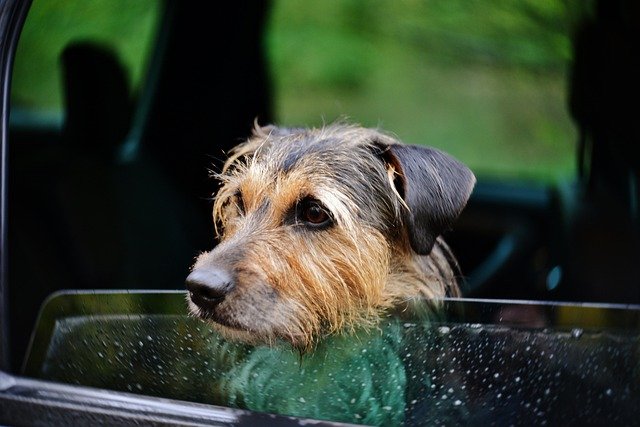
Cold, Pain, and Age Can Be Overlooked Factors
Not all shaking is emotional. I’ve had older dogs stop shaking in the car after we adjusted pain management for arthritis. Road vibrations can aggravate sore joints or spinal issues, especially in large or senior dogs.
Temperature matters too. Dogs riding on leather seats or near air vents may be cold. I once had an owner convinced her small dog had anxiety, only for the shaking to disappear once a simple blanket was added.
These are the cases where observation really counts. If your dog also shakes at home, after rest, or when standing up, I start thinking beyond behavior.
Common Mistakes I See Owners Make
One of the biggest missteps I encounter is reassurance in the moment. Talking rapidly, petting frantically, or repeating “It’s okay, it’s okay” can unintentionally reinforce the fear. From a dog’s point of view, your nervous energy confirms that something is wrong.
Another mistake is forcing exposure too quickly. I’ve seen well-meaning owners take anxious dogs on long drives, hoping they’ll “get used to it.” More often, that backfires and deepens the response.
Crating improperly is another issue. A crate that slides, rattles, or limits airflow can worsen both fear and nausea. Stability matters more than confinement.
When I Recommend Intervention—and When I Don’t
As a veterinarian, I’m cautious about jumping straight to medication, but I also don’t believe dogs should suffer through repeated distress.
If shaking is mild and limited to short trips, behavior modification and gradual exposure usually work well. For dogs with severe tremors, panting, or attempts to escape, I’m comfortable recommending medical support alongside training. That might mean anti-nausea medication, anxiety support, or both, depending on the pattern.
What I advise against is ignoring it. Shaking rarely stays static. Left unaddressed, it often escalates.
What Your Dog Is Really Communicating
Every shaking dog I’ve examined was reacting for a reason, even when that reason wasn’t apparent at first. The car is a powerful trigger because it combines movement, noise, confinement, and expectation.
When owners slow down enough to notice when the shaking starts, how it progresses, and what improves it, the answer usually reveals itself. The solution isn’t always simple, but it’s almost always possible.
I’ve watched dogs who once shook so hard they couldn’t stand eventually nap peacefully in the back seat. That change didn’t come from forcing bravery. It came from understanding the message behind the shake—and responding to it thoughtfully.