
As a licensed veterinarian who has spent years in small-animal practice with plenty of emergency shifts mixed in, I’ve learned that cats are masters of squeezing into places that make no sense to us and perfect sense to them.
Cars are one of those places. Warmth, darkness, and a sense of “tucked-away safety” draw them in, and I’ve treated more than a few cats who were discovered only after a car was started or driven.
I’m going to speak from experience here rather than theory, because that’s what actually helps people prevent injuries and find a missing cat before something bad happens.
Why do cars attract hiding cats?
Cats don’t “choose” cars because they are adventurous. They go there because cars feel like dens. A recently driven engine radiates heat through the hood. Wheel wells offer curved shelter from the wind. Trunks and cargo areas smell like stored belongings, not strangers or dogs. To a nervous or outdoor cat, those qualities are irresistible.
The cats I see hiding in cars usually fall into three situations: a frightened indoor cat that slipped out and panicked, a neighborhood cat looking for warmth in cold weather, or a new adoptee that hasn’t settled and bolts toward the first dark space it finds. All three behave similarly once scared — they go low, go dark, and go quiet.
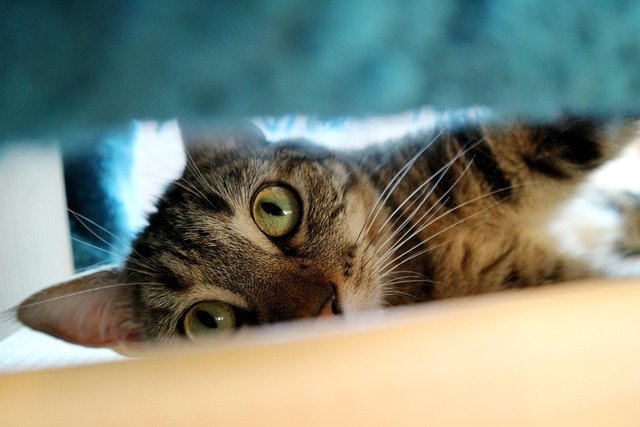
The most common hiding place I encounter: the engine bay
If I had to choose one place I worry about the most, it’s inside the engine compartment.
More than once, I’ve had a car pull up behind our clinic because the owner heard a strange cry after starting the vehicle. One case that sticks with me involved a young tabby who had crawled up from the wheel well and curled onto the insulation near the engine block. The cat didn’t make a sound until the engine turned over. He was lucky — just singed whiskers and a superficial burn — but I’ve also seen injuries far worse.
Cats usually enter from underneath, climbing up behind the front bumper or through the wheel well and settling on or beside the engine. From the outside, the car looks completely normal. From the cat’s perspective, it’s simply warm, enclosed, and quiet.
This is why I strongly recommend tapping the hood or honking briefly before starting your car if you live in an area with outdoor cats or cold mornings. I do this myself out of habit. It gives a hiding cat a chance to scramble out before the moving parts begin doing real damage.
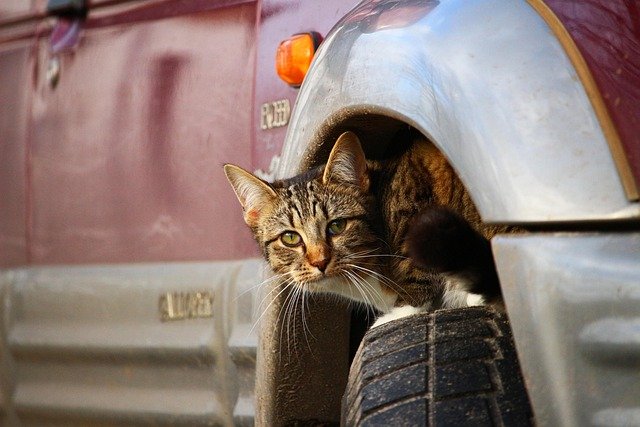
Wheel wells and undercarriage: the “panic shelters.”
The second most common places I see are wheel wells and the undercarriage.
A client, on a rainy spring morning, told me her cat vanished during a thunderstorm. We eventually found him wedged above the rear tire of her SUV, covered in road dust but otherwise fine. Cats flatten themselves surprisingly well along the curve of the tire or cling to suspension components when terrified.
The danger here isn’t only movement; it’s how well-hidden they are. Someone can shine a flashlight quickly and still miss a cat pressed tightly into the dark curve of a wheel well. I’ve had to crawl onto wet pavement more than once while helping owners search just because the cat was that well tucked in.
Inside the cabin: quieter but still hard to spot.
People are often surprised when I say this, but cats absolutely hide inside a car’s cabin, especially if a door has been left open during loading or cleaning.
I’ve seen cats:
- pressed under the front seats against the rails
- buried inside the footwell behind a pile of floor mats
- curled into the gap under folded third-row seats in vans and SUVs
One memorable case involved a cat who went missing during a household move. He was eventually found asleep under the driver’s seat of the family car after they had turned the house upside down. They had opened the doors to load boxes, and he slipped in unnoticed and then went completely silent. That silence fools people more than anything else. Owners tell me, “If he were in there, I would have heard him.” In my experience, a scared cat often won’t make a sound.
Trunks and cargo areas: the forgotten compartments
Trunks are less common than engine bays, but they do happen — especially with sedans where the back seat opens into the trunk space.
Cats can climb into:
- the spare-tire well
- small side cubbies in cargo areas
- soft pockets behind trim panels
I treated a dehydrated older cat who had spent hours in a closed trunk after slipping inside while groceries were being unloaded. There was no drama — no meowing, no scratching. The family didn’t realize the cat had entered until they opened the trunk again much later. That case changed how I personally load and unload my own car; now I glance inside the trunk before closing it, even if I’m sure my cats are indoors.
Spots people don’t expect, but I’ve actually seen.
Over time, you develop a mental list of “I wouldn’t have believed it if I hadn’t seen it myself.”
I have seen cats:
- behind loose dashboard panels after gaining access from under the steering column
- wedged under the hood insulation liner
- perched atop the fuel tank under the rear of the car
These aren’t everyday occurrences, but they’re real. Cats follow the path of darkness and warmth, and their bodies fold in ways that seem physically impossible until you’ve extracted one.
Common mistakes I see owners make
The same patterns repeat, and they’re understandable.
People assume the cat will cry out. Many don’t. Fear shuts them down.
People only check the interior seats. The cat is often entirely outside the cabin.
People start the engine for “just a moment” to see if the noise scares the cat out. I cannot stress this enough: spinning belts, pulleys, and fans can cause catastrophic injuries in seconds. I’ve treated those injuries. They’re preventable.
If you suspect a cat may be hiding, leave the engine off. Open the hood carefully. Give the cat both time and escape routes. I’ve stood quietly by parked cars with owners while we waited for a bit of face to appear once the fear finally subsided.
How I personally recommend searching for a car
I’m not offering theory here — this is precisely what I do in parking lots, clinic driveways, and my own garage.
I start from the outside before opening doors. I look into wheel wells with a flashlight. I tap the hood and wait. Then I open the hood fully and keep my hands away until I can actually see what’s inside.
Only after checking the engine bay do I move inside the car, sliding seats forward and backward, and checking under them rather than just glancing from above. I remove loose mats and bags instead of just peering around them. The mindset is simple: assume the cat has chosen the least convenient spot.
If the cat is visible but terrified, slow movements help more than grabbing. In many cases, quietly stepping back gives the cat the confidence to bolt out on its own.
My professional opinion
I strongly advise outdoor cat owners and drivers in cat-heavy neighborhoods to treat each “cold morning start” as a moment worth two extra seconds of attention. A quick hood tap or brief honk is a small habit that prevents the kind of injuries I wish I never had to treat.
For missing-cat searches, cars deserve more attention than most people give them. I’ve reunited more than one family with a cat found inside the very vehicle they’d driven to search for posters.
Cats hide in cars because they’re scared, cold, or overwhelmed — not because they’re reckless. Understanding their favorite hiding spots makes it far more likely you’ll find them safely and avoid the emergencies that end up in my exam room.
And after seeing what I’ve seen, I still tap my own hood before turning the key.