
As a licensed veterinarian practicing in Texas for over a decade, I’ve had more conversations about cat mating behavior than most people would imagine. Some are lighthearted and curious. Others are urgent, especially when a normally calm housecat begins yowling through the night or trying to bolt out the front door.
Cat reproduction follows powerful, persistent instincts that are often misunderstood. If you live with an intact cat, understanding these behaviors can spare you a lot of stress—and possibly prevent an unexpected litter.
The Female in Heat: Loud, Restless, and Determined
One of the most common calls I receive each spring is from an owner who thinks something is medically wrong with their female cat. She’s suddenly vocal, rolling on the floor, raising her hindquarters, and pacing near doors and windows.
In my experience, that dramatic shift is usually estrus—what most people call being “in heat.”
A few years ago, a client brought in her normally reserved indoor cat because she had started yowling so intensely that the family couldn’t sleep. The cat would crouch low to the ground, stretch her back paws, and lift her tail to the side when touched. The owner was worried about pain. In reality, the cat was signaling receptivity to mating.
Female cats are seasonally polyestrous, meaning they cycle repeatedly during breeding season, especially in longer daylight months. If they are not bred, they can go back into heat every couple of weeks. That repeated cycle is exhausting for owners and stressful for the cat.
The most overlooked detail? Many indoor cats will still go into heat regularly. Artificial lighting can extend its cycling well beyond what people expect.
The Male’s Response: Roaming and Spraying
Unneutered males respond quickly to the scent of a female in heat. I’ve seen calm, affectionate housecats transform into escape artists seemingly overnight.
One case that stands out involved a male client who had never shown interest in the outdoors. Once a neighborhood female entered heat, he began spraying inside the house and clawing at the window screens. The owner assumed it was behavioral regression. It was hormonal.
Male cats detect pheromones from a great distance. They may:
- Spray strong-smelling urine to mark territory.
- Roam far beyond their usual range.
- Vocalize in deep, drawn-out calls.
- Compete aggressively with other males.
Spraying is one of the behaviors owners find most distressing. It’s not simple urination—it’s territorial marking driven by testosterone. I’ve found that once spraying becomes habitual in an intact male, it can persist even after neutering, though the intensity often decreases.
The Mating Process: Brief and Intense
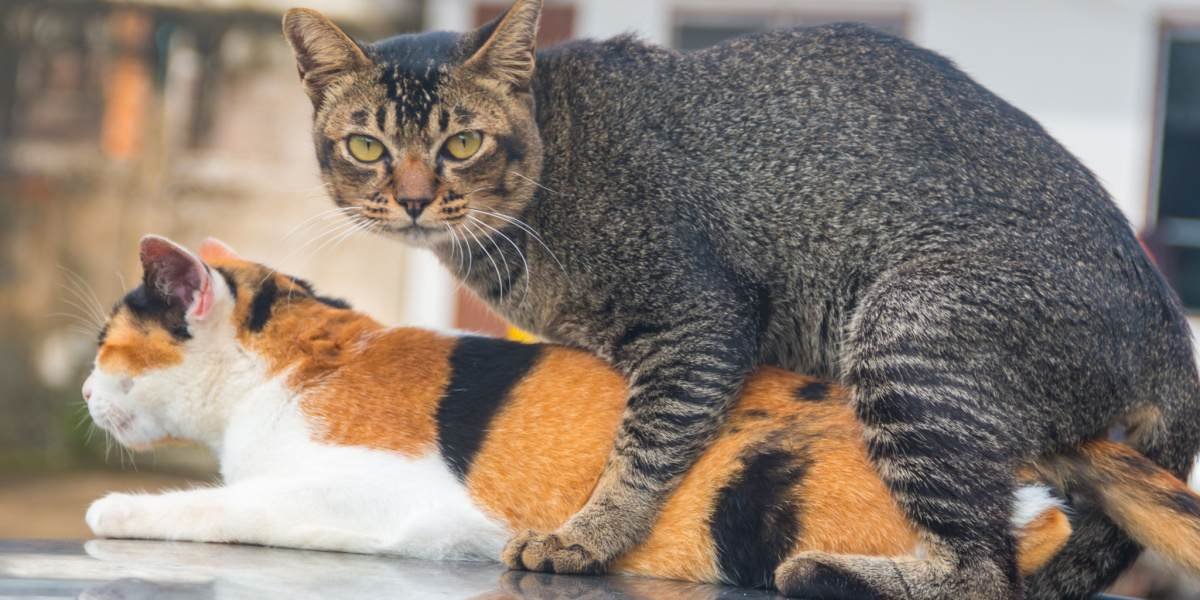
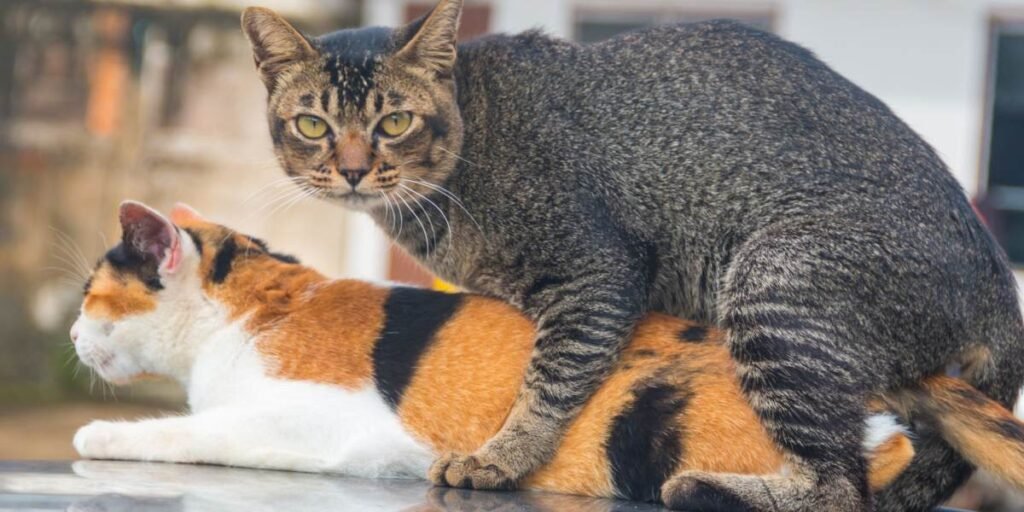
The actual mating act in cats is surprisingly quick and often startling to witness.
Female cats are induced ovulators, meaning that ovulation is triggered by mating. During copulation, the male’s barbed penis stimulates ovulation. That’s why females often cry out and may swat at the male immediately afterward. Owners sometimes assume the male injured her, but the vocalization is part of the biological process.
I remember a young couple who rushed their female cat into my clinic after witnessing mating for the first time. They were convinced she had been hurt because she screamed and rolled afterward. A physical exam confirmed she was fine. What they observed was normal feline reproductive physiology.
That said, the process is not gentle or romantic. It’s instinctual and efficient. Multiple matings over a short period are common, which also explains why litters can sometimes have more than one father.
Behavioral Changes After Mating
If pregnancy occurs, subtle changes follow. Some females become more affectionate. Others withdraw slightly. Appetite often increases over time.
One client last spring noticed her cat suddenly seeking quiet, enclosed spaces behind furniture. She had been accidentally bred by a neighborhood male. Nesting behavior started earlier than the owner expected. That’s something I’ve learned to point out—behavioral changes can precede obvious physical ones.
Male cats, on the other hand, usually show no lasting behavioral shift after mating. Their hormone-driven behaviors continue as long as they remain intact.
Common Mistakes I See
Over the years, certain patterns repeat themselves.
Some owners believe one heat cycle is “healthy” before spaying. Medically, there’s no proven benefit to allowing a cat to go through a heat cycle before sterilization. In fact, earlier spaying significantly reduces the risk of mammary tumors later in life.
Others assume indoor cats won’t get pregnant. I’ve treated plenty of “strictly indoor” cats who slipped out during one heat cycle. It only takes minutes.
I also see delayed neutering in males because owners hope to avoid personality changes. In reality, neutering typically reduces undesirable behaviors like spraying and roaming without diminishing affection or playfulness.
My Professional Recommendation
After years of practice, my advice is straightforward: if you do not plan to breed responsibly and ethically, spay or neuter your cat.
Intact cats face a higher risk of certain cancers, infections such as pyometra in females, and injuries from roaming or fighting in males. Beyond medical concerns, the stress of repeated heat cycles or territorial competition can significantly impact quality of life.
I’ve seen the difference firsthand. Cats that were once restless, vocal, and agitated often become calmer and more content after sterilization. Owners sleep better. Households feel more peaceful.
Cat mating behavior is powerful because it’s deeply biological. Understanding it helps you recognize what’s normal, what’s hormone-driven, and what steps will best protect your cat’s health. In my practice, prevention through responsible reproductive management has consistently led to healthier cats and far fewer emergency visits tied to unintended litters or mating-related complications.