
I’m a licensed veterinarian practicing in Texas, and I’ve lost count of how many times a conversation about “human food” has come up during routine visits. It usually starts casually—someone mentions a dog who begs at dinner or a harmless-looking scrap that slipped under the table. By the time we’re done talking, most owners realize this question isn’t as simple as a yes-or-no answer.
In my experience, the issue isn’t whether dogs can eat human food. It’s whether they should, how often, and under what conditions. Those distinctions matter more than people expect.
Where the Confusion Starts
Many owners come in convinced that if a food is healthy for them, it must be healthy for their dog. I understand the logic. We’re told to avoid processed foods, eat fresh ingredients, and cook at home. I’ve had clients proudly tell me they stopped feeding kibble and now “share meals” with their dog.
One case that still sticks with me involved a middle-aged Labrador who came in with recurring pancreatitis. The owner was genuinely shocked when we traced the flare-ups back to table food—mostly leftovers from dinner. Nothing obviously toxic. Just fatty meats, gravies, and occasional desserts. From the owner’s perspective, it felt loving. From the dog’s pancreas, it was a repeated insult.
Dogs process food differently than we do. That difference doesn’t show up right away. It shows up months or years later as weight gain, digestive issues, joint stress, or chronic disease.
Human Food Isn’t One Category
“Human food” gets treated like a single thing, but in practice, it’s all over the map. I’ve seen dogs do fine with small amounts of plain, cooked foods. I’ve also seen dogs hospitalized after eating things their owners thought were harmless.
Early in my career, I treated a small dog that had been given grapes as a snack. The owner had no idea grapes could cause kidney failure in dogs. They weren’t careless—just unaware. That dog survived, but the experience changed how I talk to clients about shared food.
The real danger isn’t just toxicity. It’s consistency and balance. Dogs need a specific nutrient ratio, and human meals rarely provide that balance. Even foods that aren’t dangerous can cause problems if they become a routine.
The Begging Problem (And How It Starts)
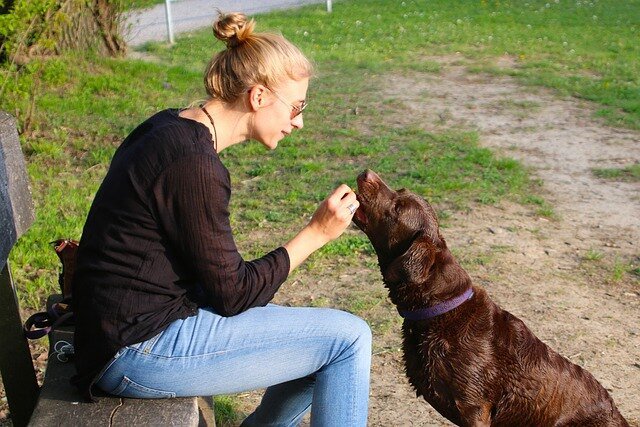
Most begging behavior is taught, not innate. I’ve watched this play out countless times. Someone shares food “just once.” The dog learns that persistence pays off. Within weeks, mealtime becomes a battle.
One owner told me their dog refused to eat kibble unless it was topped with whatever the family was having for dinner. By the time I saw them, the dog had turned into a picky eater with frequent stomach upset. We had to reset feeding habits slowly, and it took months.
Dogs thrive on predictability. A consistent diet supports digestion, weight management, and behavior. Random table scraps do the opposite.
When Human Food Can Make Sense
I’m not dogmatic about this. There are situations where certain human foods can be appropriate. I’ve recommended plain boiled chicken or white rice for short-term digestive upset more times than I can count. I’ve also had owners use small amounts of cooked vegetables as low-calorie treats during weight loss plans.
The key is intent and portion control. These foods are additions, not replacements, and they’re chosen for a specific reason—not because the dog looked sad during dinner.
If you can’t describe why you’re giving the food beyond “they like it,” that’s usually a sign to reconsider.
Common Mistakes I See Repeatedly
One of the biggest mistakes is underestimating fat. Foods that seem modest to us—like a bit of steak trimming or a spoonful of leftovers—can be rich for a dog’s system. Fat-related pancreatitis is one of the most preventable conditions I treat, yet it keeps coming back through the door.
Another mistake is sharing seasoned food. Garlic, onions, excess salt, and spices sneak into meals without people even realizing it. Dogs don’t need flavor the way we do, and their bodies aren’t built to handle those additives.
Finally, there’s the “holiday exception” mindset. I see a spike in digestive emergencies after major gatherings. Well-meaning guests slip dogs treats, and owners don’t always realize how much it adds up over a day.
My Professional Bottom Line
I don’t recommend feeding dogs human food regularly. I’ve seen too many preventable health problems tied directly to that choice. A complete, balanced dog food exists for a reason—it does a job human meals aren’t designed to do.
That doesn’t mean a dog can never taste something from your kitchen. It means those moments should be rare, intentional, and boring by human standards. Plain. Small. Purposeful.
Most dogs don’t need variety in their bowl. What they need is consistency, appropriate nutrition, and owners who show love in ways that don’t quietly shorten their lifespan.