
My Take as a Practicing Veterinarian
I’ve been a small-animal veterinarian for over a decade, most of that time spent in a busy clinic where digestive complaints are part of the daily routine. Loose stools, gas, inconsistent appetite, and the vague “my cat just isn’t herself” conversation happen more often than many owners expect.
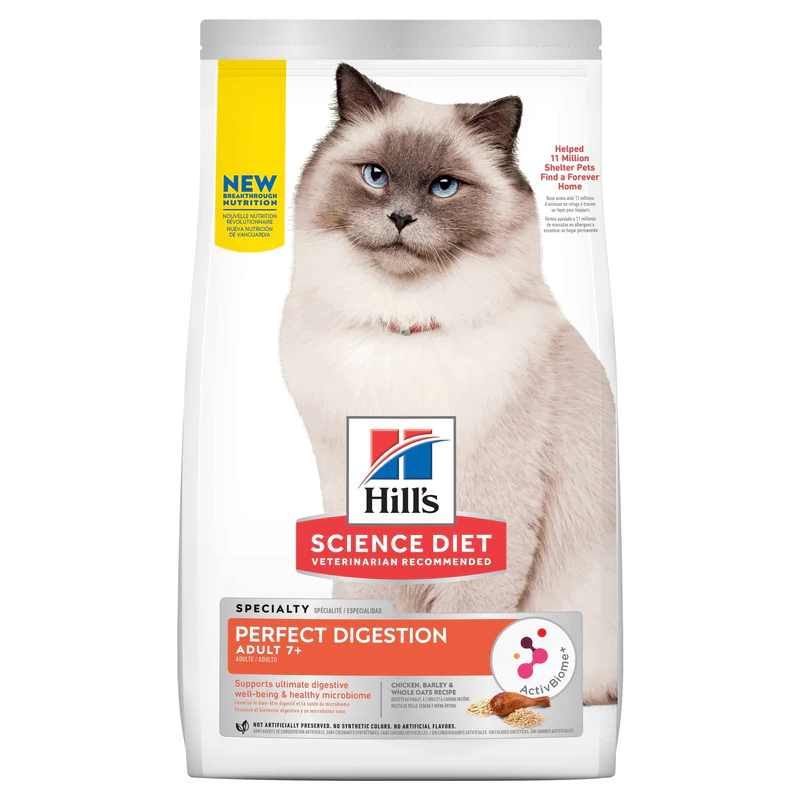
Science Diet Perfect Digestion is a food I’ve reached for repeatedly in those situations—not because it’s trendy, but because I’ve watched it help specific cats in very ordinary, very real circumstances.
How digestive trouble usually shows up in real life
Most cats don’t arrive with a neat diagnosis. They come in after a weekend of soft stools, a litter box that suddenly smells worse than usual, or a cat that vomits once or twice a week but otherwise seems fine. I’ve learned to pay close attention to patterns owners describe: stools that improve on chicken one week and worsen the next, cats that eat eagerly but lose weight slowly, or households where stress—new pets, moves, schedule changes—quietly disrupts digestion.
One case that still sticks with me involved a middle-aged indoor cat whose owner swore nothing had changed. After a more extended conversation, she mentioned she’d switched brands twice in a few months, chasing a “grain-free” label. The cat’s gut never settled. That’s a common mistake I see: well-meaning but frequent diet changes that keep the digestive system in a constant state of adjustment.
Why I use Science Diet Perfect Digestion in practice
Science Diet Perfect Digestion is built around supporting the gut microbiome, not just avoiding ingredients that sound scary. In my experience, that focus matters. The food uses a blend of prebiotics—often called ActivBiome+—designed to nourish the beneficial bacteria already living in the intestines. When those bacteria are supported, stools tend to normalize without needing medication.
I’ve seen this play out more than once. Last spring, a senior cat with no underlying disease but chronic loose stools came in after the owner had tried pumpkin, pet store probiotics, and multiple protein sources. We transitioned her slowly to Perfect Digestion. Within a few weeks, her stools were formed, the litter box odor improved noticeably, and the owner stopped apologizing every time she came in for follow-ups.
What the food does well—and where it doesn’t fit
From a veterinary standpoint, this food shines for cats with mild to moderate digestive sensitivity. That includes:
- Cats with intermittent soft stools but regular bloodwork
- Cats are prone to stress-related diarrhea
- Older cats whose digestion has become less predictable
I don’t recommend it for every digestive problem. Cats with inflammatory bowel disease, severe food allergies, or pancreatitis often need prescription diets. I’m careful about that distinction, because I’ve seen owners delay proper treatment by assuming a non-prescription food can fix everything.
There was a younger cat I treated a while back whose owner insisted on staying with Perfect Digestion despite ongoing weight loss and vomiting. The food wasn’t the problem—the cat needed further diagnostics. Once we switched to a therapeutic diet and addressed inflammation directly, things improved. That experience reinforced my rule: if symptoms persist beyond a reasonable adjustment period, food alone isn’t enough.
Transitioning matters more than most people think
One of the biggest reasons owners think a food “doesn’t work” is how it’s introduced. I always stress a slow transition, even for a food designed for sensitive digestion. In real households, that means measuring portions, resisting the urge to mix in treats, and accepting that improvement isn’t always instant.
I remember a client who called me, frustrated, after 4 days because her cat’s stool hadn’t improved. When we talked through it, she admitted she was still feeding half of the old food because the cat “liked it better.” Once she committed to a proper transition over the next 10 days, the improvement was evident.
Digestive foods are less forgiving of shortcuts. Consistency is part of the treatment, even if it doesn’t feel like treatment.
Taste, appetite, and owner compliance
Cats are honest critics. If they won’t eat a food, its benefits don’t matter. One reason I’ve continued recommending Science Diet Perfect Digestion is that most cats readily accept it. In practice, I’ve seen fewer appetite battles with some higher-fiber diets than with others that cats refuse.
An owner once joked that her cat “approved” the food because the bowl was suddenly empty again. Appetite returning is often the first sign that digestion is stabilizing, especially in cats that had been grazing cautiously due to discomfort.
Common misconceptions I hear in the exam room
A few misunderstandings come up repeatedly:
Some owners assume digestive foods are only for diarrhea. In reality, subtle issues like inconsistent stool quality or frequent hairball-related vomiting can also improve.
Others believe rotating foods prevents sensitivity. In cats, I’ve found the opposite. Stability often helps more than variety.
There’s also the belief that prescription diets are always the next step. For many cats, a well-formulated over-the-counter option like Perfect Digestion is a reasonable place to start, provided the cat has been adequately evaluated.
My professional bottom line
I don’t recommend Science Diet Perfect Digestion because of its reassuring name or polished label. I recommend it because I’ve watched it settle stomachs that didn’t need medication and bring relief to owners who just wanted their cat’s litter box habits to feel normal again.
It’s not a cure-all, and it shouldn’t replace veterinary assessment when symptoms persist or worsen. Used thoughtfully, with proper transitions and realistic expectations, it can be a practical solution for cats whose digestive systems need support rather than an overhaul.
That balance—knowing when a diet is enough and when it isn’t—is something experience teaches you slowly. Perfect Digestion earns its place in my recommendations because, in the right situations, it quietly does its job.