
I’ve been a licensed veterinarian for a little over a decade, practicing at a mixed suburban and rural clinic in Texas.
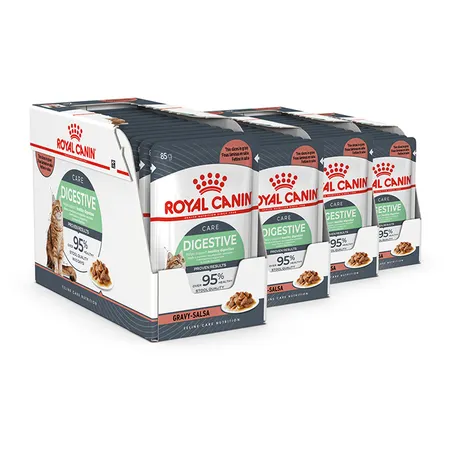
Digestive complaints are one of the most common reasons cat owners walk through our door—loose stools that never quite firm up, frequent vomiting that’s brushed off as “just hairballs,” or cats that eat eagerly but seem uncomfortable afterward. Royal Canin Digestive Care is a food I’ve worked with often, and my opinions about it come from repeated, real-world use rather than theory.
I don’t recommend diets lightly. Cats can be finicky, gastrointestinal problems are rarely one-size-fits-all, and changing food can make things worse if it’s done carelessly. That said, there are specific situations where this formula has genuinely helped cats—and owners—find some relief.
Why digestive issues in cats are trickier than people expect
One mistake I see regularly is assuming that occasional vomiting or soft stool is normal for cats. I’ve had clients tell me their cat throws up “once or twice a week, but otherwise seems fine.” In practice, that’s rarely harmless. Chronic low-grade digestive irritation can affect nutrient absorption, coat quality, and even behavior over time.
Cats also tend to hide discomfort well. I remember a middle-aged indoor cat last spring whose only visible issue was inconsistent stool. The owner was convinced stress was the cause. After ruling out parasites and systemic disease, we tried dietary management. Within a few weeks on Royal Canin Digestive Care, the litter box told a very different story—firmer stools, less odor, and fewer trips overall. The cat’s energy picked up, too, something the owner hadn’t even realized had declined.
How Royal Canin Digestive Care behaves in real cats
What sets this food apart in my experience isn’t marketing language—it’s how predictably cats respond to it when digestion is the primary issue. The kibble is designed to be highly digestible, and that shows up most clearly in stool quality. I often tell clients that the litter box is our report card.
One older neutered male I treated had a sensitive stomach his entire life. His owner had rotated through several “gentle” diets from pet stores with mixed results. We transitioned him slowly to Digestive Care over about ten days. The change wasn’t instant, but by the third week, the vomiting stopped completely. That cat stayed on the food for years without needing medication, which isn’t something I can say about every diet.
Another detail people don’t usually think about is stool odor. Digestive Care tends to reduce it noticeably. That’s not just a convenience issue—it often reflects better nutrient absorption and less fermentation in the gut.
Where this food makes sense—and where it doesn’t
I recommend Royal Canin Digestive Care most often for cats with:
- Chronic soft stool without a clear underlying disease
- Mild but frequent vomiting
- Sensitive digestion after spay/neuter or antibiotic use
However, I’m careful not to oversell it. That is not a treatment for inflammatory bowel disease, food allergies, or pancreatitis. I’ve seen owners delay proper diagnostics because a food “sort of helped.” In those cases, partial improvement can actually slow down the correct diagnosis.
I also wouldn’t use it long-term for cats that need strict calorie control. Some cats do very well on it weight-wise, but others gain faster than expected, especially indoor cats with low activity. I’ve had to switch a few patients off Digestive Care simply because the digestive benefit came with unwanted weight gain.
Palatability: a practical but critical detail
Cats won’t eat what they don’t like, no matter how well-formulated it is. In my clinic, Digestive Care has a higher acceptance rate than many prescription gastrointestinal diets. I’ve had cats turn their noses up at bland therapeutic foods, then eat this one without hesitation.
I remember one particularly picky Siamese who refused every GI diet we tried. The owner was frustrated and exhausted. Digestive Care wasn’t our first choice, but it was the first food the cat ate consistently—and that consistency mattered more than perfection in that situation.
Common mistakes I see owners make with this food
The biggest issue is transitioning too fast. Even a digestive-support diet can cause diarrhea if introduced abruptly. I usually recommend a slow mix for at least a week, sometimes longer, for very sensitive cats.
Another mistake is assuming improvement should happen in a few days. Some cats respond quickly, but others take two to three weeks before you see stable results. I’ve had owners give up after five days, only to restart later and wish they hadn’t stopped.
Lastly, people sometimes use it as a cure-all. If your cat is losing weight, lethargic, or vomiting daily, food alone isn’t enough. I’ve had to have difficult conversations with owners who tried to manage serious illness with diet changes alone.
My overall stance after years of use
Royal Canin Digestive Care isn’t magic, but it’s reliable. In my practice, it’s been a solid option for cats with functional digestive sensitivity rather than diagnosed disease. I trust it enough to recommend it repeatedly, and I’ve seen it improve the quality of life for both cats and owners.
I still insist on proper exams and testing when symptoms warrant it. But when digestion is the main issue and diagnostics don’t point to something more serious, this food often earns its place in the bowl—and stays there.
