
As a licensed veterinarian practicing in Texas for over a decade, I’ve had more than a few frantic phone calls that start with, “Doctor, my male cat is acting crazy.” More often than not, the behavior stems from mating instincts.
Male cat mating behavior can be intense, persistent, and—if you’re not expecting it—disruptive. I’ve worked with indoor-only cats who suddenly began spraying every vertical surface in the house, and outdoor toms who disappeared for days chasing the scent of a female in heat. Understanding what’s normal, what’s hormonally driven, and what can be managed makes all the difference.
Sexual Maturity Changes Everything
Most male cats reach sexual maturity around five to six months of age. In my experience, owners are often caught off guard because the transition can feel abrupt. One week, they have a playful kitten. The next week, that same kitten is yowling at doors and attempting to mount blankets, other cats, or even a startled houseguest’s leg.
Testosterone drives these changes. Intact males—often called tomcats—develop a stronger, muskier odor. Their urine smell becomes more pungent as hormones influence scent-marking behavior. I’ve had clients bring in what they thought was a urinary tract infection, only for us to determine the issue was hormone-fueled spraying rather than illness.
The physical changes are subtle but noticeable: broader cheeks, sometimes called “tomcat jowls,” and a more muscular build. Behaviorally, though, that’s where the real shift happens.
Roaming and Restlessness
One of the most common patterns I see is relentless roaming behavior. A few years ago, a client brought in her otherwise healthy orange tabby because he had started trying to bolt out the door every time it opened. She assumed he was bored.
After a few questions, it became clear that a neighbor’s female cat had recently gone into heat. That male cat could detect her pheromones from a surprising distance. I’ve seen intact males travel several blocks—sometimes farther—driven purely by scent.
This restlessness isn’t mild curiosity. It’s a biological mission. They may:
- Pace near doors and windows
- Vocalize loudly, especially at night.
- Scratch at exit points
- Lose focus on food or play.
Owners often underestimate how strong that drive can be. I’ve treated injuries from fights that happened during these excursions—abscesses, torn ears, even broken teeth.
Spraying: A Territorial Message
Spraying is one of the biggest complaints I hear. Unlike regular urination, spraying involves a small amount of urine directed onto vertical surfaces—walls, furniture, doors. The tail usually quivers, and the cat may back up to the object.
I remember a case last spring involving a young male who had just begun spraying inside his home. The owners had recently adopted another cat. They were frustrated and worried that the problem was behavioral defiance.
It wasn’t defiance. It was communication.
Male cats spray to mark territory and advertise their presence to females. The scent contains information about reproductive status. In multi-cat homes, especially when other intact cats are nearby, spraying can escalate quickly.
In my professional opinion, waiting too long to neuter often makes it harder to reverse this behavior. While neutering significantly reduces spraying in most cases, cats who have practiced the behavior for months may retain the habit even after surgery.
Vocalization and Calling
Many people associate loud “calling” with female cats in heat, but intact males can be just as vocal. The sound is deeper and more guttural, often described to me as “haunting” or “like a baby crying.”
A client once recorded her cat’s nighttime yowling because she was convinced something was physically wrong. The cat was healthy. He was simply responding to a female in estrus somewhere in the area.
The intensity can disrupt sleep for the entire household. I’ve had families resort to earplugs before finally scheduling a neuter appointment.
Mounting Behavior
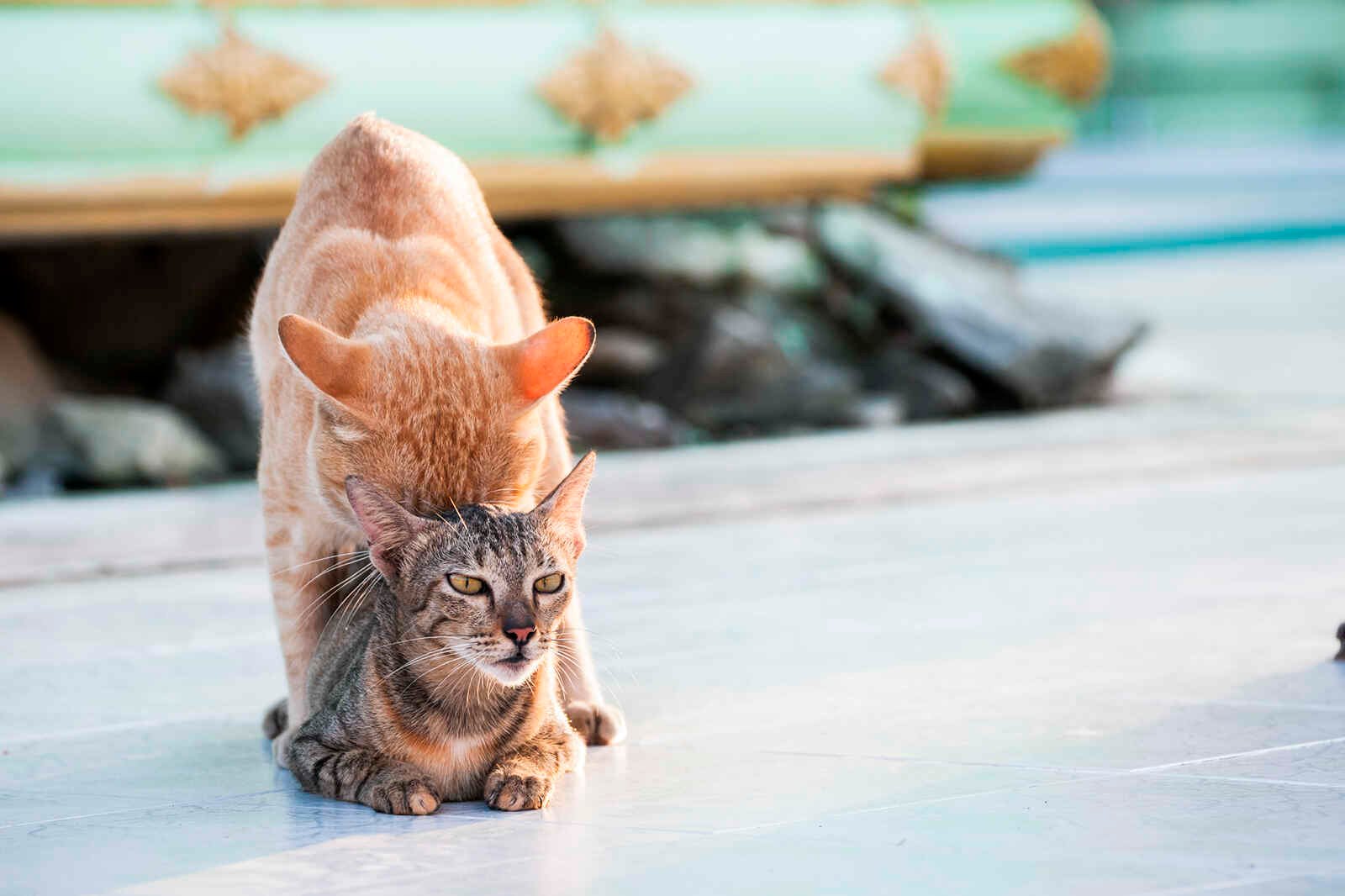
Mounting isn’t always about mating, but in intact males, it often is. They may mount other cats in the household, even neutered ones. I’ve seen significant tension develop in multi-cat homes because of this.
One memorable case involved two brothers from the same litter. The intact male began mounting his neutered sibling repeatedly once they reached adolescence. What started as occasional behavior turned into daily scuffles. The neutered cat became withdrawn and stopped using the litter box consistently due to stress.
After neutering the intact male, mounting behavior decreased dramatically within a few weeks, and harmony gradually returned.
Fighting and Aggression
Intact male cats are more likely to engage in territorial fights. Testosterone amplifies competition. These fights aren’t playful wrestling matches; they’re loud, aggressive confrontations that can result in serious injuries.
I routinely treat abscesses caused by bite wounds. A puncture may look small on the surface, but it can trap bacteria under the skin. Within a few days, the area swells painfully and may rupture.
Beyond physical injuries, there’s a risk of disease. Feline immunodeficiency virus (FIV) spreads primarily through bite wounds. In my experience, intact outdoor males are disproportionately represented among FIV-positive cats.
If a client asks my honest opinion about allowing an intact male to roam freely, I advise against it. The medical risks are not theoretical. I see them weekly.
How Neutering Changes Behavior
Neutering reduces testosterone production, and with it, most mating-driven behaviors. I’ve performed thousands of neuter surgeries over the years, and I can confidently say the majority of owners notice significant improvements within a month or two.
Spraying often decreases or stops. Roaming lessens. Vocalization typically quiets down. Aggression toward other males tends to soften.
That said, timing matters. A cat neutered before fully developing entrenched behaviors responds more predictably. Waiting until a cat is two or three years old and has spent significant time roaming and fighting makes behavioral reversal less certain.
There’s also a misconception that neutering changes a cat’s personality. In my experience, it doesn’t remove playfulness or affection. It simply removes the hormonal urgency driving mating behaviors.
Common Mistakes I See Owners Make
One frequent mistake is assuming the behavior is “just a phase.” Unlike some kitten behaviors, mating instincts do not fade with time in intact males. They intensify.
Another is punishing spraying or mounting. Cats don’t connect punishment with hormonal drives. I’ve seen increased anxiety and more frequent marking after owners tried yelling or using physical correction.
The most preventable mistake is delaying neutering because someone plans to breed “just once.” Responsible breeding requires planning, health testing, and controlled environments. Accidental litters and territorial conflicts are far more common than carefully managed breeding outcomes.
Indoor vs. Outdoor Differences
Indoor intact males often channel their mating drive into frustration behaviors—scratching, yowling, marking windows and doors. Outdoor intact males express it through roaming and fighting.
Neither scenario is ideal long-term. Even indoor cats can experience significant stress if they constantly detect females in heat nearby.
I once treated an indoor-only male who developed compulsive overgrooming. After ruling out allergies and parasites, we determined environmental stress—triggered by a neighboring intact female—was the likely cause. Neutering resolved the issue within a couple of months.
Practical Advice From the Exam Room
If you’re noticing:
- Increased vocalization
- Urine spraying
- Mounting behavior
- Persistent attempts to escape
- New aggression
And your male cat is intact, hormones are the first place I look.
In the vast majority of cases, my professional recommendation is neutering before six months of age. It reduces unwanted litters, lowers disease risk, and prevents many behavioral issues before they become ingrained habits.
Male cat mating behavior isn’t a sign your cat is “bad” or poorly trained. It’s biology doing exactly what it was designed to do. The challenge for modern households is that those instincts don’t align well with indoor living or close human companionship.
After years in practice, I’ve found that once owners understand the why behind the behavior, the frustration softens. And once the hormonal influence is addressed, most households regain a sense of calm that feels almost immediate.