
By a licensed veterinarian practicing in Texas
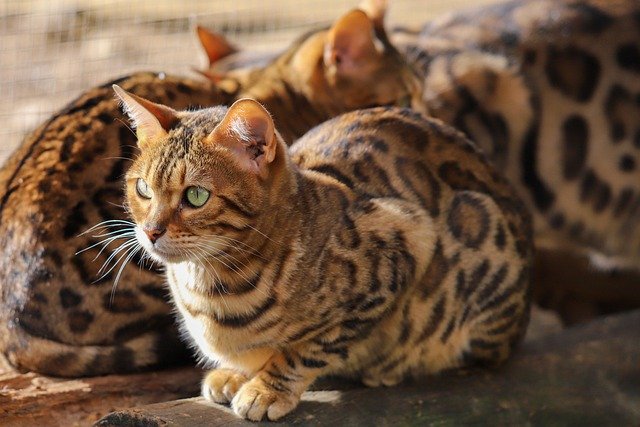
Over the past twelve years as a licensed veterinarian in Texas, I’ve worked with hundreds of cats. The Bengals stand out every single time. They walk into the exam room with a presence that feels closer to a small wildcat than a typical house cat. That’s not accidental. Their lineage traces back to crosses with the Asian leopard cat, and while today’s Bengals are fully domestic, that heritage shows up clearly in their behavior.
If you’re considering bringing one home—or already living with one—you need to understand that Bengal cat behavior is intense, intelligent, and rarely subtle. Let’s explore the specific traits that set Bengals apart, starting with their energy.
Energy Levels That Surprise Even Experienced Owners
The first thing I tell prospective Bengal owners is this: if you’re expecting a quiet lap cat, you may be in for a shock.
A few years ago, a couple brought in their nine-month-old Bengal because they were concerned he was “hyperactive.” He was knocking items off shelves, scaling door frames, and vocalizing constantly at night. After ruling out medical issues, I asked about his daily routine. It turned out he was getting about ten minutes of laser-pointer play before dinner. That’s nowhere near enough for a Bengal.
In my experience, most behavioral “problems” in this breed are actually unmet stimulation needs. Bengals are built for movement. They need tall climbing structures, not just wide ones. They need interactive play that mimics hunting: chasing, stalking, pouncing. I typically recommend at least two dedicated play sessions a day, each lasting 15–20 minutes, and access to vertical space throughout the home.
Without that, they will create their own enrichment—and you may not like what they choose.
Intelligence That Demands Engagement
Bengals are problem-solvers. I’ve seen them open cabinet doors, turn faucet handles, and unlatch certain types of pet carriers.
One client last spring told me her Bengal kept jumping onto the kitchen counter and batting at the faucet until she managed to get a steady trickle of water. She thought it was misbehavior. In reality, it was curiosity combined with a love of running water—something I see often in this breed.
This intelligence can be a gift or a frustration. Bengals respond exceptionally well to training. I’ve guided several owners through clicker training, and many Bengals learn to sit, spin, or even walk on a harness. But if their minds aren’t engaged, that same intelligence turns into boredom-driven destruction.
I advise owners to rotate toys rather than leaving them out all the time. Food puzzles, scent-based games, and structured training sessions can dramatically reduce nuisance behaviors.
Vocal and Expressive Personalities
Bengals are not typically quiet cats. They communicate clearly and often.
I once examined a Bengal who “talked” through nearly the entire appointment. Not distressed—just narrating the experience. The owner laughed and said, “He does this at home whenever I’m on the phone.” That level of vocal engagement is common.
Their vocalizations are varied. It’s not just meowing. It can include chirps, trills, and low growls during play. New owners sometimes misinterpret these sounds as aggression. In most cases, I see, they’re expressions of excitement or demand for attention.
Learning your specific cat’s sound patterns makes a big difference. Bengals tend to be consistent in what certain tones mean.
High Prey Drive
If you have small pets—hamsters, birds, or reptiles—this is not a breed I would recommend for casual ownership.
Bengals have a strong prey drive. Even in homes where they are affectionate and gentle with humans, that instinct can switch on quickly. I’ve treated more than one injured bird because a Bengal managed to knock over a cage or reach through bars.
Their play style also reflects this instinct. They stalk low to the ground, wiggle their hindquarters, and launch with impressive force. For households with young children, supervision is wise—not because Bengals are malicious, but because their play intensity can be overwhelming.
Attachment and Social Bonds
Despite their wild look, Bengals often form deep bonds with their people. They frequently follow owners from room to room. Some become almost dog-like in their loyalty.
One of my long-term clients has a Bengal that waits by the door about 20 minutes before she gets home from work. We initially ruled out separation anxiety because the cat was otherwise calm during the day. It wasn’t distress—it was anticipation. That predictability and bonding are traits I see often.
That said, Bengals do not always tolerate being ignored. They want interaction. In households where everyone works long hours, and the home is quiet most of the day, I’ve seen frustration behaviors emerge—excessive vocalizing, inappropriate scratching, or attention-seeking antics at night.
In those situations, I sometimes recommend either a second highly active cat or reconsidering whether a Bengal is the right fit.
Common Owner Mistakes I Encounter
Over the years, certain patterns repeat themselves.
First, people choose Bengals purely for appearance. The rosetted coat and sleek build are striking. But behavior matters far more in daily life than looks.
Second, owners underestimate the importance of vertical territory. Standard scratching posts often aren’t enough. Bengals thrive with multi-level cat trees that reach near the ceiling.
Third, inconsistent boundaries cause confusion. If a Bengal is allowed on counters sometimes but scolded other times, they don’t understand the difference. Clear, consistent rules work far better.
My Professional Perspective
I genuinely enjoy working with Bengals. They’re engaging, bright, and often very affectionate. But I don’t recommend them for first-time cat owners who want a low-maintenance companion.
If you enjoy interaction, have time for structured play, and appreciate a strong personality, a Bengal can be deeply rewarding. If you prefer a calm, predictable pet that naps most of the day, there are other breeds that fit that lifestyle better.
Bengal cat behavior isn’t random or chaotic. It’s purposeful, energetic, and driven by instinct and intelligence. When those traits are understood and respected, they create one of the most fascinating feline companions I see in my practice.