
I’ve been practicing small-animal veterinary medicine in Texas for over a decade, and Cesar dog food comes up in conversation more often than people might expect. Usually, it’s not because someone is comparing ingredient panels in detail. It’s because their dog loves it, or because it’s the only thing their picky eater will touch, or because a small senior dog has suddenly gone off kibble and Cesar feels like a convenient fix.
I’ve seen Cesar’s food used in innovative, limited ways—and I’ve also seen it cause real problems when owners relied on it without understanding what it is and what it isn’t. Whether it’s “good” for dogs depends a lot on how and why it’s being used.
What Cesar Food Actually Is in Practice
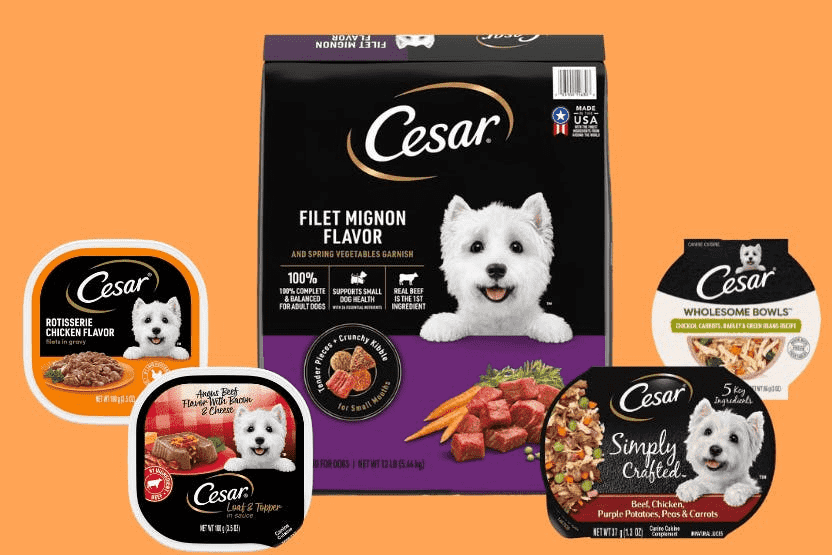
Cesar is primarily a wet dog food brand, often sold in trays or small cups, marketed toward small breeds. In my exam rooms, it’s most commonly fed to Chihuahuas, Yorkies, Maltese, and aging mixed-breed dogs under 20 pounds.
From a formulation standpoint, Cesar foods are generally complete and balanced according to AAFCO standards. That means a healthy adult dog can survive on it without becoming deficient in essential nutrients. That’s an important baseline, and I don’t dismiss it.
But “complete and balanced” doesn’t automatically mean “ideal for daily, long-term feeding in every situation.” That’s where real-world use matters.
What I’ve Seen Go Wrong
A few years ago, a client brought in her elderly Shih Tzu for recurring dental infections and weight gain. She was frustrated because she felt she was doing everything right. The dog refused dry food, so she fed Cesar exclusively—two trays a day, sometimes three if the dog begged.
When we sat down and actually talked through the feeding routine, a few things stood out. The dog wasn’t chewing much, which worsened plaque buildup. The food’s calorie density was higher than the owner realized. And because the dog loved it so much, portion control slowly disappeared.
That isn’t an unusual story. Cesar is very palatable, which is both its strength and its weakness. Dogs rarely turn it down. In practice, this often leads to overfeeding, especially in small dogs that need only a modest number of calories per day.
Ingredient Quality: Honest but Not Premium
I’ve reviewed Cesar’s ingredient lists many times with clients. They usually include meat by-products, grains, and added flavors. That doesn’t make the food unsafe, but it does place it firmly in the “budget-friendly, mass-market” category.
I’ve treated dogs that did fine on Cesar for years without obvious issues. I’ve also treated dogs with chronic soft stools or skin flare-ups that improved once we transitioned away from it. The difference usually came down to the individual dog’s sensitivity and how the food was used.
One case that stuck with me involved a small terrier mix with recurring diarrhea. The owner had been rotating Cesar’s flavors daily, assuming variety was beneficial. In reality, the frequent protein and formulation changes were upsetting the dog’s gut. Once we simplified the diet and reduced reliance on highly flavored wet food, the symptoms settled.
Where Cesar Can Make Sense
Despite its limitations, I don’t automatically advise against Cesar’s food. I’ve recommended it in specific situations, and I still do.
For example, last spring I worked with a client whose senior dog had advanced dental disease and was awaiting surgery. The dog refused dry food entirely and was losing weight fast. Cesar helped us stabilize calorie intake during a difficult period. In that context, the benefit outweighed the drawbacks.
I’ve also seen Cesar used effectively as a topper—mixed with dry food to encourage eating. When owners measure carefully and don’t let it become the bulk of the diet, this approach often works well.
Common Mistakes I See Owners Make
One mistake is assuming that because a dog loves a food, it must be good for them. Palatability is engineered. Cesar is designed to smell and taste appealing to dogs, not necessarily to promote dental health or lean body condition.
Another mistake is feeding based on package suggestions without adjusting for treats, activity level, or age. Small dogs gain weight quietly and quickly. By the time a problem shows up in bloodwork or joints, it’s already been building for years.
I’ve also seen owners use Cesar as a long-term solution for picky eating without addressing the underlying behavior. In several cases, dogs learned that refusing food led to tastier options later. Once that pattern sets in, it’s surprisingly hard to undo.
Dental Health and Long-Term Feeding
That is an area where my clinical experience really shapes my opinion. Dogs fed exclusively wet food tend to have more dental disease over time. That includes Cesar.
I’ve cleaned thousands of dog teeth. The small dogs fed soft, primarily sticky foods consistently show heavier plaque and tartar buildup. That doesn’t mean Cesar “causes” dental disease, but it certainly doesn’t help prevent it.
For dogs already prone to dental problems—which includes most small breeds—exclusive soft-food feeding is something I approach cautiously.
So, Is Cesar Food Good for Dogs?
Cesar’s food is acceptable as a short-term solution, a supplemental food, or a targeted tool in specific situations. I don’t consider it an ideal long-term, sole diet for most dogs, especially if dental health and weight management are concerns.
If a client tells me they’re feeding Cesar occasionally, using measured portions, and their dog is maintaining a healthy weight with clean bloodwork, I don’t panic. If they tell me it’s the only thing their dog eats, in unlimited amounts, year after year, that’s a different conversation.
Dog food decisions rarely exist in a vacuum. They show up later as joint pain, dental infections, pancreatitis, or obesity. I’ve seen enough of those outcomes to be cautious, even with foods that dogs clearly enjoy.
Cesar isn’t toxic. It isn’t dangerous by default. But enjoyment alone isn’t a good enough reason to build an entire diet around it. Over time, the small compromises add up, and those are the cases that end up back in my exam room.
