
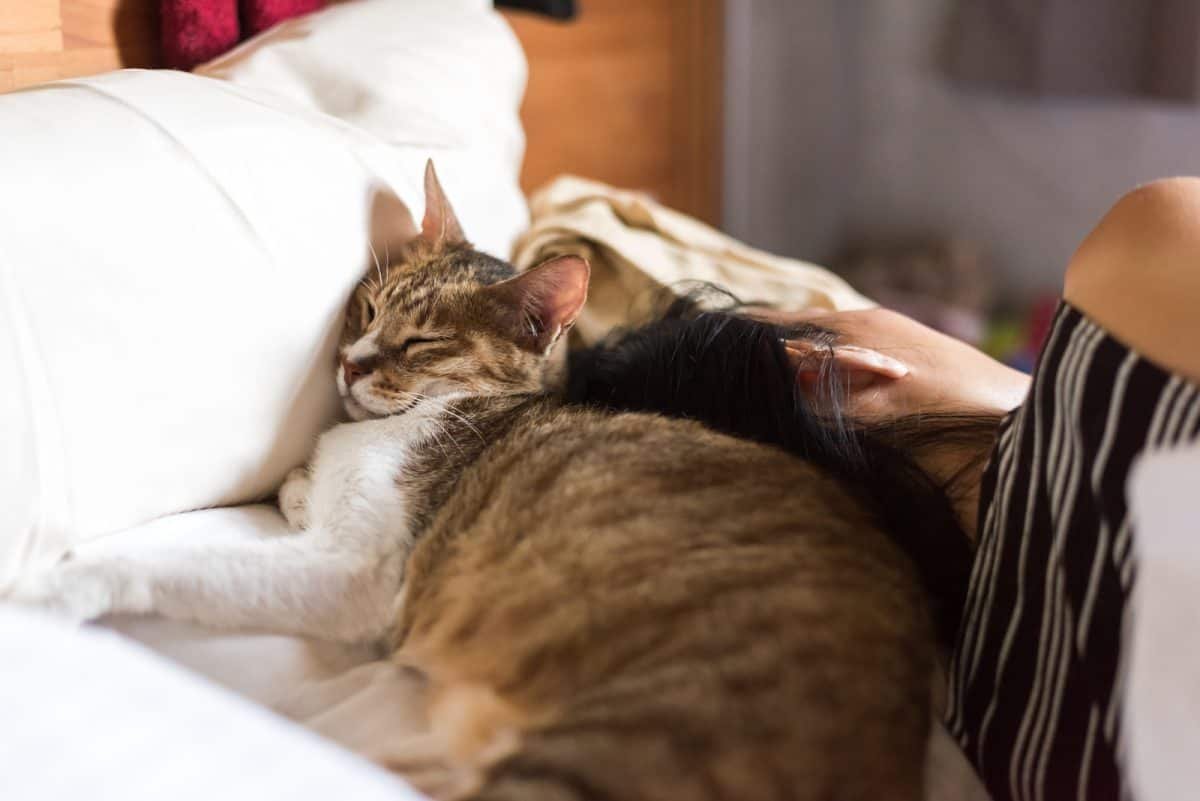
Many cat owners notice a familiar habit: their cat prefers sleeping right on top of them. It can happen on the chest, legs, or even the head. This behavior may seem random, but it usually has clear reasons. Cats are sensitive animals with strong instincts and emotional bonds. Sleeping on you is often linked to comfort, safety, and connection.
Comfort, Warmth, and Safety Instincts
Cats seek warm, safe places to rest. Your body provides steady heat, mimicking the comfort of lying with your mother or littermates, creating a strong sense of security.
Many cats prefer elevated comfort spots. Sleeping on you provides them with a stable surface that moves little. Beds or couches may shift slightly, but a human body is usually steady during rest. This stability helps cats relax fully.
Safety instincts factor in as well. Even indoor cats retain their natural survival behaviors. Being with you makes them feel shielded from potential threats. They regard you as their safe haven. This trust develops gradually. Some cats become clingier in colder months, seeking heat more often. Your body becomes a reliable heater—a simple, very natural behavior.l.
Bonding Behavior and Emotional Attachment
Cats are often seen as independent, but they form strong emotional bonds with their owners. Sleeping on you is a clear sign of attachment. It shows they feel secure in your presence. This behavior is usually seen in cats that deeply trust their humans.
Research-based pet behavior insights, such as why does my cat sleep on top of me, explain how physical closeness is linked to feline bonding instincts and how cats often choose their favorite person as a safe resting spot when they feel emotionally connected.
Cats also use sleep time for bonding. Unlike active play, sleep is a vulnerable state. Choosing to sleep on your own shows confidence in your care. They believe nothing harmful will happen while resting near you. Some cats develop a routine of sleeping on their favorite human, building a sense of emotional comfort and becoming part of their daily rhythm. Change can make them uneasy.y.
Interestingly, some cats sleep on you to claim you as part of their social group. By transferring scent, they reinforce their sense of belonging. This scent-marking acts as subtle communication.
Attention-Seeking and Learned Habits
Cats are smart and quickly learn which behaviors get responses. If your cat slept on you once and received warmth, petting, or attention, they may do so again. Positive reinforcement plays a big role in shaping habits. Cats remember what feels good.
Some cats also sleep on their owners because it keeps them close to interaction opportunities. If they stay near you, they may get more petting or soft talking. This attention becomes rewarding. Over time, it becomes a habit. Young cats often develop this behavior early. Kittens that sleep with humans get used to close contact and often continue the pattern as adults.m.
Another motivation is a disrupted routine. If mealtime or play schedules shift, cats may seek extra comfort. Sleeping on you restores emotional balance and eases uncertainty.
Sometimes, the behavior is simply a learned preference. Cats are creatures of habit. Once a sleeping spot becomes “theirs,” they rarely change it without reason. Familiar comfort matters a lot.
Health, Stress, and When to Notice Changes
Most of the time, a cat sleeping on you is harmless and positive. However, abrupt shifts in sleeping behavior can indicate stress or discomfort. If a cat becomes highly clingy overnight, something in their environment may have changed. Monitor timing closely.
Health problems can impact behavior. Unwell cats may seek closeness for comfort. They might sleep on you more frequently than before. This can signal a desire for reassurance or safety.
Household changes, like new pets or guests, may trigger clinginess. Cats react strongly to environmental changes. Sleeping on your grounds. Familiar scents and presence reduce anxiety.
If your cat shows other symptoms, such as loss of appetite or unusual hiding, the behavior should be observed carefully. Alone, sleeping on you is normal. Combined with other changes, it may need attention. Patterns matter.
Age influences these behaviors. Older cats often grow more attached as energy wanes or comfort needs grow. Young cats may do it for connection and play. Every life stage presents its own reasons.
Understanding and Responding to the Behavior
Letting your cat sleep on you is usually harmless. It can even deepen your bond. However, balance is key. Make sure both you and your cat are comfortable while resting.
If it becomes too intense, gently guide your cat to a nearby bed. Soft blankets with your scent can help. This creates a shared space without full-body contact. Gradual adjustment works best.
Ensure your cat has access to other warm, secure spots. This limits dependence. Cats enjoy options, even if they often pick you. Choice is important to them.
Watch for changes in behavior over time. If sleeping patterns shift suddenly, consider environmental or health factors. Small observations help you better understand your cat. Awareness builds better care.
A cat sleeping on you demonstrates trust and affection. It signals emotional connection, warmth, and instinct. Many owners cherish this behavior as a sign of companionship, proof that their cat feels safe and at home.