
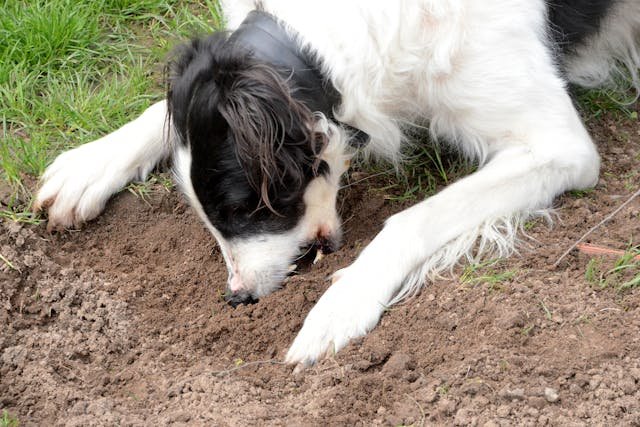
When a senior dog starts eating dirt, many owners are surprised and concerned. As a veterinarian in Texas for over 12 years, I’ve seen this behavior often—and it almost always points to something beyond a quirky habit.
A Real-Life Example: Max the Golden Retriever
For example, I remember a golden retriever named Max whose owner brought him in last spring. Max had just turned 11 and suddenly began sniffing and nibbling at patches of soil in the yard. His owner initially laughed it off, thinking it was just a passing phase.
But when I examined him, I noticed pale gums and mild weight loss. Bloodwork revealed anemia caused by a slow-developing gastrointestinal issue. In this case, dirt-eating—technically known as pica—was Max’s way of trying to compensate for mineral deficiencies he wasn’t getting from his diet.
Behavioral Reasons: Rosie the Beagle’s Story
In another instance, I encountered a senior beagle, Rosie, who was otherwise healthy but had begun eating dirt consistently after her daily walks. Her owner was concerned about possible intestinal blockages.
After a careful discussion about her diet and behavior, it became clear that Rosie was bored and seeking stimulation. Older dogs often experience cognitive changes similar to those seen in mild dementia in humans.
In Rosie’s case, the dirt-eating wasn’t about nutrition but mental enrichment. We introduced puzzle feeders and increased short, interactive play sessions, and within a few weeks, her dirt cravings decreased noticeably.
Digestive Issues and Medication Side Effects
There are also cases where the cause is gastrointestinal upset. Dogs sometimes eat soil to soothe nausea or stomach irritation. I had a senior Labrador, Buddy, who developed arthritis and was on medication that occasionally upset his stomach. Buddy started nibbling dirt around his favorite tree. After adjusting his medication schedule and introducing a probiotic, the dirt-eating subsided.
Important Things Dog Owners Should Consider
From my perspective, dirt-eating in senior dogs warrants close attention. Here are important considerations:
-
Health check: A physical exam and basic bloodwork can rule out anemia, digestive disorders, or nutrient deficiencies.
-
Diet review: Sometimes the diet lacks specific minerals or fiber, prompting dogs to seek them elsewhere.
-
Behavior and mental stimulation: Older dogs may develop repetitive behaviors out of boredom or mild cognitive decline. Enrichment activities and gentle exercise can reduce these habits.
-
Environmental safety: Ensure the areas your dog has access to are free of harmful substances like fertilizers or pesticides.
Final Thoughts
In my experience, catching the underlying cause early makes a difference. Dirt-eating may be resolved through dietary adjustments or cognitive interventions. Each case is unique, and with professional guidance, owners usually find effective solutions.
While seeing a senior dog eat dirt can be concerning, with careful observation and appropriate changes, most owners can redirect the behavior and help their older companions stay healthy and engaged.