
What I’ve Learned as a Veterinarian
As a licensed veterinarian practicing in Texas for over a decade, I’ve met plenty of purebred cats with strong personalities. The Russian Blue consistently stands out—not because they’re loud or demanding, but because they’re quietly intense. They observe everything. They bond deeply. And they don’t give their trust away casually.
In my exam room, their behavior is almost predictable. At home, however, they can surprise even experienced cat owners.
If you’re considering one—or trying to better understand the one currently staring at you from across the room—here’s what I’ve learned from years of hands-on experience.
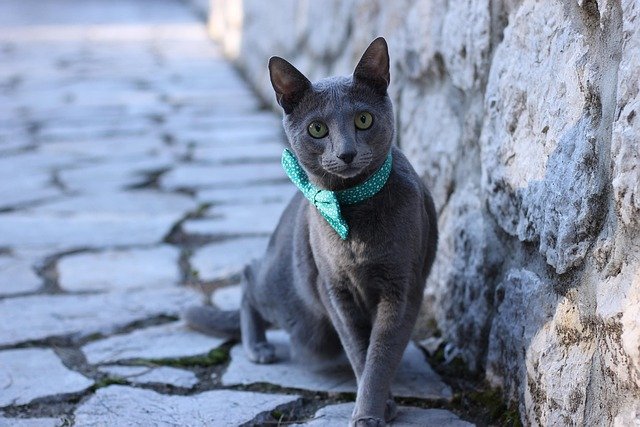
Reserved, But Not Aloof
The first thing most owners tell me about their Russian Blue is that the cat “only likes one person.” That’s not entirely true—but it often feels that way.
I remember a client who brought in her Russian Blue for a wellness exam last spring. The cat hid behind her arm the entire appointment, refusing treats and avoiding eye contact. Yet at home, she told me, he followed her from room to room and slept beside her pillow every night. Her husband? Politely tolerated. Guests? Ignored completely.
This pattern is common.
Russian Blues tend to form a primary bond. They may coexist peacefully with others in the household, but they choose their person. Once that bond forms, it’s deep and loyal. They aren’t clingy in the way some breeds are—they won’t constantly demand to be held—but they want proximity. They prefer being in the same room, quietly watching.
If you’re looking for a social butterfly who greets every visitor, this may not be the breed for you. But if you value a strong one-on-one connection, few cats match their devotion.
Sensitive to Environmental Changes
I’ve found Russian Blues to be particularly sensitive to disruption.
A few years ago, a family moved into a newly renovated home. Their Russian Blue, previously confident and calm, began urinating outside the litter box. They assumed it was a medical issue—and we did rule out urinary tract disease—but the trigger turned out to be environmental stress. New furniture. New smells. Different acoustics in the home.
For this breed, stability matters.
They thrive on routine. Feeding at the same time. Predictable play sessions. Litter boxes are kept immaculate. Even small changes—like switching litter brands—can lead to subtle protest behaviors.
This sensitivity isn’t a flaw. It’s part of their temperament. But owners need to be proactive. If you anticipate change—a move, a new baby, houseguests—gradual introductions and safe, quiet retreat spaces make a real difference.
Intelligent and Easily Bored
Russian Blues are thinkers.
In the clinic, they quickly learn patterns. I’ve seen them anticipate the thermometer before I even reach for it. At home, that intelligence translates into problem-solving behavior.
One patient learned to open a cabinet where treats were stored. Not by accident—he studied the handle mechanism for weeks, according to his owner. Eventually, he hooked his paw under the edge and pulled.
Without stimulation, that intelligence can turn into mischief or anxiety.
Interactive toys, puzzle feeders, and structured play are not luxuries for this breed—they’re necessities. I’ve advised several owners who complained of nighttime zooming or early-morning vocalization. In almost every case, adding 15–20 minutes of focused evening play significantly reduced the behavior.
They don’t just want exercise. They want engagement.
Quiet Voices, Subtle Communication
Unlike more vocal breeds, Russian Blues tend to communicate softly. Their meows are often delicate and polite. In the exam room, they rarely growl or hiss unless extremely stressed.
But that quiet nature can fool owners.
One client once brought in her Russian Blue because he had “suddenly become distant.” He wasn’t vocalizing or acting dramatically ill. He had simply stopped greeting her at the door and spent more time alone. Bloodwork revealed early kidney changes.
This breed doesn’t always announce discomfort loudly. They withdraw.
If you live with a Russian Blue, pay attention to subtle shifts. Less grooming. Slight appetite changes. Increased hiding. These small behavioral adjustments can be early indicators of health issues.
Fastidious Groomers With Strong Preferences
Russian Blues are meticulous about cleanliness.
I’ve rarely encountered one with a poorly maintained coat unless there was an underlying medical issue. They groom frequently and often expect the same standard from their environment.
Dirty litter boxes often cause tension. I’ve resolved several inappropriate elimination cases simply by increasing cleaning frequency or adding an additional box.
They also tend to prefer consistency in texture—both in litter and food. Abrupt diet changes can lead to food refusal. I generally recommend gradual transitions over at least a week for this breed, sometimes longer if they’ve shown sensitivity before.
Gentle With Children—If Respected
In my experience, Russian Blues can do well in homes with children, but only if the children understand boundaries.
I recall examining a Russian Blue belonging to a family with two elementary-aged kids. The cat tolerated gentle petting but would immediately retreat if the energy level rose. The parents had taught their children to let the cat initiate contact.
That’s key.
Russian Blues do not respond well to rough handling or forced affection. They won’t typically lash out aggressively—but they will remove themselves from the situation. Repeated stress can lead to hiding behaviors or stress-related illness.
If your household is loud and unpredictable, this breed may struggle unless there’s a guaranteed quiet zone.
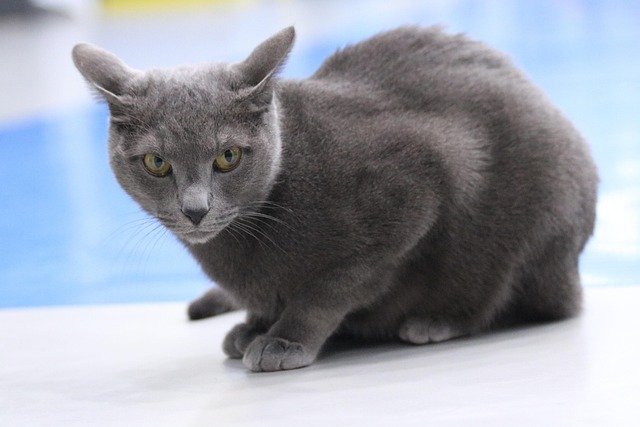
They Mature Slowly Emotionally
One subtle trait I’ve noticed is that Russian Blues often retain a kitten-like playfulness longer than many other breeds.
Even at five or six years old, I see them enthusiastically chasing feather toys in the exam room before vaccinations. Yet emotionally, they can remain cautious with strangers well into adulthood.
Owners sometimes misinterpret this as fearfulness. I see it more as deliberation. They assess before engaging.
Patience pays off.
My Professional Take
If a client asks me whether a Russian Blue is a good choice, I usually ask about their lifestyle first.
Do you value calm, predictable routines?
Are you home regularly?
Do you want a close, almost exclusive bond?
If the answer is yes, I often enthusiastically recommend the breed.
If someone wants a highly social cat that entertains guests and adapts to change instantly, I advise considering a different temperament.
Russian Blue cat behavior isn’t dramatic or flashy. It’s nuanced. Quiet. Observant. They bond deeply, think carefully, and react strongly to environmental shifts. In my years of practice, I’ve found that the happiest Russian Blues live in homes where their sensitivity is respected rather than dismissed.
When they feel secure, they are among the most loyal and emotionally attuned companions I see in my clinic.