
From a Veterinarian Who’s Seen It Too Often
I’ve been a practicing small-animal veterinarian for over a decade, and I can tell you this: a dog licking a frog is rarely as harmless as it sounds. Most of the time, it starts as curiosity—your dog nudges, sniffs, then licks. Within minutes, the situation can turn into a full-blown emergency.
I still remember a case from last spring. A family brought in their Labrador after an evening in the yard. The dog had started drooling excessively, pawing at its mouth, and acting strangely agitated. By the time they reached the clinic, the dog was trembling and disoriented. It turned out he had licked a toxic toad.
That’s not unusual. It’s something I see every year.
Not All Frogs Are Dangerous—But Some Absolutely Are
Let me be clear: not every frog or toad is toxic. Many are harmless and might only cause mild irritation. But certain species, especially toads, secrete toxins through their skin as a defense mechanism.
One of the most notorious is the cane toad, which produces a potent toxin that can seriously affect a dog’s heart and nervous system. Even in regions where cane toads aren’t common, local toad species can still produce enough toxin to make your dog sick.
In my experience, the problem isn’t just which frog—it’s how much exposure your dog gets and how quickly you respond.
What Actually Happens in the Dog’s Body
When a dog licks a toxic frog or toad, the toxin is absorbed through the gums and lining of the mouth almost immediately. This isn’t something that needs to be swallowed to cause harm.
The first signs are usually very obvious and happen fast:
- Excessive drooling (often thick and foamy)
- Pawing at the mouth
- Bright red gums
- Vomiting
I’ve had owners tell me, “It looked like he was chewing gum he couldn’t spit out.” That’s a pretty accurate description.
If the toxin is stronger—or the exposure is longer—you can see more serious symptoms:
- Disorientation or stumbling
- Rapid or irregular heartbeat
- Tremors or seizures
In severe cases, especially with highly toxic toads, it can become life-threatening within a short window.
A Case I Still Think About
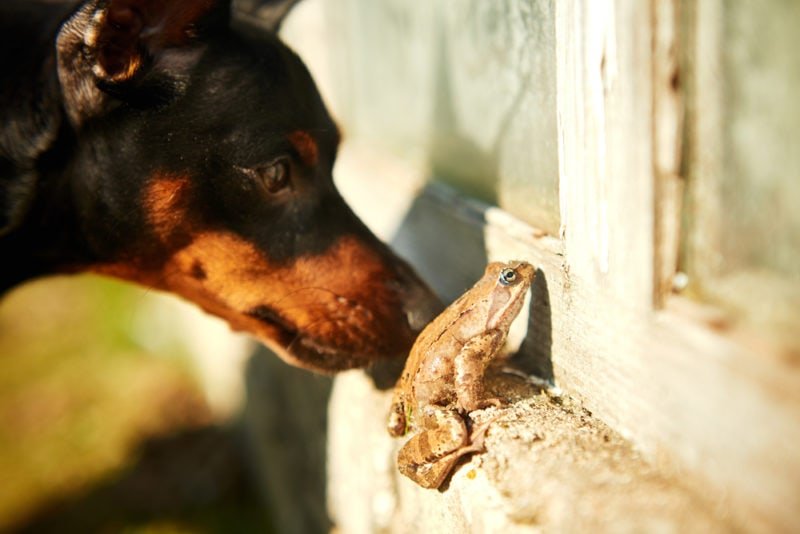
A few years back, a client brought in a small terrier who had been playing outside after a rainstorm. The dog had found a toad near a garden light—prime hunting behavior.
By the time they noticed something was wrong, the dog was already shaking. We immediately flushed the mouth, administered medications, and closely monitored the heart. The dog pulled through, but it was a close call.
What stuck with me wasn’t just the severity—it was how quickly everything escalated. The owner had only stepped away for a few minutes.
What You Should Do Immediately
If you even suspect your dog has licked a frog or toad, don’t wait to “see what happens.” Acting fast makes a huge difference.
In the clinic, the first thing we often do is thoroughly flush the dog’s mouth. You can start this at home:
- Use a steady stream of water (like from a hose or tap)
- Rinse from the side of the mouth outward (so water doesn’t go down the throat)
- Continue for several minutes.
I always tell clients: this simple step can significantly reduce toxin absorption.
After that, get veterinary help right away—especially if symptoms have already started.
Common Mistakes I See Owners Make
Over the years, I’ve noticed a few patterns that don’t help the situation.
One is assuming the dog will “sleep it off.” That’s risky. These toxins don’t behave as mild stomach upsets—they can affect the heart and brain.
Another mistake is delaying the mouth rinse. Owners sometimes drive straight to the clinic without doing anything first. I understand the panic, but those first few minutes matter.
And then there’s the assumption that “it was just a small frog.” Size doesn’t reliably predict toxicity. I’ve seen small toads cause significant reactions.
Prevention Is Mostly About Awareness
Most of these incidents happen at night or after rain, when frogs and toads are more active. Dogs that love chasing movement—retrievers, terriers, young energetic breeds—are especially at risk.
In my own yard, I’ve made it a habit to keep outdoor lights off when possible and to check areas where water collects. It doesn’t eliminate the risk, but it reduces the chances of an encounter.
The Reality of It
In mild cases, a dog might just experience temporary irritation and recover quickly. But I’ve seen enough serious cases to say this plainly: it’s not something to take lightly.
A dog licking a frog can go from “a little drool” to a medical emergency faster than most people expect.
And in my experience, the difference between a quick recovery and a critical situation often comes down to how fast the owner reacts.