
Practical Advice from a Veterinarian Who Lives With This Daily
I’m a small-animal veterinarian who has treated many blind and visually impaired cats over the years, and I also share my home with one. Blind cats are not fragile ornaments. They can be confident, playful, and deeply bonded companions — but they do best in homes that were set up with intention.
The most significant shift isn’t your cat losing vision. It’s you learning to stop relying on their eyes for them and trusting the senses they still use extraordinarily well.
Understanding how blind cats really navigate
People are often surprised that blindness in cats is less dramatic than expected. I’ve examined cats whose owners only realized vision loss after rearranging furniture. Cats map rooms through memory, whiskers, smell, and the feel of airflow. Losing sight doesn’t erase that internal map — it just makes consistency non-negotiable.
One client years ago moved a sofa a few feet to clean behind it and watched her blind cat walk directly into it. The cat wasn’t clumsy; her map was suddenly wrong. That experience stuck with me. Since then, my first recommendation has been simple: create predictability.
That means keeping feeding stations, litter boxes, and major furniture in the exact locations. You don’t need a sterile, frozen-in-time house. You just shouldn’t constantly “surprise” a blind cat with significant changes.

Making the home safer without turning it into a padded room
Blind cats don’t want to live wrapped in bubble wrap, and they don’t need to. What they need is risk management.
The common problem areas I see in clinics and homes:
- unsecured balconies or stair gaps
- Sharp table edges at head height
- open washing machines and dryers
- deep declines, such as open basement stairs
One of my first blind feline patients fell two floors through an open stairwell because the family assumed she “knew” it was there. She survived, but it was a painful lesson. Since then, I’ve encouraged physical barriers around drops until the cat clearly learns the boundaries.
Soft lighting at night doesn’t magically “help them see,” but it helps you avoid stepping on them and keeps the household calmer. More useful than lights are scent and texture cues — different rugs near key locations, for example, help blind cats understand where they are based on what’s under their paws.
Sound becomes their flashlight.
Blind cats “see” with their ears far more than people realize. I’ve watched a blind cat in my exam room bat a toy accurately out of the air using just sound. In my own house, I deliberately talk as I walk through rooms so my cat can track where I am. It reduces startle responses and maintains trust.
If you have a habit of approaching silently and scooping your cat up, change that habit. Blind cats often react defensively, not because they’re aggressive, but because hands appear “out of nowhere.”
I usually recommend creating small sound cues at necessary resources — a bell hanging from the food cabinet door, for example. Over time, sounds create orientation.
Don’t rearrange the world on them.
I’ve seen well-meaning owners completely “cat-proof” rooms every few weeks, assuming more change equals more safety. For a blind cat, the opposite is true.
The bowls, scratching posts, beds, and litter box locations are anchors in a mental map. In my experience, moving the litter box “just a little” is one of the fastest ways to create accidents that frustrate both owner and cat.
If you genuinely need to rearrange a room, do it once and then commit to it. Walk your cat slowly through the new space, speaking softly, letting them smell and touch. They learn fast if you give them the chance.
Play and enrichment aren’t optional — blindness is not a retirement sentence.
Blind cats do not need pity; they need stimulation suited to their senses. I strongly encourage owners to use toys that make noise or move air.
Some of the things I’ve seen work repeatedly in real households:
- crinkle tunnels
- toys with bells or rattles
- wand toys you swish so the air movement is felt
- Food puzzles that they can explore through touch and smell
One blind cat I treated would ignore silent toys but go wild for a worn-out rattle ball with half the beads missing. She chased it around the tile floor using sound, not sight. Her owner assumed blindness meant she “wasn’t playful anymore.” The problem wasn’t the cat — it was the toys.
Blind cats also benefit from predictable verbal routines. I tend to use consistent phrases such as “up,” “down,” or “step” at home. They don’t understand English the way we do, but patterns sink in.
Introducing other pets requires more thought than force.
Sighted cats rely heavily on visual body language. Blind cats lose access to part of that communication channel, and misunderstandings can happen fast.
The worst introductions I’ve seen involved people simply “putting them together to figure it out.” The best ones were slow, scent-first introductions where the blind cat learned the smell and sound of the new animal before meeting face-to-face.
In my own household, I let my blind cat smell blankets used by new animals before contact and allow them to exchange sounds safely through a barrier. Once she recognizes a particular collar bell or footstep pattern, her confidence increases dramatically.
Medical care: don’t assume blindness is the problem
As a veterinarian, I always stress this: blindness is sometimes the condition, but sometimes it is a symptom. High blood pressure, diabetes, severe infections, retinal detachment, trauma — I’ve diagnosed all of these after an owner simply said, “He’s bumping into things.”
If your cat suddenly becomes blind, that is an urgent situation. Even in the long term, regular veterinary visits matter. Blind cats can’t readily show visual pain signals, and owners sometimes miss subtle changes.
I’m personally cautious with heavy sedatives in blind cats unless they’re necessary. Losing the ability to track sound while sedated can make recovery frightening for them. That’s the kind of detail you only really learn by watching it happen.
The emotional side no one prepares people for
Owners often feel grief before their cat does. That’s natural. Vision loss feels catastrophic to humans because we imagine ourselves in the same situation. Cats don’t frame it that way; they adapt.
I’ve seen owners cry in my exam room while their newly blind cat purred, grooming calmly on the table. The cat was already adjusting. The human was mourning the version of their pet they thought they were losing.
Blind cats don’t need sadness. They need patience, consistency, and a household that respects their way of moving through space.
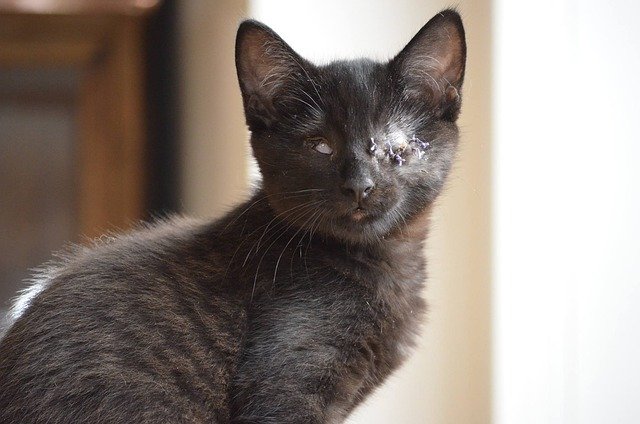
My strongest recommendations after years of living and working with blind cats
If I condense years of cases and my own personal experience into clear advice, it comes down to this:
- keep the environment consistent
- Use sound and scent as orientation tools
- avoid sudden handling and silent approaches
- encourage play rather than “protecting” them from life
- treat sudden blindness as medical until proven otherwise
A blind cat is fully capable of being independent, confident, and joyful. I’ve watched it firsthand many times in my practice, and every night in my own living room.
They don’t need sight to live well. They need a human who is willing to meet them where they are and trust their ability to adapt.
