
What I’ve Seen as a Practicing Veterinarian
I’m a licensed veterinarian, and a good part of my week involves talking with dog owners about everyday, convenient questions: food, behavior, public spaces—those come up just as often as medical issues.
One question I hear surprisingly frequently, usually while a client is gathering a leash or wrangling a puppy in the lobby, is whether dogs are allowed inside Whole Foods.
I’ve dealt with this question both professionally and personally. I run errands like everyone else, and I also see the aftermath when rules are misunderstood. The short answer is that most dogs are not allowed inside Whole Foods stores. The longer, more helpful answer depends on understanding why, what exceptions exist, and how this plays out in real life.
How Whole Foods Handles Dogs in Practice
Whole Foods is a grocery store that sells both open and packaged food. Because of that, they follow the rules of local and state health departments. In every state where I’ve practiced or consulted, those rules allow service animals inside food retail spaces and prohibit pets.
In my experience, Whole Foods consistently follows this. I’ve been in stores where a staff member quietly approached a shopper with a small dog in a sling and explained the policy. I’ve also been in stores where no one intervened until another customer complained. The inconsistency sometimes leads people to think dogs are allowed, but, policy-wise, it’s service animals only.
Service dogs are trained to perform specific tasks for people with disabilities. Emotional support animals, therapy dogs, and pets—even very well-behaved ones—don’t fall into that category under health codes.

What Counts as a Service Animal Inside the Store
From a veterinary standpoint, service dogs are usually easy to spot once you know what to look for. They’re calm, focused, and not interacting with merchandise or other shoppers. I once stood behind a man in line whose service dog lay flat at his feet the entire time, ignoring dropped food and foot traffic. Most people didn’t even notice the dog was there.
Store employees are legally limited in what they can ask. They can ask whether the dog is a service animal and what task it’s trained to perform. They can’t ask for documentation or demand a vest.
That’s where confusion often starts. I’ve had clients confidently tell me that their dog is “registered” online and therefore allowed anywhere. That registration doesn’t carry legal weight in grocery stores.
Real Situations I’ve Seen Go Wrong
One situation that stuck with me happened last spring. A client brought in a young mixed-breed dog with persistent diarrhea and anxiety. During the appointment, she mentioned that the dog had been going everywhere with her, including grocery stores. A week earlier, the dog had slipped out of her arms inside a market and licked a spill near the hot food bar.
From a health standpoint, that’s risky for everyone involved. Dogs can pick up bacteria like Salmonella or Campylobacter from food environments, and they can also shed pathogens without looking sick. I’ve treated dogs for gastrointestinal infections after outings that seemed harmless at the time.
Another case involved a dog that was stepped on in a crowded store aisle. The owner assumed people would notice the dog sitting quietly. They didn’t. The dog reacted defensively, and someone got a minor bite. That turned into a reportable incident that could have been avoided entirely.
These aren’t extreme or rare scenarios. They’re everyday consequences of bringing dogs into spaces that aren’t designed for them.
Outdoor Seating Is a Different Story
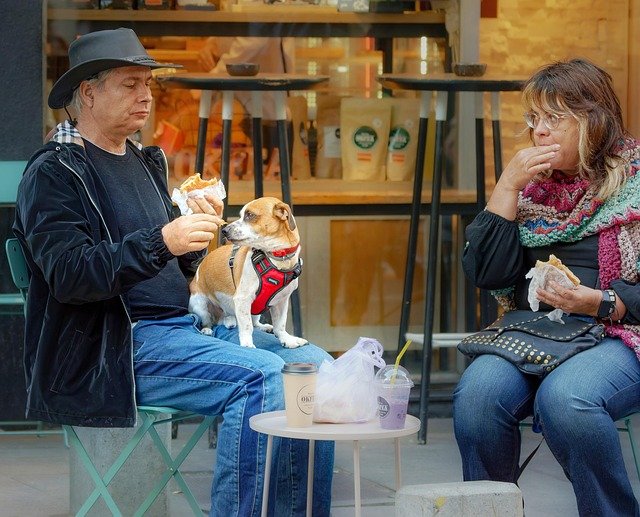
Some Whole Foods locations have outdoor seating areas or patios. In many cities, dogs are allowed in these outdoor spaces as long as they remain outside the food preparation and indoor dining areas.
I’ve sat on those patios with my own dog more than once, usually after checking posted signs or asking a staff member. In those settings, dogs were typically expected to stay on the ground, on a leash, and away from tables where food is being served.
Even then, I always advise owners to think about their dog’s temperament. A patio full of carts, dropped food, and strangers can be overwhelming for some dogs, even if it’s technically permitted.
Common Mistakes Dog Owners Make
One mistake I see often is assuming that small dogs don’t count. I’ve heard variations of “They stay in my bag” or “She won’t touch anything.” Size doesn’t change health regulations, and it doesn’t eliminate stress for the dog.
Another mistake is relying on what someone saw once. A client might say they’ve seen dogs inside their local Whole Foods many times. That usually means enforcement was inconsistent, not that the rule doesn’t exist.
I also see owners underestimate how quickly a calm dog can become overstimulated. Grocery stores have slick floors, strong smells, sudden noises, and tight spaces. From a veterinary behavior perspective, those are not neutral environments.
My Professional Recommendation
As a veterinarian, I don’t recommend bringing pet dogs into grocery stores like Whole Foods. It’s not about judging owners or dogs. It’s about safety, public health, and reducing unnecessary stress for animals.
If your dog is a trained service animal, they belong with you and is legally allowed inside. If your dog is a pet, even a well-trained one, I advise leaving them at home or choosing dog-friendly environments designed for animals.
Farmers’ markets, pet supply stores, outdoor cafes, and designated dog-friendly patios are much better options. I’ve seen dogs thrive in those spaces and struggle in grocery stores.
Why This Question Keeps Coming Up
People love their dogs, and many dogs today are more integrated into daily life than ever before. I understand the desire to keep them close. I also understand the confusion created by mixed enforcement and social media.
But from years of treating dogs and talking with owners after things didn’t go as planned, I’ve learned that just because a dog can go somewhere doesn’t mean they should.
Whole Foods isn’t a hostile place for dogs, but it’s not built for them either. Respecting that boundary helps protect shoppers, staff, and the dogs themselves.
That’s been my experience, both in my scrubs and in everyday life.
