
I’m a licensed veterinarian practicing in Texas, and a surprising amount of my day revolves around cat digestion. Not dramatic surgeries or rare diseases—just the everyday reality of cats vomiting, losing weight, refusing food, or having litter box changes that worry their owners. Over the years, I’ve learned that many of these problems trace back to one thing: a misunderstanding of how a cat’s digestive tract actually works.
Cats are not small dogs. Their digestive system reflects millions of years as obligate carnivores, and when we ignore that fact—through diet choices, feeding habits, or well-meaning home remedies—the gut is often the first place things go wrong.
The Mouth and Teeth: Where Digestion Really Begins
I often hear people say, “My cat doesn’t even chew, so teeth don’t matter much.” That belief has cost more than a few cats their appetite.
A cat’s mouth is designed for slicing, not grinding. The sharp premolars and molars act like scissors, shearing meat into swallowable pieces. Saliva contains very little in the way of digestive enzymes compared to humans, but the mechanical action of chewing still matters. When dental disease sets in, cats don’t chew less—they chew differently. They swallow larger chunks, which can irritate the stomach and intestines downstream.
I remember a middle-aged indoor cat that kept vomiting undigested food. The owner had tried switching brands three times. The real issue turned out to be a painful molar infection. Once the bad tooth was treated, the vomiting stopped without changing the diet.
The Esophagus: Short, Direct, and Easily Upset
From the mouth, food moves quickly down the esophagus. In cats, this tube is relatively short and efficient, which is why regurgitation—food coming back up almost immediately—usually points to a problem right at the start of digestion.
Hairballs are the most common culprit I see. Despite popular belief, hairballs don’t usually form in the stomach; they often start accumulating in the esophagus. Cats groom constantly, and their digestive tract wasn’t designed to handle large volumes of fur. When owners underestimate grooming needs, especially in long-haired cats, the esophagus pays the price.
The Stomach: Built for Meat, Not Variety
A cat’s stomach is highly acidic. That acidity evolved to break down raw prey, bone fragments, and bacteria. It’s effective, but it also means the stomach doesn’t tolerate frequent dietary changes well.
I’ve treated many cats with gastritis after owners rotated foods too quickly, chasing the “perfect” brand. One client switched proteins every week, thinking variety was enrichment. The cat developed chronic vomiting that resolved only after we stuck to one meat-based diet for several months.
The stomach also has a limited capacity. Cats are natural grazers of small prey, not large-meal eaters. Overfeeding, especially once or twice a day, stretches the stomach and increases the risk of vomiting and reflux.
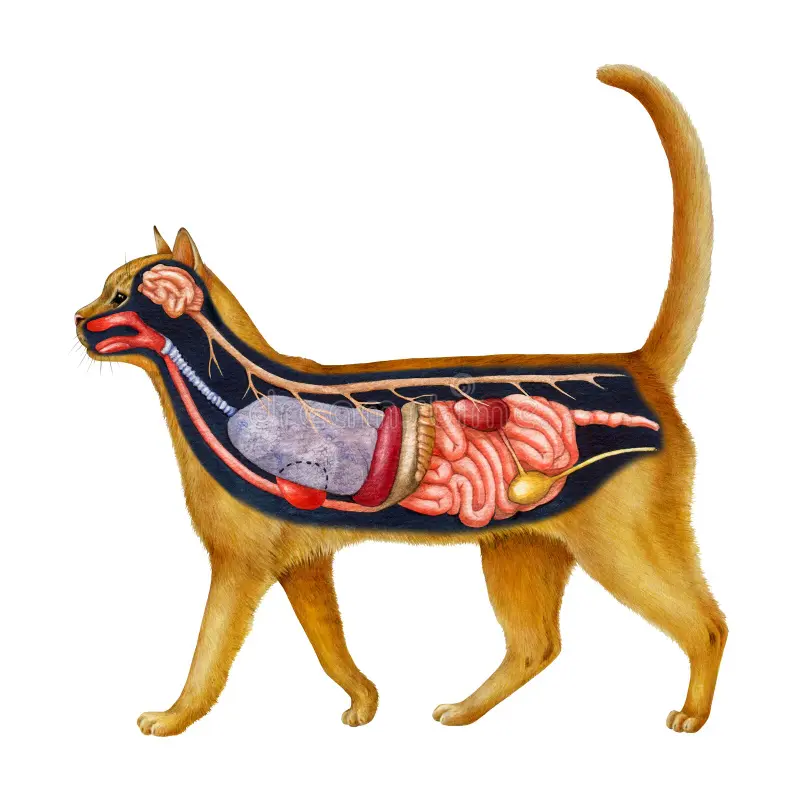
The Small Intestine: Where Nutrition Actually Happens
Most nutrient absorption occurs in the small intestine, which is relatively short in cats compared to omnivores. This shorter length reflects a diet meant to be easy to digest—high in animal protein and fat, very low in carbohydrates.
That is where I see the most damage from inappropriate diets. Cats lack significant amounts of amylase, the enzyme used to digest carbohydrates. While they can tolerate some carbs, heavy reliance on fillers often leads to loose stools, gas, or weight loss over time.
A senior cat I treated last winter had been slowly losing weight despite “eating well.” Bloodwork was unremarkable. The issue turned out to be malabsorption linked to a high-carbohydrate senior diet that didn’t suit her physiology. Switching to a higher-protein formula improved stool quality and stabilized her weight within weeks.
The Pancreas and Liver: Quiet Partners in Digestion
The pancreas produces digestive enzymes, while the liver contributes bile to break down fats. In cats, these organs are tightly connected to the intestinal tract, which is why inflammation rarely happens in isolation.
In practice, I often see what we call “triaditis”—inflammation of the pancreas, liver, and intestines simultaneously. It’s more common than many owners realize and often presents subtly: mild lethargy, decreased appetite, and occasional vomiting.
One case involved a cat that “wasn’t herself.” No dramatic symptoms. Imaging revealed mild changes across all three organs. Managing her digestion carefully—small meals, highly digestible protein, no sudden changes—made more difference than any single medication.
The Large Intestine: Water Balance and Waste, Not Nutrition
The large intestine’s primary job is water absorption and stool formation. When things go wrong here, owners usually notice diarrhea or constipation.
In my experience, chronic constipation in cats is often misunderstood. Many owners blame dehydration alone, but poor motility and low-residue diets play a role. On the other hand, chronic diarrhea was frequently treated with random probiotics or fiber supplements without understanding the cause.
I’ve had cases where adding fiber worsened symptoms because the underlying issue was protein intolerance, not stool bulk.
Common Mistakes I See Over and Over
One recurring issue is assuming vomiting is “normal for cats.” Occasional hairballs happen, but frequent vomiting is a sign of digestive stress.
Another is feeding dog food in a pinch. Even short-term, dog food lacks taurine and sufficient protein for cats, which affects digestion and overall health.
Finally, many people underestimate stress. The feline digestive tract is susceptible to environmental changes. I’ve seen perfectly healthy guts derail after a move, a new pet, or even a rearranged feeding area.
How Understanding the Digestive Tract Changes Care
Once owners understand that a cat’s digestive system is specialized, fragile in some ways, and incredibly efficient in others, their choices change. They stop chasing trends and start observing their cat’s actual response to food and routine.
I’ve found that respecting the design of the feline digestive tract—short, meat-focused, and routine-oriented—prevents more problems than any supplement or medication ever could.
Cats don’t need complicated feeding strategies. They need consistency, appropriate nutrition, and an environment that doesn’t constantly challenge their gut. When those pieces fall into place, the digestive tract usually does exactly what it evolved to do, quietly and effectively, without drawing attention to itself.