
I work as a mobile cat groomer, and I spend a lot of time handling paws while owners watch closely and ask questions about their pets. One question that keeps coming up is how many toes a cat actually has, especially when someone notices their cat’s paws look a little unusual. I usually explain it while trimming nails or checking for mats around the paw pads. It’s one of those small details that surprises people more than they expect. Most cats have eighteen toes total.
Counting a cat’s toes up close
When I first started grooming cats from a mobile van, I assumed everyone knew about toe count, but I was wrong. A typical cat has five toes on each front paw and four on each back paw, for a total of 18 toes. That difference between front and back paws always catches people off guard when I point it out during a visit. I still remember a customer last spring who kept counting and recounting because they thought I had missed one.
Over time, I learned to slow down the explanation and let owners feel each paw themselves while I work. Cats use those front extra toes almost like tiny thumbs for gripping, climbing, and holding objects during play. The back paws stay more stable with four toes each, giving balance and support when the cat jumps or lands. Most cats have eighteen toes total.
One thing I often say while grooming is that cats are built with function in mind rather than symmetry that looks simple to us. The structure of their paws helps them move silently and with precision, even in small indoor spaces. I have seen cats climb curtains or shelves with those front toes acting like hooks, which always reminds me why anatomy matters. It is simple biology, but it explains a lot of behavior that people find confusing at home.
Front paws, back paws, and what I check during visits
During my mobile grooming sessions, I always start with the front paws because they usually need more attention due to extra use in scratching and climbing. The five-toe structure on each front paw includes a small inner toe that sits slightly higher than the others. That toe often grows a sharper nail because it does not wear down as quickly on surfaces as the rest of the toes do. I explain this carefully because owners often assume something is wrong when they see that nail curve differently.
While working in the field, I rely on local resources for pet care guidance and sometimes refer owners to how many toes a cat has when they want more structured information about grooming routines and paw care. I do this because not everyone feels comfortable trimming nails at home, especially when a cat keeps pulling its paw away mid-process.
One client from a nearby town told me she only trusted professional help after accidentally trimming too close once and getting nervous about doing it again. These conversations usually happen while I gently hold the paw steady and talk through what I am seeing.
The back paws are usually easier to manage, but they still need inspection, as mats can form between the toes in long-haired or older cats. I check each toe one by one, making sure nothing is stuck between the pads and that the nails are not curling inward. The four-toe structure in the back gives stability when the cat pushes off surfaces, especially during fast movement. I often notice that owners are surprised by how different the front and back paws actually feel when I let them compare them during grooming.
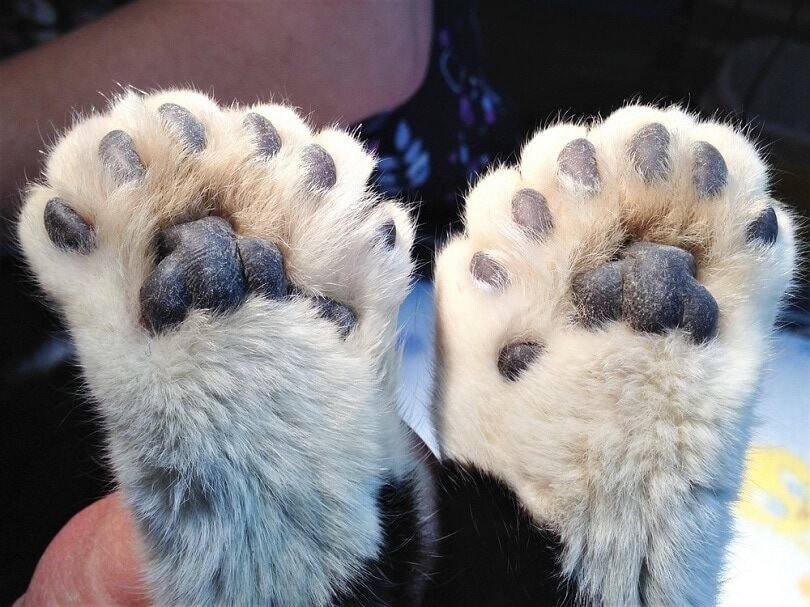
Polydactyl cats and extra toes
One of the most interesting parts of my job is encountering polydactyl cats, which have more than the usual number of toes. These cats can have six, seven, or even more toes on one paw, which changes how their feet look and move. I once worked on a cat in a small household where the owner initially thought the extra toes were an injury. After a closer look, it was clear the cat was simply born that way, completely healthy and active.
Extra toes are common in certain family lines, especially in coastal regions where polydactyl cats were historically more frequent. I see it often in cats that live very active indoor-outdoor lives, where their paws develop slightly stronger grip patterns. Extra toes are common. It does not usually cause problems, but it does require careful nail trimming because more nails increase the risk of overgrowth if left unchecked.
Handling these cats takes a bit more patience because each paw can feel different from the next, even on the same animal. I have had sessions where one front paw had seven toes while the other had five, which makes the grooming process slower but more interesting. The owners usually watch closely, surprised that something so small can vary so much within a single cat. These moments often turn into long conversations about genetics and how pets inherit physical traits.
Why toe count matters in grooming
Understanding how many toes a cat has helps me do my job safely and with less stress for the animal. When I know the exact structure of the paw, I can avoid cutting nails too short or missing hidden claws that sit slightly behind the main toes. I have seen cases where a missed nail caused discomfort later, which is something I always try to prevent by slowing down and checking carefully. It is not complicated work, but it demands attention to detail.
In many homes I visit, cats are treated like quiet family members, and owners want reassurance that they are being handled correctly during grooming. I explain that most cats have 18 toes in total, and once they see the breakdown between the front and back paws, it becomes easier to understand why grooming needs vary slightly. I also notice that younger cats tend to resist paw handling more, while older ones usually tolerate it if they are used to regular care. I see it often.
Over the years, I have learned that small anatomical facts like toe count actually build trust between groomer and owner because they turn a simple service into a shared understanding of the animal. When I finish a session and return the cat to its owner, I sometimes see them gently pressing the paws just to confirm what they learned. It is a small detail in grooming work, but it stays in people’s minds longer than expected. And for me, it is one of those simple truths that never gets old to explain.