
I work as a veterinary technician in a small-animal clinic, where I’ve handled thousands of routine checkups, overnight observations, and worried pet owners who come in after noticing “weird” behavior at home.
One of the most common concerns I hear is about cats twitching while they sleep, and I’ve seen that moment of panic more times than I can count. Over the years, I’ve learned that this behavior is often normal, but it still deserves a closer look depending on the context.
What that twitching actually looks like
When I first started working in the clinic, I used to watch sleeping cats during quiet shifts just to better understand their patterns. I noticed their paws twitching, whiskers flickering, and sometimes their ears making tiny movements even while they looked deeply asleep. It is usually normal.
Most cats go through sleep cycles similar to those of humans, including a stage that resembles REM sleep, where dreaming likely occurs. During this phase, their brains remain active even as their bodies rest, which explains the small muscle movements. I’ve seen cats gently “run” with their paws while lying on their sides, then suddenly relax again without waking up.
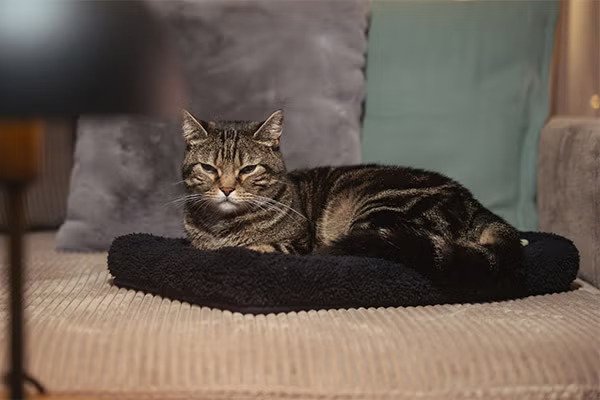
In a clinic setting, I’ve also observed that younger cats tend to twitch more often than older ones, especially kittens, who seem to be processing many new experiences. Their nervous systems are still developing, which can make their sleep movements slightly more noticeable. I remember a customer last spring who brought in a young tabby because she thought it was having seizures, but it turned out to be normal dream activity after a full examination.
When I start paying closer attention
There are moments when twitching stops being something I casually dismiss, and that usually depends on how the movement looks and what else is happening with the cat. If the twitching is violent, repetitive, or happens while the cat is fully awake, that’s when I start asking more detailed questions about frequency and environment. I also pay attention to whether the cat seems disoriented or unusually tired after waking up.
In one case, a cat owner was unsure whether their pet’s nighttime movements were normal, so I suggested they track the behavior over several nights and note any changes in intensity or duration. I also recommended they look at trusted resources like the ASPCA’s cat behavior advice, because understanding baseline feline behavior can really help reduce unnecessary worry. After a week of observation, the cat’s twitching remained consistent and harmless, which helped the owner relax.
From my experience, stress can also increase sleep movement in cats, especially if their environment has recently changed. Moving homes, new pets, or even a change in feeding schedule can make their sleep slightly more active. I’ve had clients who noticed twitching spikes after renovations or after introducing a new kitten into the household.
Normal sleep vs something concerning
One of the hardest things for cat owners is distinguishing between normal dreaming behavior and signs of a neurological issue. I’ve seen both, and the difference usually comes down to consistency, control, and awareness. Normal twitching happens in short bursts and stops naturally without intervention.
When I evaluate a cat in the clinic, I look for signs such as stiffness, unsteadiness, or twitching that persist even after the cat wakes up. Those signs can sometimes point toward seizures or other neurological concerns, although those cases are much less common than people assume. A calm sleep twitch is far more typical than anything serious.
I also ask owners whether the cat responds normally when awake, because a healthy cat should still recognize voices, move normally, and show regular behavior during the day. If everything else checks out, I usually reassure them that sleep twitching is just part of how feline brains process rest cycles. Still, I always tell them to monitor any sudden changes.
What I usually tell worried cat owners
After years of handling these conversations, I’ve learned that reassurance matters just as much as technical knowledge. People often worry in silence for days before asking, and by the time they do, they’ve already imagined the worst-case scenario. I try to break that cycle early by explaining what I’ve consistently observed in real clinic settings.
In most cases, I encourage owners to simply observe without interrupting their cat’s sleep unless the movement becomes extreme or distressing to watch. Cats spend a large portion of their lives sleeping, sometimes up to sixteen hours a day, so natural variations in their sleep behavior are expected. Small muscle twitches are part of that rhythm and not usually a warning sign.
I also remind them that each cat has its own baseline behavior, so what looks unusual for one cat might be completely normal for another. One patient I cared for would twitch almost every time she slept on her side, while another barely moved at all, even during deep sleep phases. Both were perfectly healthy.
Over time, I’ve learned to trust patterns more than isolated moments. A single twitching episode rarely tells the full story, but repeated changes in behavior always deserve attention. That balance between observation and calm understanding is what helps most cat owners feel more confident about what they’re seeing at home.