
I’ve worked as a professional dog trainer for more than a decade, and one of the most common issues people bring to me—especially with puppies—is nipping. A client will usually say something like, “He’s sweet most of the time, but he keeps biting our hands,” or “She grabs our clothes when we walk past.”
In most cases, the dog isn’t being aggressive at all. Nipping is usually a mix of play behavior, curiosity, and a puppy still figuring out boundaries. But that doesn’t make it harmless. If the habit sticks, it can become frustrating or even dangerous, especially around children.
Over the years, I’ve helped hundreds of dogs unlearn this behavior. The process is rarely complicated, but it does require consistency and a clear understanding of why the dog is doing it in the first place.
Why Dogs Nip in the First Place
Most dogs that nip are trying to interact with you, not hurt you.
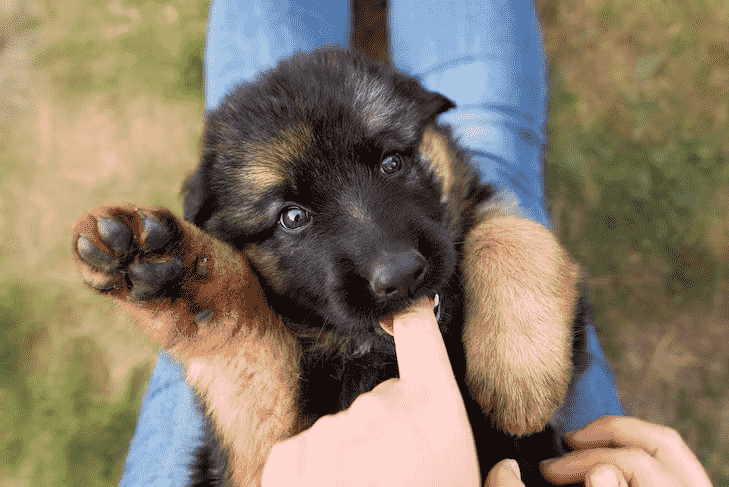
Puppies explore the world with their mouths. It’s similar to how toddlers grab everything within reach. They’re learning pressure, reactions, and social boundaries. If you’ve ever watched a litter of puppies play together, you’ll notice they constantly mouth each other.
One puppy bites too hard. The other yelps. Play stops for a moment. That’s how they learn.
The problem is that humans often react in ways that accidentally encourage the behavior.
I remember a young Labrador I worked with last year. His owners complained that he attacked their sleeves every evening. When I visited their house, I noticed something immediately. Every time the puppy grabbed a sleeve, they laughed and tried to pull away. To the puppy, that looked exactly like a game of tug.
From his perspective, he was winning.
The First Thing I Change: Human Reactions
One of the biggest mistakes I see is people reacting dramatically.
Pulling your hand away, waving, or shouting can excite a playful puppy and feel like an invitation.
Instead, I usually teach owners to do something much simpler.
The moment the dog nips, interaction stops.
Hands go still. Attention disappears. Eye contact breaks.
Dogs learn extremely quickly that nipping makes the fun end.
I once worked with a Border Collie puppy who nipped constantly during playtime. His owner had tried everything—spraying water, saying “no,” even tapping the dog’s nose. None of it worked.
What finally changed things was silence.
Every time teeth touched skin, she stood up and walked away for about twenty seconds. Within a week, the puppy started choosing toys instead of hands.
Redirecting the Mouth to Something Appropriate
Stopping interaction alone isn’t always enough. Dogs still have a natural urge to chew, especially teething puppies.
That’s why I always recommend having toys nearby.
When a puppy starts getting mouthy, I gently guide the situation toward something acceptable. A rope toy, a rubber chew, or a soft tug toy works well.
A client of mine with a young German Shepherd kept a small basket of toys in every room. Whenever the puppy got excited and started grabbing hands, she immediately offered a toy instead.
Within a few weeks, the puppy began grabbing toys on his own when he wanted to play.
That’s the goal: teaching the dog what to do, not just what not to do.
Timing Matters More Than Most People Realize
Dogs connect actions and consequences quickly, but only if the timing is right.
If a dog nips you and you correct it ten seconds later, the lesson is lost. From the dog’s point of view, the correction came out of nowhere.
The response has to happen immediately.
In training sessions, I often tell people to imagine they’re communicating in real time, as if it were a conversation. The feedback has to happen the moment the behavior occurs.
Delayed reactions confuse dogs more than they teach.
The Energy Factor Most Owners Miss
Another pattern I see all the time is under-exercised dogs.
High-energy breeds, especially Labradors, Australian Shepherds, and Belgian Malinois, can become nippy simply because they have too much pent-up energy.
One client I worked with had a young cattle dog that constantly bit ankles. The family was convinced the dog was developing aggression.
In reality, the dog was getting one short walk per day.
We increased physical exercise, added short training sessions, and introduced puzzle feeders. The ankle biting almost disappeared within two weeks.
A tired dog is far less likely to use your hands as entertainment.
Avoid Rough Play With Your Hands
This is a rule I’m pretty firm about.
If you regularly wrestle with your dog using your hands, you’re teaching the dog that biting skin is part of play.
Some dogs can learn the difference between “play biting” and inappropriate biting, but many don’t.
I’ve seen plenty of cases where a dog behaved perfectly with adults but nipped visiting kids. The reason was simple: the adults played roughly with their hands, while the kids moved unpredictably.
Using toys for rough play avoids that confusion entirely.
Consistency Across the Household
Training fails surprisingly often because the rules change from person to person.
I remember a household where the dog behaved perfectly with the husband but constantly nipped the wife. After watching them interact for a few minutes, the reason became obvious.
The husband always stopped playing immediately when the dog got mouthy.
The wife continued playing while saying, “Stop.”
Dogs pay attention to outcomes, not words.
Once both owners responded similarly, the nipping behavior faded quickly.
When Nipping Becomes a Bigger Concern
Most nipping is playful or exploratory, especially in young dogs.
But occasionally I see cases where the behavior has a different tone—stiff posture, intense staring, or guarding behavior alongside the biting.
In those situations, I usually recommend a more structured training plan and sometimes collaboration with a veterinarian or behavior specialist. Those cases are less common, but they shouldn’t be ignored.
The majority of nipping problems, though, come down to communication and consistency.
Dogs repeat behaviors that work. If nipping gets attention, movement, laughter, or play, it will continue.
Once the dog learns that calm behavior leads to interaction while nipping ends, the change can happen surprisingly fast. I’ve seen dogs that seemed “out of control” at first become gentle playmates within a few weeks simply because the humans changed their responses.