
As a veterinarian who has spent more than a decade treating companion animals in a busy small-animal clinic, I’m asked about feeding amounts almost daily. One question that comes up more often than people expect is how much a 15-pound cat should eat. Owners usually assume the answer is straightforward—just read the bag and scoop the recommended portion.
In reality, feeding a 15-pound cat takes a bit more judgment. That number could describe a healthy, large-framed cat, or it could signal that a smaller cat has gained extra weight. I’ve had plenty of appointments where owners proudly told me their cat eats “just a cup a day,” only for us to discover that the cat was consuming nearly double the calories it actually needed.
Understanding how much food a 15-pound cat should eat starts with evaluating the cat itself, not just the number on the scale. To do this, it helps to recognize that not all 15-pound cats are alike.
A 15-Pound Cat Isn’t Always the Same Cat.
One of the first things I explain to clients is that body weight alone doesn’t tell the whole story. Some breeds naturally weigh more. A lean, muscular Maine Coon can easily reach 15 pounds without being overweight. On the other hand, many domestic shorthair cats should ideally sit closer to 9 or 10 pounds.
Last spring, a big orange tabby weighing 15 pounds had clearly defined ribs and a visible waistline. He was healthy at that weight.
A week later, another cat arrived with the same weight but signs of excess fat. For him, 15 pounds represented a significant excess weight.
So before deciding how much a 15-pound cat should eat, the first question I ask is simple: Is the cat supposed to weigh 15 pounds?
The Calorie Needs of a Typical 15-Pound Cat
For a healthy adult cat weighing around 15 pounds, daily calorie needs often fall somewhere between 280 and 330 calories per day. This calorie range varies depending on factors such as the cat’s age, activity level, metabolic rate, whether the cat is kept indoors or outdoors, and whether the cat needs to lose weight.
- Activity level
- Age
- Metabolism
- Whether the cat lives indoors or outdoors
- Whether the cat is trying to lose weight
Indoor cats usually need fewer calories. They spend more time sleeping and less time burning energy than outdoor hunters do.
In my clinic, I frequently see indoor cats gaining weight simply because they’re eating the same portions they did as kittens. Kittens burn a lot of energy as they grow and play. Adult indoor cats rarely do.
What That Means in Actual Food Portions
Calorie numbers help veterinarians, but most owners want to know how much food to put in the bowl.
For many commercial diets, a 15-pound adult cat typically eats roughly:
- Dry food: about ¾ to 1 cup per day, depending on calorie density
- Wet food: about two to three 5.5-ounce cans per day
- Combination feeding: smaller portions of each
Those are rough estimates. Some dry foods have 300 calories per cup, others nearly 500. That difference changes portion sizes dramatically.
A client switched to a higher-calorie food but kept feeding the same cup per day, and her cat gained two pounds in a few months.
Food labels can be surprisingly misleading if you don’t check the calorie content.
Why Free-Feeding Often Leads to Overweight Cats
Many cat owners prefer to leave food out all day. It seems convenient and natural—after all, cats nibble in small amounts.
In practice, free-feeding often results in overeating.
Several years ago, I treated a shy gray cat whose owner insisted she barely ate. A food bowl stayed full in the kitchen all day. But during the exam, I noticed the cat was significantly overweight. After a bit of discussion, we discovered that another family member was topping off the bowl whenever it looked low.
Once the owner switched to measured meals twice daily, the cat gradually returned to a healthier weight.
Measured feeding removes much of the guesswork.
Activity Level Makes a Big Difference
A sedentary indoor cat can require dramatically fewer calories than an active one.
Cats that climb, explore, and play regularly burn more energy. Cats that spend most of their day sleeping on the couch do not.
I often ask owners how often their cat plays. Many pause and then admit, “Not much lately.” That small detail explains many cases of slow weight gain.
Encouraging activity—laser toys, climbing trees, puzzle feeders—can help regulate appetite and metabolism.
Signs a 15-Pound Cat Is Eating Too Much
During routine exams, I usually demonstrate body condition scoring to owners. It’s one of the simplest ways to evaluate whether feeding amounts are appropriate.
A cat may be eating too much if you notice:
- The ribs are difficult to feel beneath a thick layer of fat.
- The waistline disappears when viewed from above.
- Fat pads develop near the lower abdomen.
- Grooming becomes harder for the cat.
One memorable case involved a cat that stopped grooming its lower spine entirely. The owner assumed arthritis was the cause. After weight reduction, the grooming behavior returned almost immediately.
Excess calories can reduce mobility sooner than many owners expect.
Weight Loss Requires Careful Adjustments
If a 15-pound cat actually needs to lose weight, the feeding plan must be gradually adjusted.
Rapid weight loss can lead to a dangerous condition called hepatic lipidosis, in which fat accumulates in the liver. I’ve unfortunately seen this develop in cats whose food was suddenly restricted too aggressively.
Instead, I usually recommend reducing calorie intake slowly while monitoring weight every few weeks. Small adjustments—often just 10–15% fewer calories—can produce steady, safe results.
Wet Food vs. Dry Food for Larger Cats
Another common discussion in my exam room revolves around wet versus dry diets.
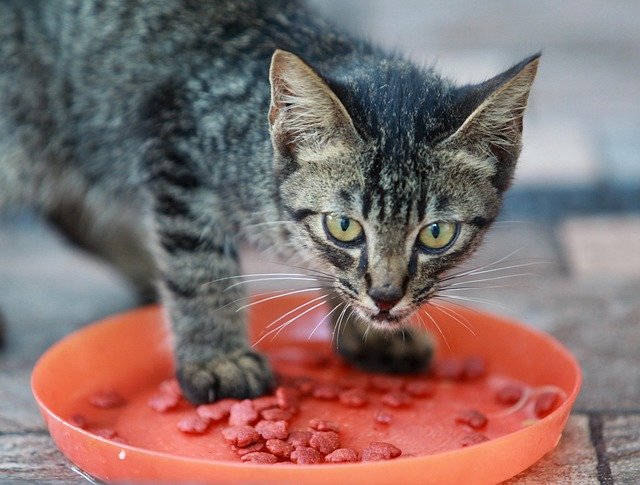
In my experience, wet food often helps larger cats maintain healthier weights. It contains more moisture and generally fewer calories per volume. Cats tend to feel full sooner.
Dry food isn’t bad, but portion control is vital. Extra scoops add hundreds of calories.
Some owners find that a mixed feeding approach works best: wet meals in the morning and evening, with a small portion of dry food offered separately.
Treats Count More Than People Think
Treats can quietly sabotage a feeding plan.
Many owners give several treats, not realizing how quickly those calories add up. A handful might equal a quarter of a cat’s daily intake.
A client fed her cat half a cup daily, along with lots of treats, totaling an extra meal’s worth of calories.
Treats are fine, but they should stay under about 10% of daily calories.
A Practical Way to Evaluate Your Cat’s Diet
Over the years, I’ve found the simplest strategy is regular observation.
Monitor your cat’s weight and feel the ribcage periodically. Notice if the waist is visible.
Most feeding plans don’t need complicated math once the correct portion is found. If weight stays stable and body condition looks healthy, the diet is likely appropriate.
Cats are creatures of habit. Once their calorie intake matches their needs, things tend to remain steady.
The Bottom Line for a 15-Pound Cat
A healthy adult cat weighing 15 pounds usually needs around 280–330 calories daily, though the exact amount depends on activity level, metabolism, and body condition.
What matters most is not the number on the scale but whether that weight suits the individual cat. Some cats naturally thrive at 15 pounds, while others need fewer calories to gradually return to a leaner frame.
Over the years in veterinary practice, I’ve seen that small feeding adjustments—sometimes just a few tablespoons less food per day—can completely change a cat’s health trajectory. Careful portions, occasional weight checks, and attention to body condition often make all the difference between a sluggish cat and a healthy, active one.